QUESTION IMAGE
Question
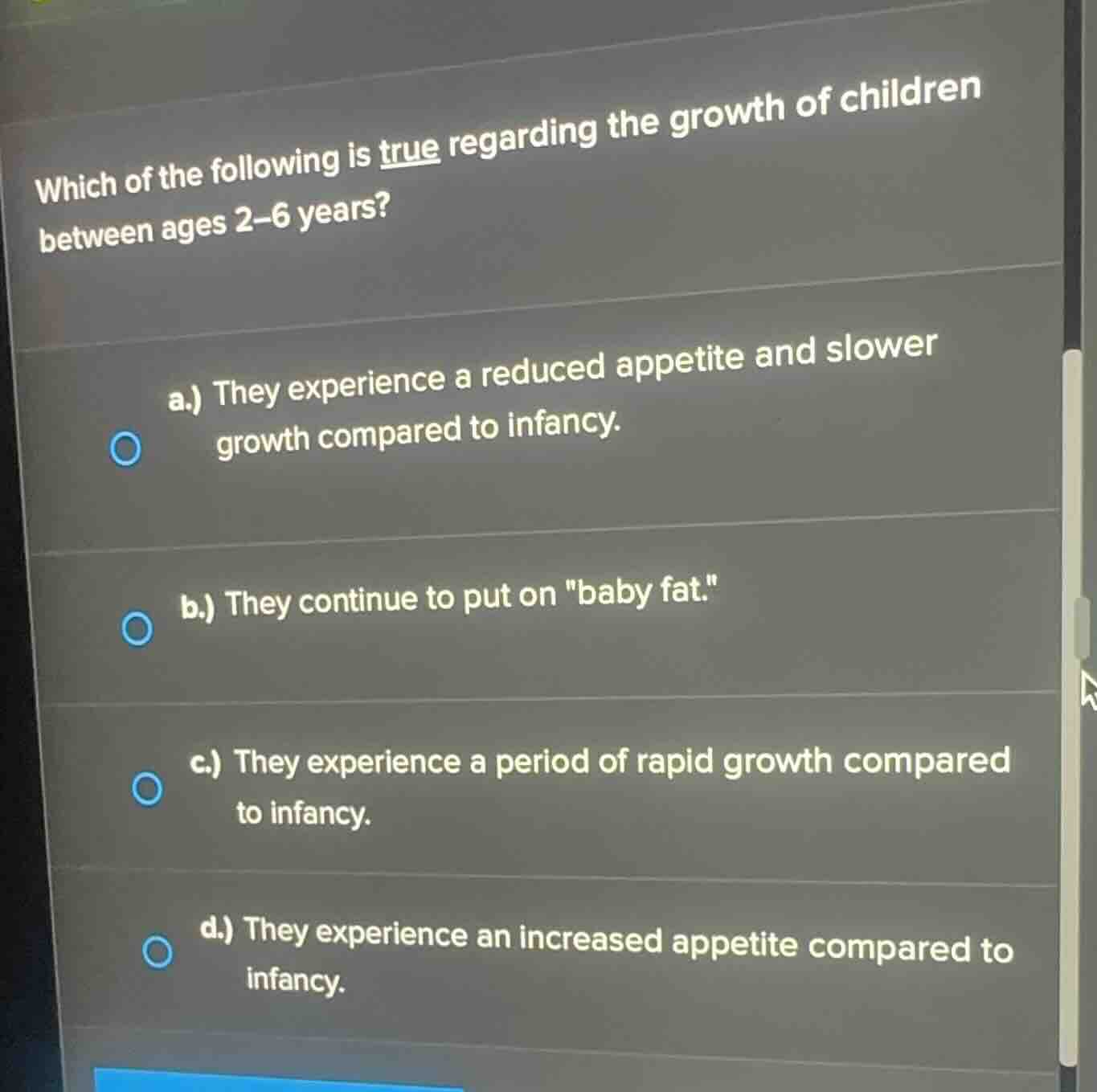
which of the following is true regarding the growth of children between ages 2-6 years?
a.) they experience a reduced appetite and slower growth compared to infancy.
b.) they continue to put on \baby fat.\
c.) they experience a period of rapid growth compared to infancy.
d.) they experience an increased appetite compared to infancy.
Analyze early childhood growth rates
During early childhood (ages 2 to 6 years), physical growth slows down significantly compared to the rapid growth seen during infancy. Because their growth rate slows, children in this age range require fewer calories per pound of body weight, which naturally leads to a noticeably reduced appetite. This is a normal part of Developmental Stages and often surprises parents who are used to the high food intake of infancy.
Evaluate the given options
- Option a: Correct. Children between 2–6 years grow at a slower rate than infants and consequently experience a decrease in appetite.
- Option b: Incorrect. During early childhood, children typically lose their "baby fat" and become leaner and more muscular.
- Option c: Incorrect. Growth during early childhood is slower, not more rapid, compared to infancy.
- Option d: Incorrect. Because growth slows down, appetite decreases rather than increases compared to infancy.

Snap & solve any problem in the app
Get step-by-step solutions on Sovi AI
Photo-based solutions with guided steps
Explore more problems and detailed explanations
- a.) They experience a reduced appetite and slower growth compared to infancy. (Correct answer)
- b.) They continue to put on "baby fat."
- c.) They experience a period of rapid growth compared to infancy.
- d.) They experience an increased appetite compared to infancy.