QUESTION IMAGE
Question
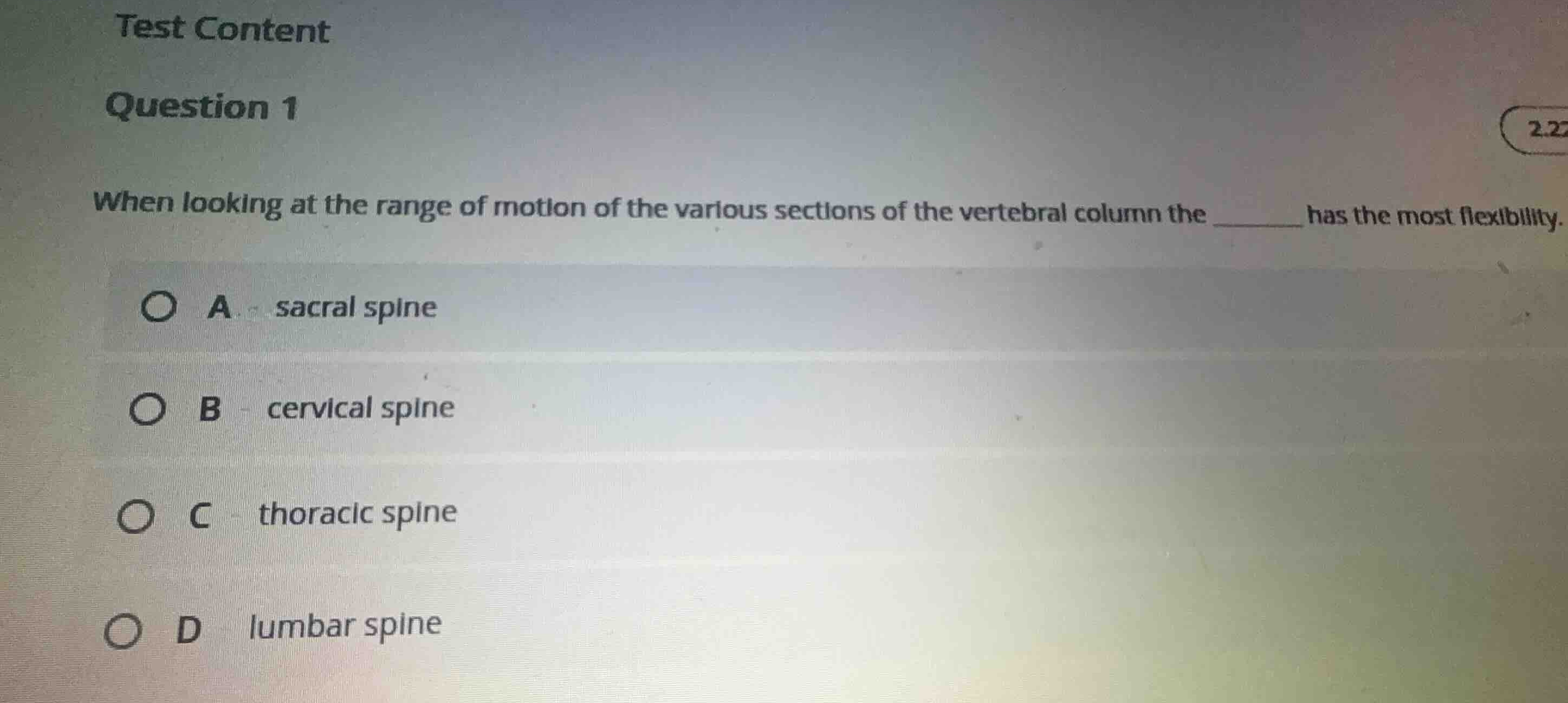
when looking at the range of motion of the various sections of the vertebral column the ______ has the most flexibility.
a. sacral spine
b. cervical spine
c. thoracic spine
d. lumbar spine
Analyze the vertebral regions
The vertebral column is divided into five distinct regions: cervical, thoracic, lumbar, sacral, and coccygeal. Each region has unique anatomical structures that dictate its range of motion and overall flexibility.
Evaluate flexibility of each region
- Sacral spine: The sacral vertebrae are fused together to form the single sacrum bone, meaning it has no internal range of motion or flexibility.
- Thoracic spine: This region is highly restricted in movement because the thoracic vertebrae articulate with the ribs, forming the rigid thoracic cage to protect vital organs.
- Lumbar spine: The lumbar vertebrae are large and designed to bear weight. While they allow for flexion and extension, their large articular processes significantly limit rotation.
- Cervical spine: The cervical vertebrae (especially C1/atlas and C2/axis) are highly specialized to support and move the head. They have the smallest vertebral bodies and relatively flat articular facets, allowing for a wide range of rotation, flexion, extension, and lateral bending.
Determine the most flexible region
Comparing all regions, the cervical spine possesses the greatest range of motion and is anatomically designed to be the most flexible section of the vertebral column.

Snap & solve any problem in the app
Get step-by-step solutions on Sovi AI
Photo-based solutions with guided steps
Explore more problems and detailed explanations
- (A) sacral spine
- (B) cervical spine (Correct answer)
- (C) thoracic spine
- (D) lumbar spine