QUESTION IMAGE
Question
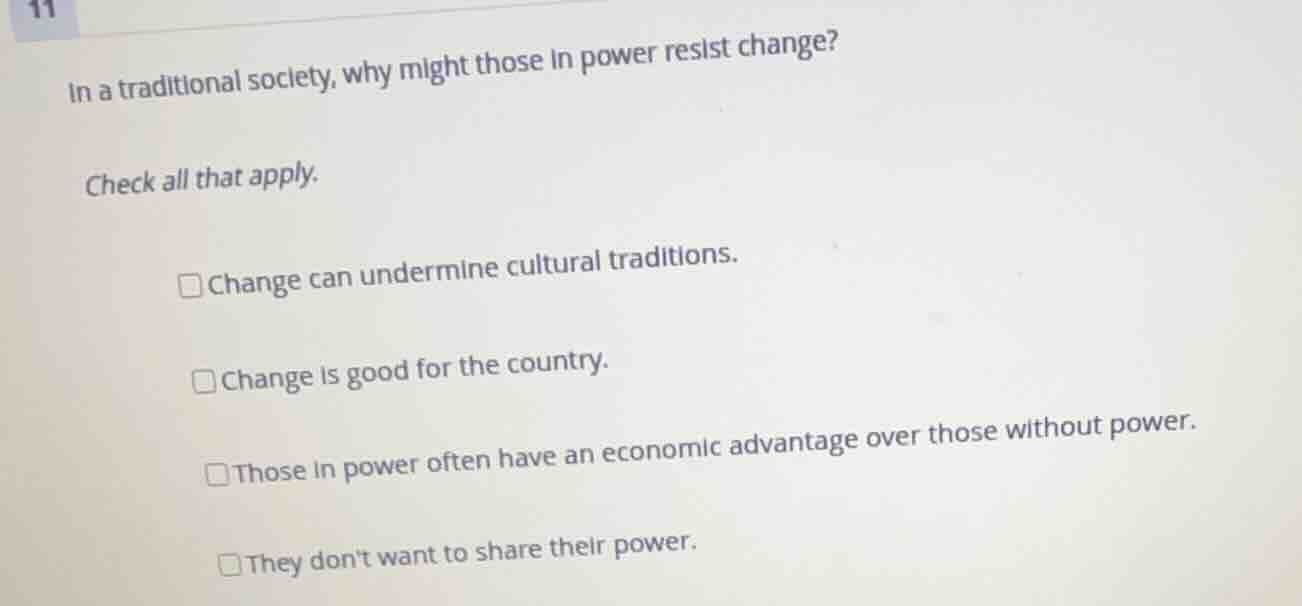
in a traditional society, why might those in power resist change?
check all that apply.
change can undermine cultural traditions.
change is good for the country.
those in power often have an economic advantage over those without power.
they dont want to share their power.
Analyze the motivations of rulers in traditional societies
Traditional societies rely heavily on established customs, hereditary power structures, and historical norms to maintain order and authority. Those in power resist change because it threatens the foundational beliefs and practices that legitimize their rule.
Evaluate each option against these motivations
- "Change can undermine cultural traditions.": True. Traditional authority is justified by long-standing customs; disrupting these customs weakens their legitimacy.
- "Change is good for the country.": False. This is a general positive claim that would motivate accepting change, not resisting it.
- "Those in power often have an economic advantage over those without power.": True. Existing economic hierarchies benefit the ruling class, and structural changes could redistribute wealth or resources.
- "They don't want to share their power.": True. Political change often introduces democratic elements or new competing factions, which directly threatens their exclusive control.

Snap & solve any problem in the app
Get step-by-step solutions on Sovi AI
Photo-based solutions with guided steps
Explore more problems and detailed explanations
- Change can undermine cultural traditions. (Correct answer)
- Change is good for the country.
- Those in power often have an economic advantage over those without power. (Correct answer)
- They don't want to share their power. (Correct answer)