Sovi.AI - AI Math Tutor

Scan to solve math questions

QUESTION IMAGE

select the correct answer. which of the following issues was often a pr…

Question

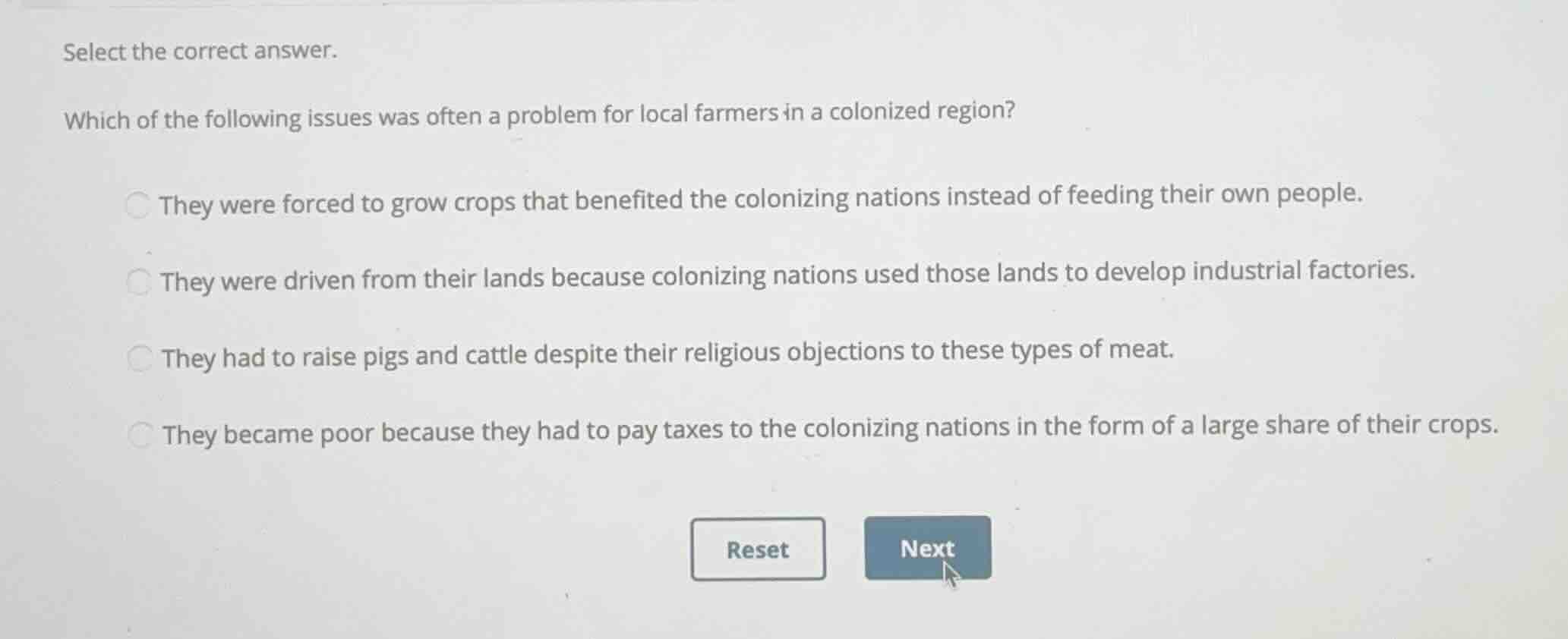
select the correct answer.

which of the following issues was often a problem for local farmers in a colonized region?

they were forced to grow crops that benefited the colonizing nations instead of feeding their own people.
they were driven from their lands because colonizing nations used those lands to develop industrial factories.
they had to raise pigs and cattle despite their religious objections to these types of meat.
they became poor because they had to pay taxes to the colonizing nations in the form of a large share of their crops.

Explanation:

Response

<pre_analysis>
{
"quality": "clear",
"question_count": 1,
"skills_matched": [
"direct_cot",
"multiple_choice_formatter",
"explain_then_answer",
"tutor"
],
"needs_drawing": false,
"concepts_used": [
"Old Imperialism",
"New Imperialism",
"Mercantilism"
],
"new_concepts": [
"Cash Crop Agriculture",
"Colonial Economics"
],
"current_concepts": [
"Old Imperialism",
"New Imperialism",
"Mercantilism",
"Cash Crop Agriculture",
"Colonial Economics"
]
}
</pre_analysis>

<reasoning>

Analyze the economic policies of imperialism

Under Old Imperialism and New Imperialism, European powers structured colonial economies to benefit the metropole. Through Mercantilism, colonies provided raw materials and served as markets for finished goods.

Evaluate the impact on local agriculture

Colonizers forced local farmers to shift from subsistence farming (growing food for themselves) to cash crop agriculture (growing crops like cotton, rubber, tea, or cocoa for export). This often led to local food shortages and famines.

Assess the provided options

  • Option 1 directly describes this forced shift to cash crops for the colonizing nation's benefit.
  • Option 2 is incorrect because colonizers rarely built industrial factories in colonized regions; they kept colonies as raw material producers.
  • Option 3 describes a specific religious conflict rather than a widespread systemic agricultural issue.
  • Option 4 is less accurate because colonial taxes were typically demanded in cash to force participation in the colonial wage labor market, rather than directly in crops.

</reasoning>

<answer>
<mcq-correct>They were forced to grow crops that benefited the colonizing nations instead of feeding their own people.</mcq-correct>
<mcq-option>They were driven from their lands because colonizing nations used those lands to develop industrial factories.</mcq-option>
<mcq-option>They had to raise pigs and cattle despite their religious objections to these types of meat.</mcq-option>
<mcq-option>They became poor because they had to pay taxes to the colonizing nations in the form of a large share of their crops.</mcq-option>
</answer>

<post_analysis>
{
"subject": "Social Science",
"question_type": "Multiple Choice",
"knowledge_point": [
"Social Science",
"History",
"Imperialism and Colonialism"
]
}
</post_analysis>

Answer:

<pre_analysis>
{
"quality": "clear",
"question_count": 1,
"skills_matched": [
"direct_cot",
"multiple_choice_formatter",
"explain_then_answer",
"tutor"
],
"needs_drawing": false,
"concepts_used": [
"Old Imperialism",
"New Imperialism",
"Mercantilism"
],
"new_concepts": [
"Cash Crop Agriculture",
"Colonial Economics"
],
"current_concepts": [
"Old Imperialism",
"New Imperialism",
"Mercantilism",
"Cash Crop Agriculture",
"Colonial Economics"
]
}
</pre_analysis>

<reasoning>

Analyze the economic policies of imperialism

Under Old Imperialism and New Imperialism, European powers structured colonial economies to benefit the metropole. Through Mercantilism, colonies provided raw materials and served as markets for finished goods.

Evaluate the impact on local agriculture

Colonizers forced local farmers to shift from subsistence farming (growing food for themselves) to cash crop agriculture (growing crops like cotton, rubber, tea, or cocoa for export). This often led to local food shortages and famines.

Assess the provided options

  • Option 1 directly describes this forced shift to cash crops for the colonizing nation's benefit.
  • Option 2 is incorrect because colonizers rarely built industrial factories in colonized regions; they kept colonies as raw material producers.
  • Option 3 describes a specific religious conflict rather than a widespread systemic agricultural issue.
  • Option 4 is less accurate because colonial taxes were typically demanded in cash to force participation in the colonial wage labor market, rather than directly in crops.

</reasoning>

<answer>
<mcq-correct>They were forced to grow crops that benefited the colonizing nations instead of feeding their own people.</mcq-correct>
<mcq-option>They were driven from their lands because colonizing nations used those lands to develop industrial factories.</mcq-option>
<mcq-option>They had to raise pigs and cattle despite their religious objections to these types of meat.</mcq-option>
<mcq-option>They became poor because they had to pay taxes to the colonizing nations in the form of a large share of their crops.</mcq-option>
</answer>

<post_analysis>
{
"subject": "Social Science",
"question_type": "Multiple Choice",
"knowledge_point": [
"Social Science",
"History",
"Imperialism and Colonialism"
]
}
</post_analysis>