QUESTION IMAGE
Question
the roaring twenties
mike kubic • 2016
mike kubic is a former correspondent for newsweek magazine. in this article, kubic explores the ups and downs of the 1920s, an exciting time following the united states’ success in world war i. unfortunately, the good times couldn’t last; in the early 1930s the united states experienced an economic crisis that starkly contrasted the fast lifestyles citizens experienced during the 1920s.
as you read, identify the possible factors that contributed to the united states’ economic crisis of the 1930s.
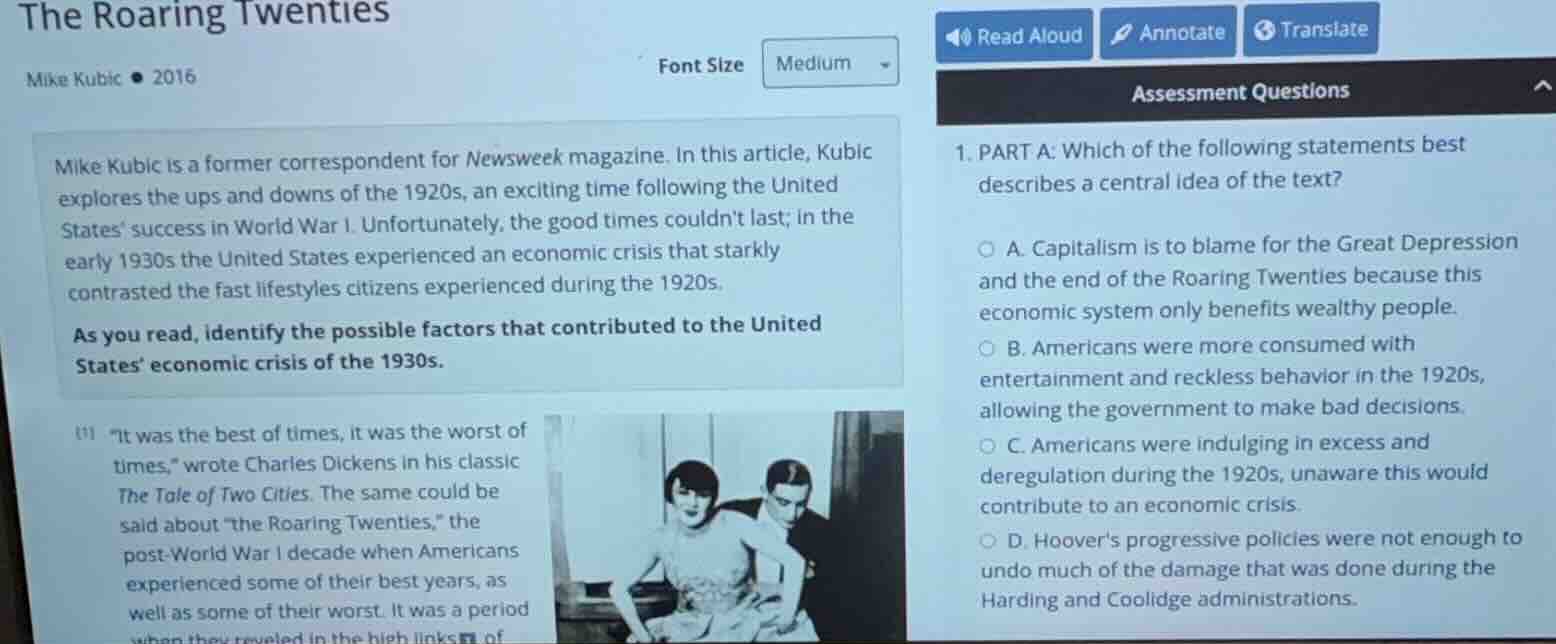
“it was the best of times, it was the worst of times,” wrote charles dickens in his classic the tale of two cities. the same could be said about “the roaring twenties,” the post - world war i decade when americans experienced some of their best years, as well as some of their worst. it was a period
assessment questions
- part a: which of the following statements best describes a central idea of the text?
a. capitalism is to blame for the great depression and the end of the roaring twenties because this economic system only benefits wealthy people.
b. americans were more consumed with entertainment and reckless behavior in the 1920s, allowing the government to make bad decisions.
c. americans were indulging in excess and deregulation during the 1920s, unaware this would contribute to an economic crisis.
d. hoover’s progressive policies were not enough to undo much of the damage that was done during the harding and coolidge administrations.
To determine the central idea, analyze each option:
- Option A: The text focuses on factors of the economic crisis, not solely blaming capitalism. Eliminate.
- Option B: The text doesn't emphasize government bad decisions due to entertainment. Eliminate.
- Option C: The 1920s had excess (consumerism, etc.) and deregulation, which led to the 1930s crisis. This matches the text's exploration of 1920s excess leading to the economic downturn.
- Option D: The text's central idea isn't about Hoover vs. Harding/Coolidge policies. Eliminate.

Snap & solve any problem in the app
Get step-by-step solutions on Sovi AI
Photo-based solutions with guided steps
Explore more problems and detailed explanations
C. Americans were indulging in excess and deregulation during the 1920s, unaware this would contribute to an economic crisis.