QUESTION IMAGE
Question
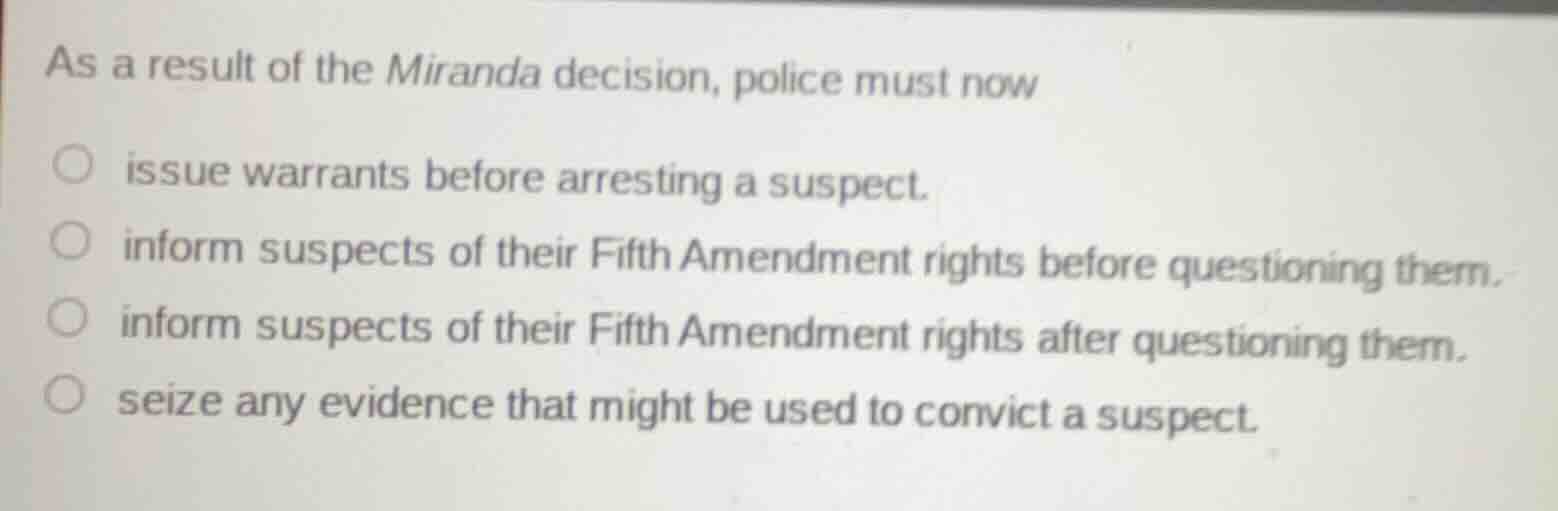
as a result of the miranda decision, police must now
○ issue warrants before arresting a suspect.
○ inform suspects of their fifth amendment rights before questioning them.
○ inform suspects of their fifth amendment rights after questioning them.
○ seize any evidence that might be used to convict a suspect.
The Miranda decision (Miranda v. Arizona) requires law enforcement to inform suspects of their Fifth Amendment rights (right to remain silent, right to an attorney) before custodial interrogation. Let's analyze each option:
- "issue warrants before arresting a suspect": Miranda is about rights during questioning, not arrest warrants for arrest (warrants for arrest have different legal requirements), so this is incorrect.
- "inform suspects of their Fifth Amendment rights before questioning them": This matches the Miranda warning's purpose, as suspects must be informed of their rights (like against self - incrimination) before being questioned while in custody.
- "inform suspects of their Fifth Amendment rights after questioning them": Miranda requires informing before questioning, so this is incorrect.
- "seize any evidence that might be used to convict a suspect": Miranda is not about evidence seizure; evidence seizure is governed by other rules like search and seizure laws (Fourth Amendment), so this is incorrect.

Snap & solve any problem in the app
Get step-by-step solutions on Sovi AI
Photo-based solutions with guided steps
Explore more problems and detailed explanations
B. inform suspects of their Fifth Amendment rights before questioning them.