QUESTION IMAGE
Question
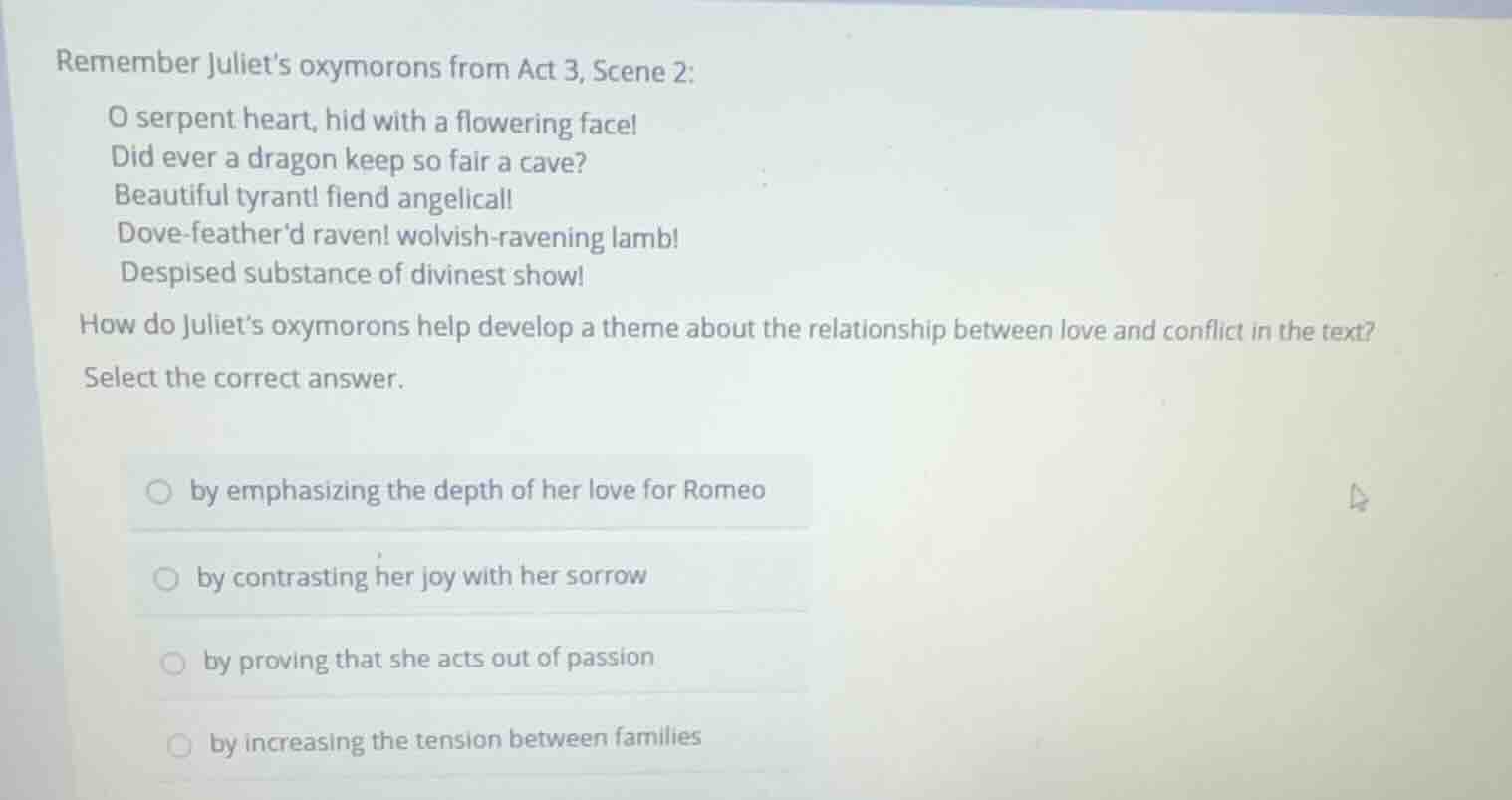
remember juliets oxymorons from act 3, scene 2:
o serpent heart, hid with a flowering face!
did ever a dragon keep so fair a cave?
beautiful tyrant! fiend angelical!
dove-featherd raven! wolvish-ravening lamb!
despised substance of divinest show!
how do juliets oxymorons help develop a theme about the relationship between love and conflict in the text?
select the correct answer.
by emphasizing the depth of her love for romeo
by contrasting her joy with her sorrow
by proving that she acts out of passion
by increasing the tension between families
Analyze the function of Juliet's oxymorons
Juliet uses contrasting terms ("serpent heart / flowering face", "beautiful tyrant", "fiend angelical") upon learning that Romeo killed Tybalt. These oxymorons represent her internal conflict: her deep love for her husband Romeo versus her grief and anger over his violent action.
Evaluate the options
- "by emphasizing the depth of her love for Romeo": The oxymorons highlight the painful clash between her love for him and the reality of his violent conflict, thereby emphasizing how deeply she loves him despite his actions.
- "by contrasting her joy with her sorrow": She is not experiencing joy in this scene; she is entirely in distress.
- "by proving that she acts out of passion": The oxymorons reflect her emotional state, but they specifically develop the theme of love struggling against external/internal conflict rather than proving her actions.
- "by increasing the tension between families": The oxymorons are internal expressions of her feelings, not actions that increase external family tension.

Snap & solve any problem in the app
Get step-by-step solutions on Sovi AI
Photo-based solutions with guided steps
Explore more problems and detailed explanations
- (A) by emphasizing the depth of her love for Romeo (Correct answer)
- (B) by contrasting her joy with her sorrow
- (C) by proving that she acts out of passion
- (D) by increasing the tension between families