QUESTION IMAGE
Question
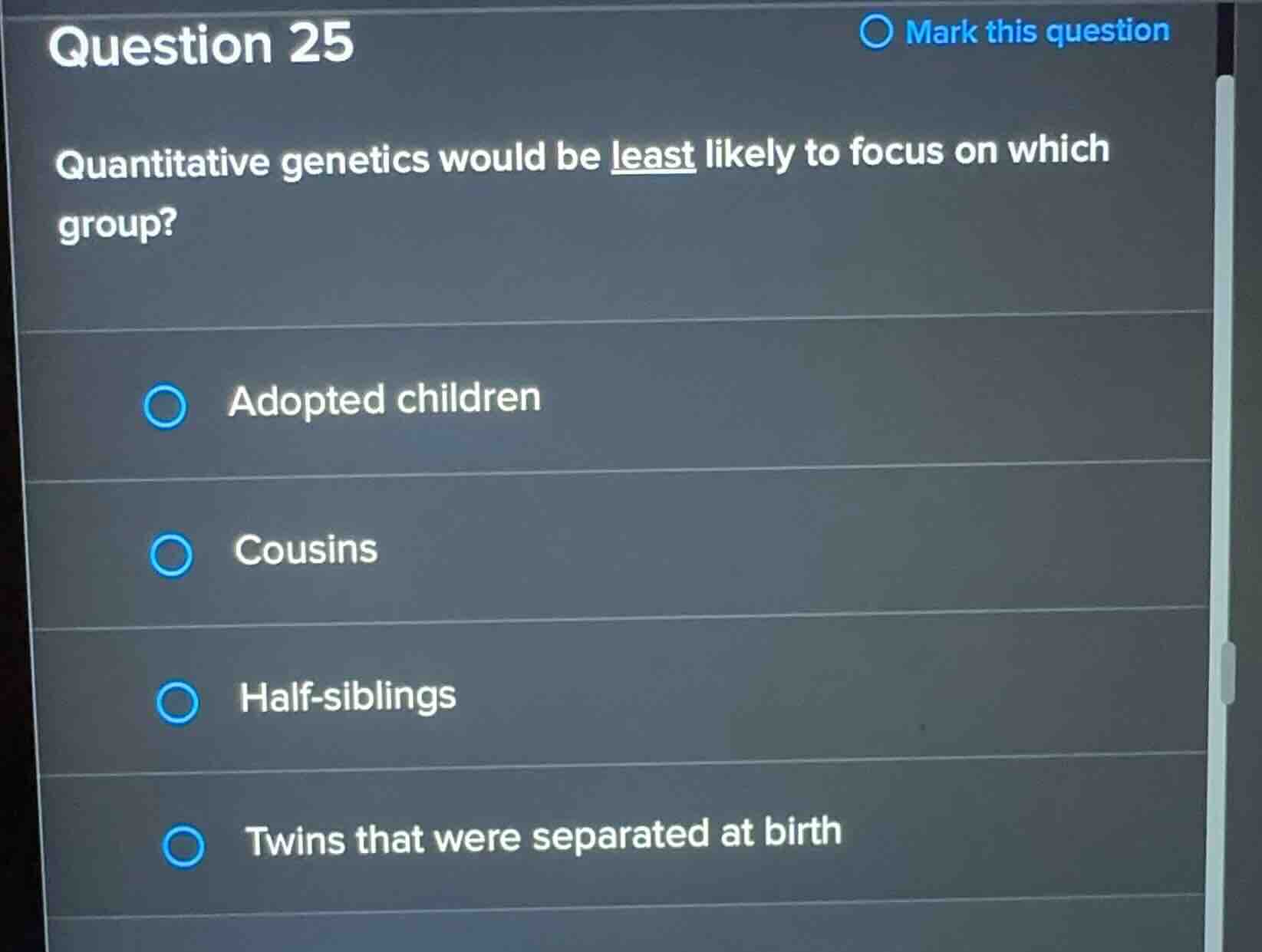
question 25
quantitative genetics would be least likely to focus on which group?
adopted children
cousins
half-siblings
twins that were separated at birth
Define quantitative genetics in behavioral research
Using the Behavioral Genetics knowledge point, quantitative genetics is a scientific field that estimates the relative contributions of genetic and environmental factors to individual differences in behavior or traits. It relies on studying groups of individuals with varying, known degrees of genetic relatedness to see how similarity in traits correlates with genetic similarity.
Evaluate the utility of each group
- Adopted children: Crucial for adoption studies to separate environmental influences (shared with adoptive parents) from genetic influences (shared with biological parents).
- Twins that were separated at birth: The gold standard for twin studies, allowing researchers to study individuals with identical genetic makeups raised in completely different environments.
- Half-siblings: Useful for sibling studies to compare individuals who share approximately 25% of their segregating genes, helping to estimate heritability.
- Cousins: While cousins share about 12.5% of their genes, they are rarely the primary focus of quantitative genetics studies because their low genetic overlap and highly varied environments make it much harder to isolate genetic from environmental effects compared to closer relatives (twins, siblings, half-siblings, or adoptees). Therefore, quantitative genetics is least likely to focus on cousins.

Snap & solve any problem in the app
Get step-by-step solutions on Sovi AI
Photo-based solutions with guided steps
Explore more problems and detailed explanations
- Adopted children
- Cousins (Correct answer)
- Half-siblings
- Twins that were separated at birth