QUESTION IMAGE
Question
question 2 of 10
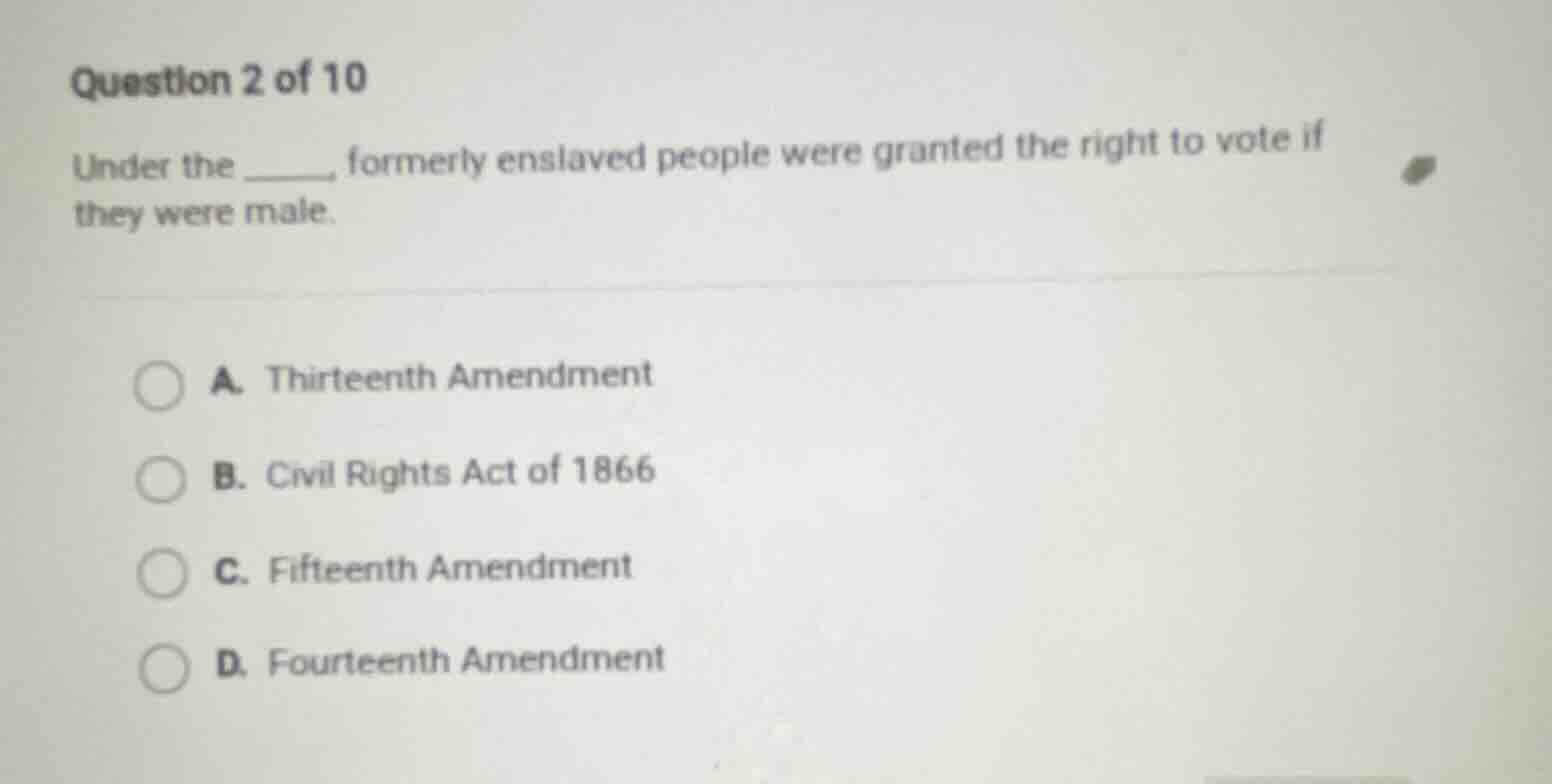
under the ______, formerly enslaved people were granted the right to vote if they were male.
a. thirteenth amendment
b. civil rights act of 1866
c. fifteenth amendment
d. fourteenth amendment
Analyze the question prompt
The question asks to identify the historical measure under which formerly enslaved people were granted the right to vote if they were male.
Evaluate the historical options
- Thirteenth Amendment: Abolished slavery and involuntary servitude, except as a punishment for a crime. It did not address voting rights.
- Civil Rights Act of 1866: Defined citizenship and affirmed that all citizens are equally protected by the law. It did not explicitly guarantee voting rights.
- Fifteenth Amendment: Prohibited the federal government and each state from denying a citizen the right to vote based on that citizen's "race, color, or previous condition of servitude." Since women were still excluded from voting at this time, this effectively granted the right to vote specifically to newly enfranchised male citizens, including formerly enslaved men.
- Fourteenth Amendment: Granted citizenship to all persons born or naturalized in the United States—including formerly enslaved people—and guaranteed equal protection under the laws. While it penalized states that limited male voting rights, it did not directly grant the right to vote.
Determine the correct choice
The Fifteenth Amendment is the specific constitutional amendment that prohibited disenfranchisement based on race, thereby granting voting rights to formerly enslaved men.

Snap & solve any problem in the app
Get step-by-step solutions on Sovi AI
Photo-based solutions with guided steps
Explore more problems and detailed explanations
- (A) Thirteenth Amendment
- (B) Civil Rights Act of 1866
- (C) Fifteenth Amendment (Correct answer)
- (D) Fourteenth Amendment