QUESTION IMAGE
Question
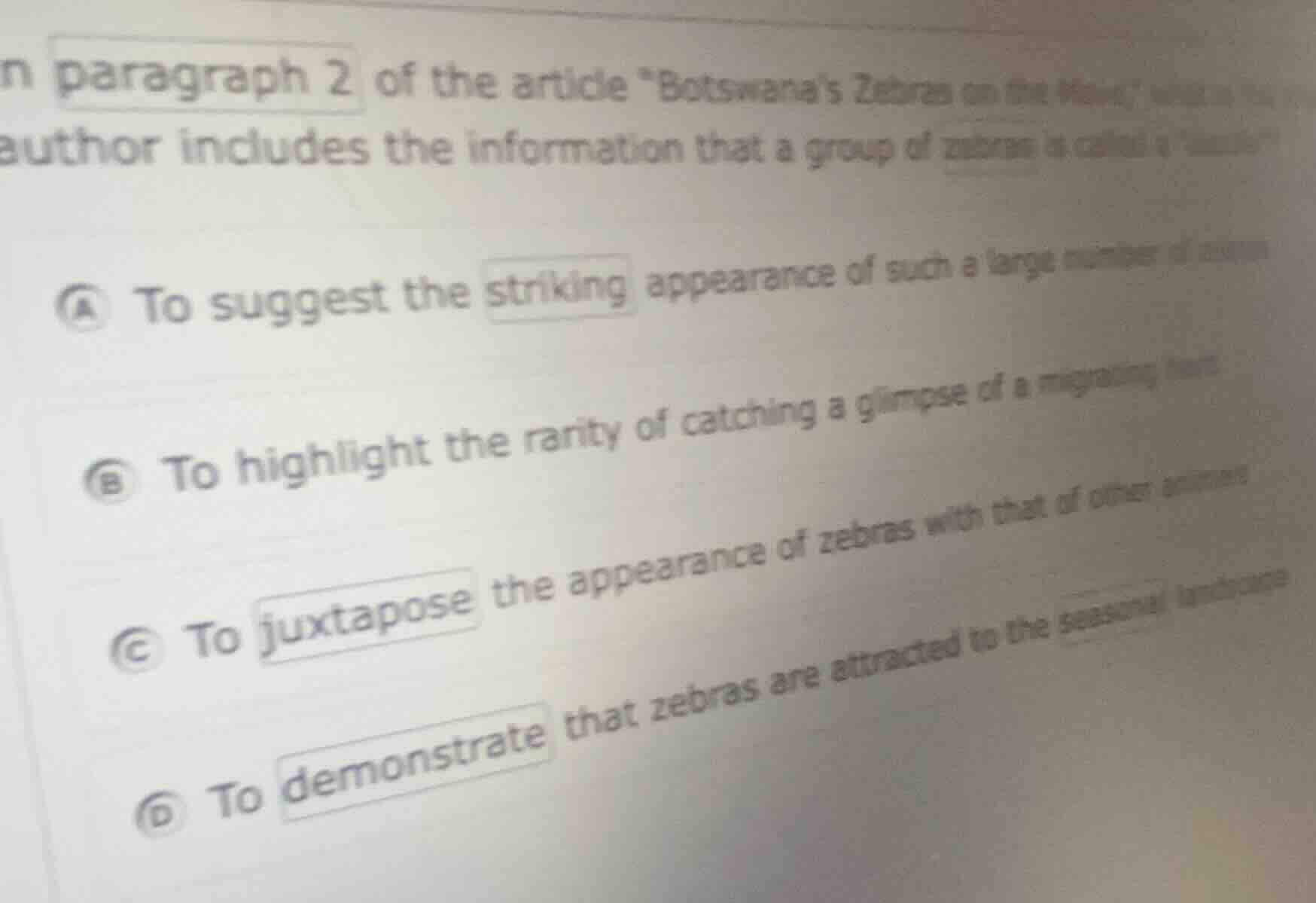
in paragraph 2 of the article \botswanas zebras on the move,\ why the author includes the information that a group of zebras is called a \dazzle\?
a to suggest the striking appearance of such a large number of zebras
b to highlight the rarity of catching a glimpse of a migrating herd
c to juxtapose the appearance of zebras with that of other animals
d to demonstrate that zebras are attracted to the seasonal landscape
<pre_analysis>
{
"quality": "clear",
"question_count": 1,
"skills_matched": [
"direct_cot",
"multiple_choice_formatter",
"explain_then_answer",
"tutor"
],
"needs_drawing": false,
"concepts_used": [
"Rhetorical Strategies",
"Word Choice Impact"
],
"new_concepts": [
"Authorial Intent Analysis"
],
"current_concepts": [
"Rhetorical Strategies",
"Word Choice Impact",
"Authorial Intent Analysis"
]
}
</pre_analysis>
<reasoning>
Analyze the author's word choice
The question asks why the author mentions that a group of zebras is called a "dazzle" in paragraph 2. The term "dazzle" is a vivid collective noun. We must evaluate how this specific Word Choice Impact relates to the rhetorical purpose of the passage.
Evaluate the rhetorical purpose
Using the term "dazzle" to describe a group of zebras highlights their visual effect. When many striped zebras move together, they create a visually stunning, confusing, and striking pattern. This is a key Rhetorical Strategies choice to emphasize their physical appearance.
Match with the options
Option A states "To suggest the striking appearance of such a large number of zebras." This directly aligns with the definition and visual connotation of the word "dazzle," which means to blind temporarily or greatly impress with brilliance or contrast.
</reasoning>
<answer>
<mcq-correct>(A) To suggest the striking appearance of such a large number of zebras</mcq-correct>
<mcq-option>(B) To highlight the rarity of catching a glimpse of a migrating herd</mcq-option>
<mcq-option>(C) To juxtapose the appearance of zebras with that of other animals</mcq-option>
<mcq-option>(D) To demonstrate that zebras are attracted to the seasonal landscape</mcq-option>
</answer>
<post_analysis>
{
"subject": "Others",
"question_type": "Multiple Choice",
"knowledge_point": [
"Others",
"Reading Comprehension",
"Authorial Intent Analysis"
]
}
</post_analysis>
Snap & solve any problem in the app
Get step-by-step solutions on Sovi AI
Photo-based solutions with guided steps
Explore more problems and detailed explanations
<pre_analysis>
{
"quality": "clear",
"question_count": 1,
"skills_matched": [
"direct_cot",
"multiple_choice_formatter",
"explain_then_answer",
"tutor"
],
"needs_drawing": false,
"concepts_used": [
"Rhetorical Strategies",
"Word Choice Impact"
],
"new_concepts": [
"Authorial Intent Analysis"
],
"current_concepts": [
"Rhetorical Strategies",
"Word Choice Impact",
"Authorial Intent Analysis"
]
}
</pre_analysis>
<reasoning>
Analyze the author's word choice
The question asks why the author mentions that a group of zebras is called a "dazzle" in paragraph 2. The term "dazzle" is a vivid collective noun. We must evaluate how this specific Word Choice Impact relates to the rhetorical purpose of the passage.
Evaluate the rhetorical purpose
Using the term "dazzle" to describe a group of zebras highlights their visual effect. When many striped zebras move together, they create a visually stunning, confusing, and striking pattern. This is a key Rhetorical Strategies choice to emphasize their physical appearance.
Match with the options
Option A states "To suggest the striking appearance of such a large number of zebras." This directly aligns with the definition and visual connotation of the word "dazzle," which means to blind temporarily or greatly impress with brilliance or contrast.
</reasoning>
<answer>
<mcq-correct>(A) To suggest the striking appearance of such a large number of zebras</mcq-correct>
<mcq-option>(B) To highlight the rarity of catching a glimpse of a migrating herd</mcq-option>
<mcq-option>(C) To juxtapose the appearance of zebras with that of other animals</mcq-option>
<mcq-option>(D) To demonstrate that zebras are attracted to the seasonal landscape</mcq-option>
</answer>
<post_analysis>
{
"subject": "Others",
"question_type": "Multiple Choice",
"knowledge_point": [
"Others",
"Reading Comprehension",
"Authorial Intent Analysis"
]
}
</post_analysis>