Sovi.AI - AI Math Tutor

Scan to solve math questions

QUESTION IMAGE

• human activities such as farming, urbanization, and mining have led t…

Question

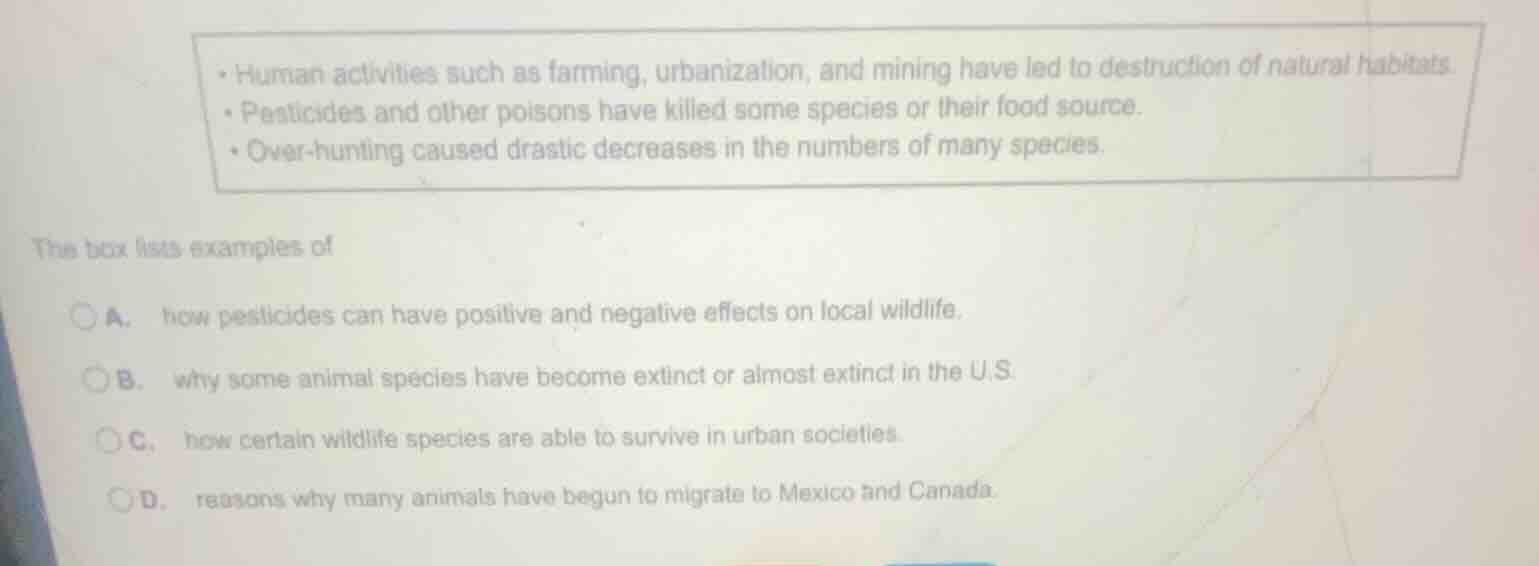
  • human activities such as farming, urbanization, and mining have led to destruction of natural habitats.
  • pesticides and other poisons have killed some species or their food source.
  • over-hunting caused drastic decreases in the numbers of many species.

the box lists examples of
a. how pesticides can have positive and negative effects on local wildlife.
b. why some animal species have become extinct or almost extinct in the u.s.
c. how certain wildlife species are able to survive in urban societies.
d. reasons why many animals have begun to migrate to mexico and canada.

Explanation:

Response

<pre_analysis>
{
"quality": "clear",
"question_count": 1,
"skills_matched": [
"direct_cot",
"multiple_choice_formatter",
"explain_then_answer",
"tutor"
],
"needs_drawing": false,
"concepts_used": [],
"new_concepts": [
"Human Impact on Ecosystems",
"Causes of Extinction"
],
"current_concepts": [
"Human Impact on Ecosystems",
"Causes of Extinction"
]
}
</pre_analysis>

<reasoning>

Analyze the listed examples

The box lists three major points:

  • Human activities like farming, urbanization, and mining destroy natural habitats.
  • Pesticides and poisons kill species or their food sources.
  • Over-hunting causes drastic decreases in species populations.

Relate examples to the options

These points describe destructive human impacts on wildlife populations. Let's evaluate the choices:

  • A is incorrect because the box mentions only negative effects, not positive ones, and goes beyond just pesticides.
  • B is correct because habitat destruction, poisoning, and over-hunting are primary reasons why species become extinct or endangered.
  • C is incorrect because the box describes threats to survival, not how species adapt or survive.
  • D is incorrect because the text does not mention migration to other countries.

Formulate the final conclusion

The listed factors are classic drivers of biodiversity loss and extinction. Therefore, they represent reasons why some animal species have become extinct or almost extinct.
</reasoning>

<answer>
<mcq-option>A. how pesticides can have positive and negative effects on local wildlife.</mcq-option>
<mcq-correct>B. why some animal species have become extinct or almost extinct in the U.S.</mcq-correct>
<mcq-option>C. how certain wildlife species are able to survive in urban societies.</mcq-option>
<mcq-option>D. reasons why many animals have begun to migrate to Mexico and Canada.</mcq-option>
</answer>

<post_analysis>
{
"subject": "Natural Science",
"question_type": "Multiple Choice",
"knowledge_point": [
"Natural Science",
"Biology",
"Human Impact on Ecosystems"
]
}
</post_analysis>

Answer:

<pre_analysis>
{
"quality": "clear",
"question_count": 1,
"skills_matched": [
"direct_cot",
"multiple_choice_formatter",
"explain_then_answer",
"tutor"
],
"needs_drawing": false,
"concepts_used": [],
"new_concepts": [
"Human Impact on Ecosystems",
"Causes of Extinction"
],
"current_concepts": [
"Human Impact on Ecosystems",
"Causes of Extinction"
]
}
</pre_analysis>

<reasoning>

Analyze the listed examples

The box lists three major points:

  • Human activities like farming, urbanization, and mining destroy natural habitats.
  • Pesticides and poisons kill species or their food sources.
  • Over-hunting causes drastic decreases in species populations.

Relate examples to the options

These points describe destructive human impacts on wildlife populations. Let's evaluate the choices:

  • A is incorrect because the box mentions only negative effects, not positive ones, and goes beyond just pesticides.
  • B is correct because habitat destruction, poisoning, and over-hunting are primary reasons why species become extinct or endangered.
  • C is incorrect because the box describes threats to survival, not how species adapt or survive.
  • D is incorrect because the text does not mention migration to other countries.

Formulate the final conclusion

The listed factors are classic drivers of biodiversity loss and extinction. Therefore, they represent reasons why some animal species have become extinct or almost extinct.
</reasoning>

<answer>
<mcq-option>A. how pesticides can have positive and negative effects on local wildlife.</mcq-option>
<mcq-correct>B. why some animal species have become extinct or almost extinct in the U.S.</mcq-correct>
<mcq-option>C. how certain wildlife species are able to survive in urban societies.</mcq-option>
<mcq-option>D. reasons why many animals have begun to migrate to Mexico and Canada.</mcq-option>
</answer>

<post_analysis>
{
"subject": "Natural Science",
"question_type": "Multiple Choice",
"knowledge_point": [
"Natural Science",
"Biology",
"Human Impact on Ecosystems"
]
}
</post_analysis>