QUESTION IMAGE
Question
Question was provided via image upload.
Analyze the question and options
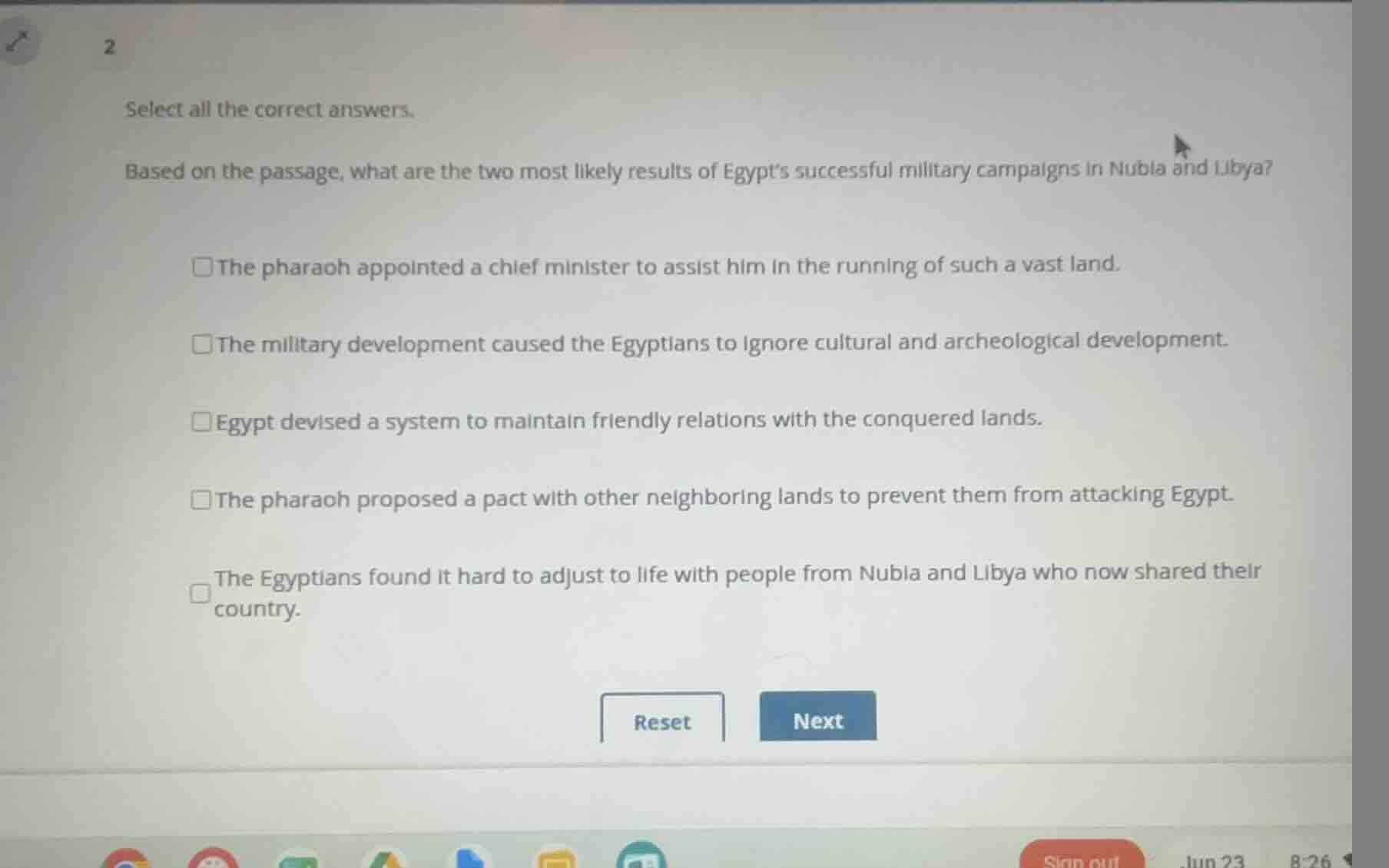
The question asks for the two most likely results of Egypt's successful military campaigns in Nubia and Libya based on historical context (as the referenced passage is not visible in the image). Let's evaluate the historical plausibility of each option:
- The pharaoh appointed a chief minister to assist him in the running of such a vast land.
- Analysis: Historically, as Egypt expanded its territory through military campaigns (especially during the New Kingdom), the administration of a larger empire became increasingly complex. Pharaohs relied heavily on chief ministers (viziers) and regional deputies to manage these vast territories. This is a highly likely administrative consequence.
- The military development caused the Egyptians to ignore cultural and archeological development.
- Analysis: This is historically inaccurate. Military success and territorial expansion brought immense wealth, resources, and captives into Egypt, which actually fueled monumental construction, cultural achievements, and artistic development.
- Egypt devised a system to maintain friendly relations with the conquered lands.
- Analysis: Egypt established administrative systems, garrisons, and vassal relationships to maintain control and secure tribute from conquered regions like Nubia and Libya, rather than focusing on egalitarian "friendly relations."
- The pharaoh proposed a pact with other neighboring lands to prevent them from attacking Egypt.
- Analysis: While treaties existed (such as the famous Treaty of Kadesh with the Hittites), successful campaigns in nearby Nubia and Libya typically resulted in direct subjugation, colonization, or administrative integration rather than defensive pacts with those specific conquered regions.
- The Egyptians found it hard to adjust to life with people from Nubia and Libya who now shared their country.
- Analysis: Military campaigns led to the integration of foreign populations (as soldiers, laborers, and captives) into Egyptian society. Historical records indicate social tensions, integration challenges, and cultural adjustments as these populations became part of the domestic landscape.
Determine the two most likely correct options
Based on standard historical curricula regarding Ancient Egyptian expansion:
- The expansion of territory required administrative adaptation, specifically the delegation of authority to chief ministers (viziers) to manage the vast lands.
- The influx of conquered peoples from Nubia and Libya into Egypt created social integration dynamics and adjustments within Egyptian society.

Snap & solve any problem in the app
Get step-by-step solutions on Sovi AI
Photo-based solutions with guided steps
Explore more problems and detailed explanations
- The pharaoh appointed a chief minister to assist him in the running of such a vast land. (Correct answer)
- The military development caused the Egyptians to ignore cultural and archeological development.
- Egypt devised a system to maintain friendly relations with the conquered lands.
- The pharaoh proposed a pact with other neighboring lands to prevent them from attacking Egypt.
- The Egyptians found it hard to adjust to life with people from Nubia and Libya who now shared their country. (Correct answer)