QUESTION IMAGE
Question
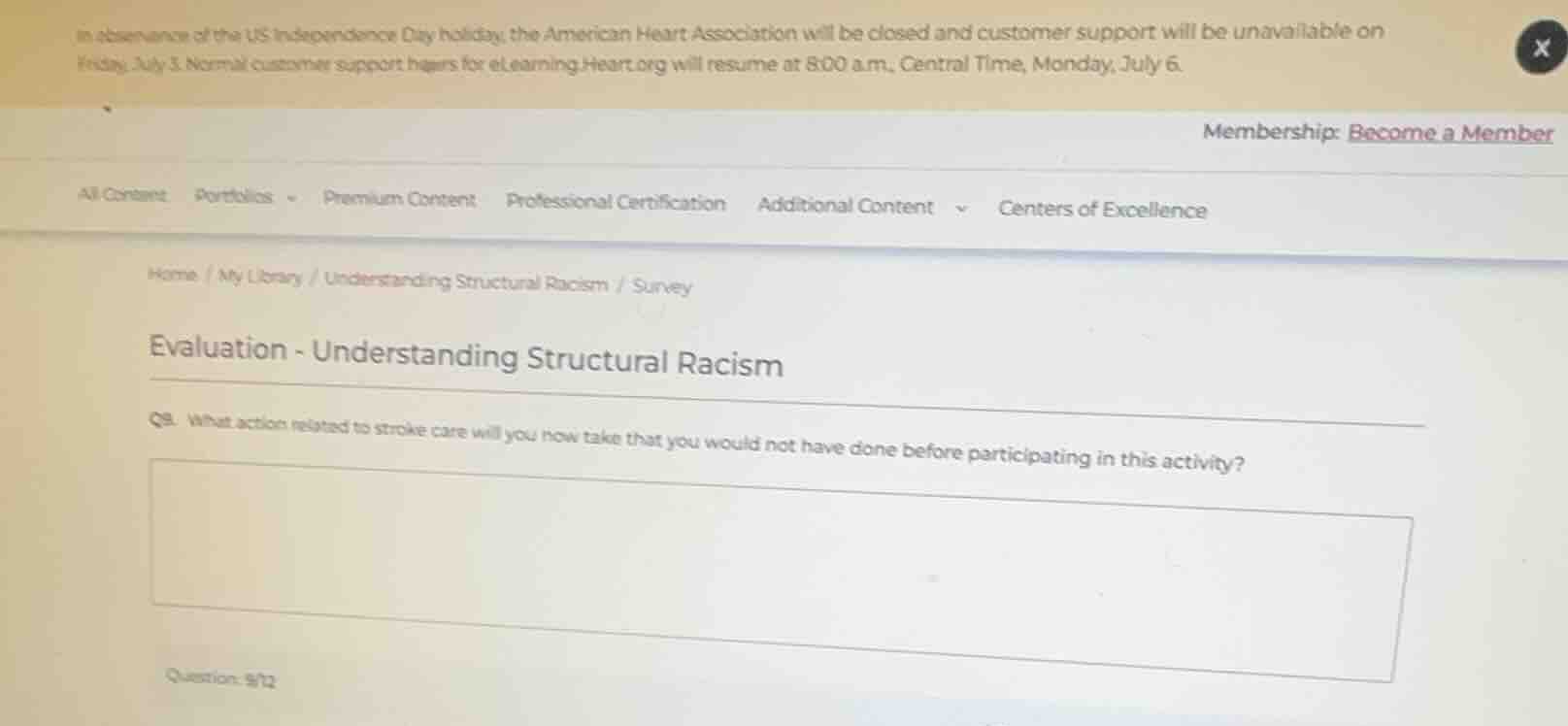
evaluation - understanding structural racism
q9. what action related to stroke care will you now take that you would not have done before participating in this activity?
Analyze the question context
The question is from an evaluation module titled "Understanding Structural Racism" hosted on an American Heart Association (AHA) platform. The prompt asks: "What action related to stroke care will you now take that you would not have done before participating in this activity?" This is an open-ended, reflective evaluation question rather than a factual test question with a single correct answer.
Connect structural racism to stroke care
To answer this constructively, we must connect the concepts of structural racism and health equity to clinical or community actions in stroke care. Structural racism in healthcare leads to disparities in stroke prevention, symptom recognition, emergency response times, and quality of clinical treatment for marginalized racial groups.
Formulate a reflective action plan
An appropriate professional response should focus on active measures to mitigate these disparities. Key actions include:
- Screening patients more systematically for social determinants of health (SDOH) that impact stroke risk and recovery.
- Utilizing culturally and linguistically appropriate stroke education materials to ensure all communities recognize stroke symptoms (using the FAST or BE FAST acronyms).
- Actively identifying and addressing implicit biases during clinical triage and treatment decisions to ensure equitable delivery of time-sensitive therapies like thrombolysis.

Snap & solve any problem in the app
Get step-by-step solutions on Sovi AI
Photo-based solutions with guided steps
Explore more problems and detailed explanations
Q9. What action related to stroke care will you now take that you would not have done before participating in this activity? <blank>I will actively screen for social determinants of health and address implicit bias during clinical triage to ensure equitable, timely delivery of stroke therapies to marginalized populations.</blank>