QUESTION IMAGE
Question
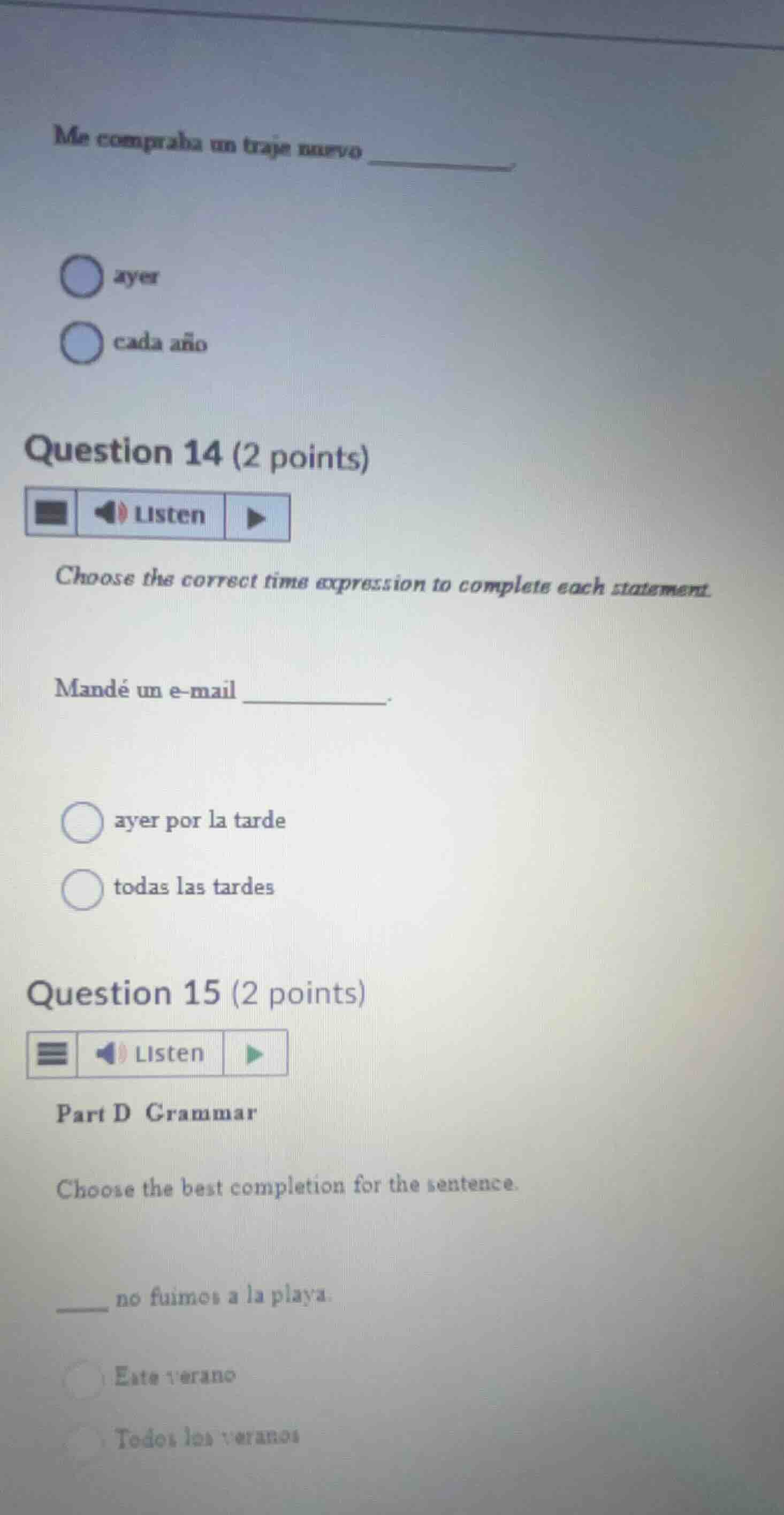
me compraba un traje nuevo _______
ayer
cada año
question 14 (2 points)
choose the correct time expression to complete each statement.
mandé un e-mail _______
ayer por la tarde
todas las tardes
question 15 (2 points)
part d grammar
choose the best completion for the sentence.
_______ no fuimos a la playa.
este verano
todos los veranos
<pre_analysis>
{
"quality": "clear",
"question_count": 3,
"skills_matched": [
"direct_cot",
"multiple_choice_formatter",
"explain_then_answer",
"quick"
],
"needs_drawing": false,
"concepts_used": [
"Spanish Preterite vs Imperfect",
"Spanish Time Expressions"
],
"new_concepts": [],
"current_concepts": [
"Spanish Preterite vs Imperfect",
"Spanish Time Expressions"
]
}
</pre_analysis>
<reasoning>
Analyze the first sentence
The verb "compraba" is in the imperfect tense, which describes habitual or ongoing past actions. "Cada año" (every year) triggers the imperfect tense, whereas "ayer" (yesterday) triggers the preterite tense.
Analyze Question 14
The verb "mandé" is in the preterite tense, which describes completed actions at a specific point in time. "Ayer por la tarde" (yesterday afternoon) triggers the preterite tense, whereas "todas las tardes" (every afternoon) triggers the imperfect tense.
Analyze Question 15
The verb "fuimos" is in the preterite tense, which describes a completed action in the past. "Este verano" (this summer) refers to a specific, completed timeframe, whereas "todos los veranos" (every summer) triggers the imperfect tense.
</reasoning>
<answer>
Question 1
<mcq-option>ayer</mcq-option>
<mcq-correct>cada año</mcq-correct>
Question 14
<mcq-correct>ayer por la tarde</mcq-correct>
<mcq-option>todas las tardes</mcq-option>
Question 15
<mcq-correct>Este verano</mcq-correct>
<mcq-option>Todos los veranos</mcq-option>
</answer>
<post_analysis>
{
"subject": "Others",
"question_type": "Multiple Choice",
"knowledge_point": [
"Others",
"Spanish",
"Spanish Preterite vs Imperfect"
]
}
</post_analysis>
Snap & solve any problem in the app
Get step-by-step solutions on Sovi AI
Photo-based solutions with guided steps
Explore more problems and detailed explanations
<pre_analysis>
{
"quality": "clear",
"question_count": 3,
"skills_matched": [
"direct_cot",
"multiple_choice_formatter",
"explain_then_answer",
"quick"
],
"needs_drawing": false,
"concepts_used": [
"Spanish Preterite vs Imperfect",
"Spanish Time Expressions"
],
"new_concepts": [],
"current_concepts": [
"Spanish Preterite vs Imperfect",
"Spanish Time Expressions"
]
}
</pre_analysis>
<reasoning>
Analyze the first sentence
The verb "compraba" is in the imperfect tense, which describes habitual or ongoing past actions. "Cada año" (every year) triggers the imperfect tense, whereas "ayer" (yesterday) triggers the preterite tense.
Analyze Question 14
The verb "mandé" is in the preterite tense, which describes completed actions at a specific point in time. "Ayer por la tarde" (yesterday afternoon) triggers the preterite tense, whereas "todas las tardes" (every afternoon) triggers the imperfect tense.
Analyze Question 15
The verb "fuimos" is in the preterite tense, which describes a completed action in the past. "Este verano" (this summer) refers to a specific, completed timeframe, whereas "todos los veranos" (every summer) triggers the imperfect tense.
</reasoning>
<answer>
Question 1
<mcq-option>ayer</mcq-option>
<mcq-correct>cada año</mcq-correct>
Question 14
<mcq-correct>ayer por la tarde</mcq-correct>
<mcq-option>todas las tardes</mcq-option>
Question 15
<mcq-correct>Este verano</mcq-correct>
<mcq-option>Todos los veranos</mcq-option>
</answer>
<post_analysis>
{
"subject": "Others",
"question_type": "Multiple Choice",
"knowledge_point": [
"Others",
"Spanish",
"Spanish Preterite vs Imperfect"
]
}
</post_analysis>