QUESTION IMAGE
Question
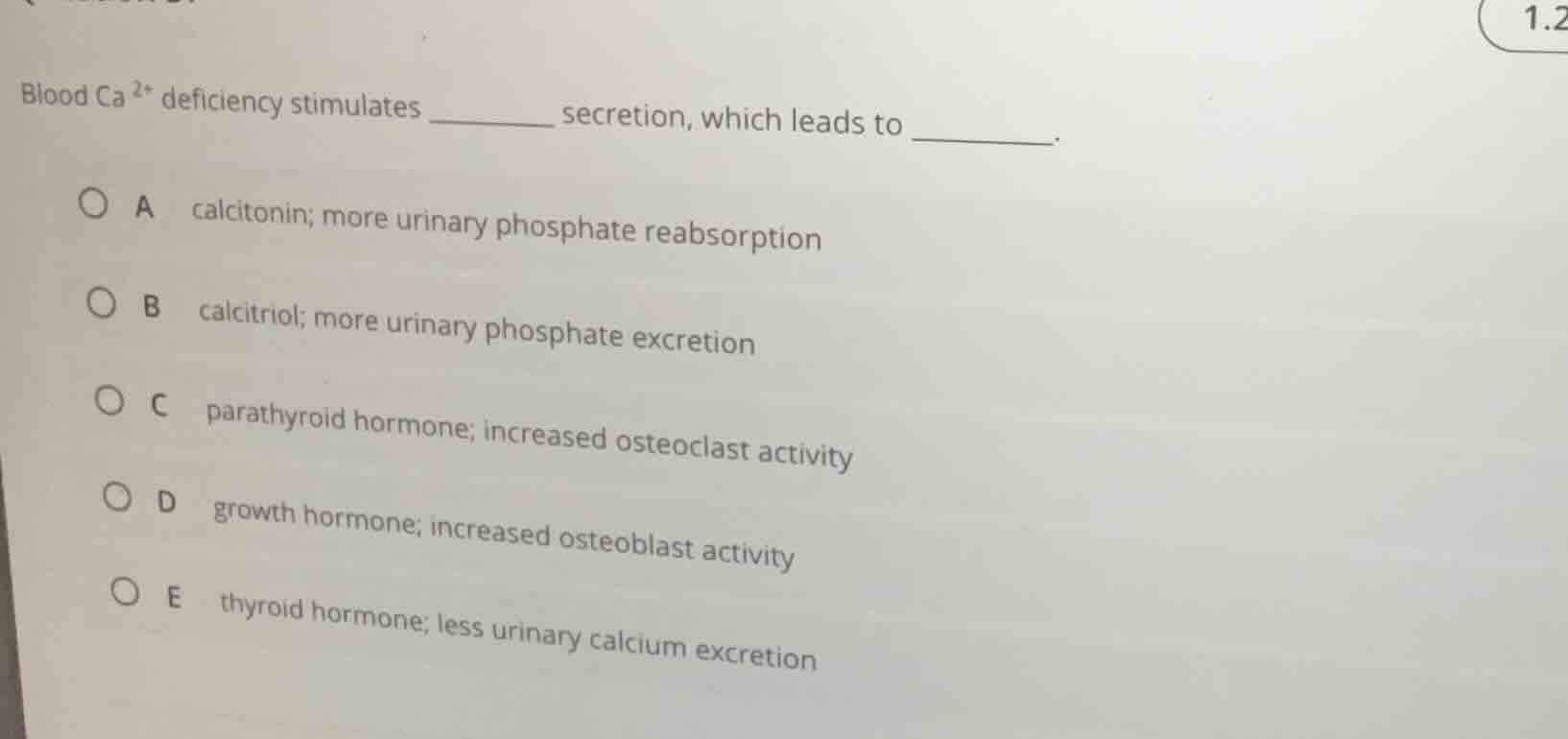
blood \\(\text{ca}^{2+}\\) deficiency stimulates ______ secretion, which leads to ______.
a. calcitonin; more urinary phosphate reabsorption
b. calcitriol; more urinary phosphate excretion
c. parathyroid hormone; increased osteoclast activity
d. growth hormone; increased osteoblast activity
e. thyroid hormone; less urinary calcium excretion
Analyze blood calcium deficiency
Low blood calcium levels (hypocalcemia) trigger a homeostatic response to restore normal calcium levels. The body detects this deficiency and stimulates endocrine glands to release specific hormones that act on target tissues to increase blood calcium.
Identify the stimulated hormone
The primary hormone secreted in response to low blood calcium levels is parathyroid hormone (PTH), which is released by the parathyroid glands. Calcitonin is secreted in response to high blood calcium, while calcitriol (active vitamin D) synthesis is downstream of PTH stimulation.
Determine the physiological effect
Parathyroid hormone (PTH) acts to increase blood calcium levels through several mechanisms. One of its primary actions is to stimulate Osteoclasts, which are bone-resorbing cells. This breakdown of bone matrix releases calcium back into the bloodstream to correct the deficiency.
Evaluate the given options
- Option A: Calcitonin is stimulated by high calcium, not deficiency.
- Option B: Calcitriol is synthesized later, but PTH is the direct primary response, and calcitriol increases calcium absorption rather than primarily promoting phosphate excretion in this direct sequence.
- Option C: Parathyroid hormone is stimulated, leading to increased osteoclast activity. This matches the physiological mechanism perfectly.
- Option D: Growth hormone is not the primary regulator of acute calcium homeostasis.
- Option E: Thyroid hormone does not regulate acute calcium levels in this manner.

Snap & solve any problem in the app
Get step-by-step solutions on Sovi AI
Photo-based solutions with guided steps
Explore more problems and detailed explanations
- (A) calcitonin; more urinary phosphate reabsorption
- (B) calcitriol; more urinary phosphate excretion
- (C) parathyroid hormone; increased osteoclast activity (Correct answer)
- (D) growth hormone; increased osteoblast activity
- (E) thyroid hormone; less urinary calcium excretion