QUESTION IMAGE
Question
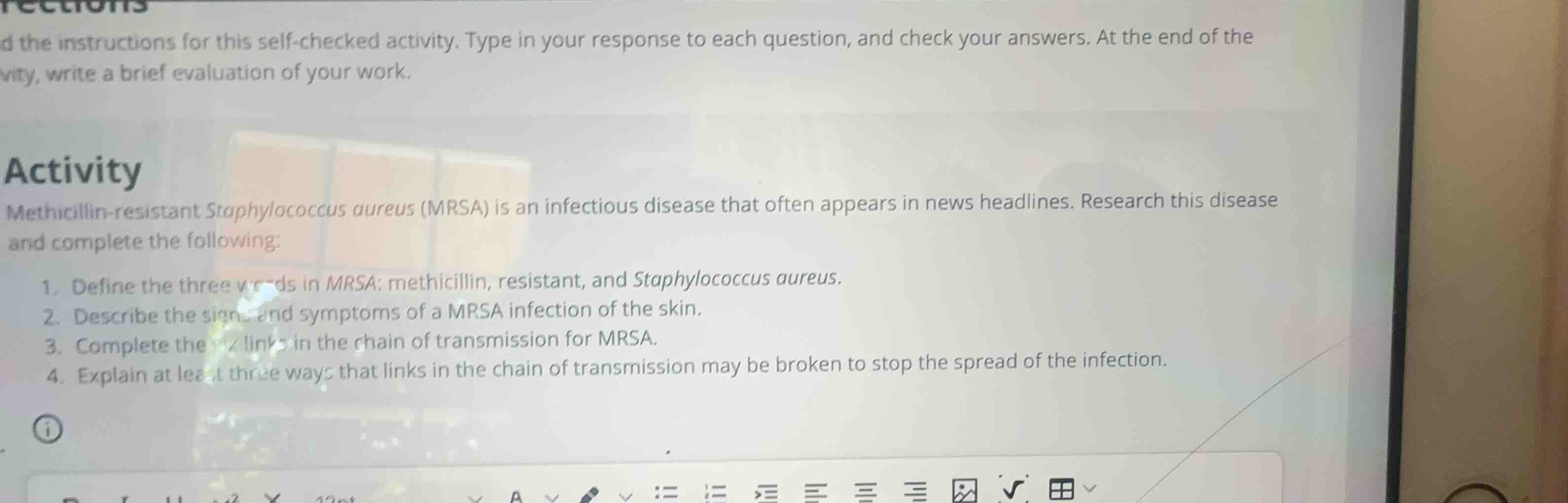
activity
methicillin-resistant staphylococcus aureus (mrsa) is an infectious disease that often appears in news headlines. research this disease and complete the following:
- define the three words in mrsa: methicillin, resistant, and staphylococcus aureus.
- describe the signs and symptoms of a mrsa infection of the skin.
- complete the links in the chain of transmission for mrsa.
- explain at least three ways that links in the chain of transmission may be broken to stop the spread of the infection.
Define methicillin, resistant, and Staphylococcus aureus
- Methicillin: A strong penicillin-type antibiotic used to treat bacterial infections.
- Resistant: The ability of bacteria to survive and grow despite exposure to antibiotics designed to kill them.
- Staphylococcus aureus: A common species of bacteria found on human skin and in the nose that can cause infections.
Describe skin symptoms of MRSA
- Red, swollen, painful bumps that resemble pimples or spider bites.
- Warm to the touch and filled with pus or other drainage.
- Often accompanied by a fever.
Complete the six links in the chain of transmission
- Infectious Agent: Staphylococcus aureus (MRSA) bacteria.
- Reservoir: Human skin, nose, or contaminated surfaces.
- Portal of Exit: Open wounds, cuts, or respiratory droplets.
- Mode of Transmission: Direct skin-to-skin contact or touching contaminated objects.
- Portal of Entry: Broken skin, cuts, scrapes, or surgical sites.
- Susceptible Host: Anyone, especially individuals with weakened immune systems or open wounds.
Explain three ways to break the chain of transmission
- Hand Hygiene: Wash hands frequently with soap and water or use alcohol-based hand sanitizer to break the mode of transmission.
- Wound Care: Keep cuts, scrapes, and wounds clean and covered with dry, sterile bandages to block portals of exit and entry.
- Sanitization: Clean and disinfect shared items and surfaces (like gym equipment or countertops) regularly to eliminate the reservoir.

Snap & solve any problem in the app
Get step-by-step solutions on Sovi AI
Photo-based solutions with guided steps
Explore more problems and detailed explanations
Question 1
- Methicillin: A type of penicillin antibiotic used to treat bacterial infections.
- Resistant: The ability of bacteria to withstand the effects of an antibiotic.
- Staphylococcus aureus: A common bacterium that lives on the skin and nose, which can cause infections.
Question 2
- Red, swollen, and painful bumps (often resembling pimples or spider bites).
- Warmth around the infected area.
- Pus or fluid drainage from the bump.
- Fever.
Question 3
- Infectious Agent: Staphylococcus aureus (MRSA bacteria).
- Reservoir: Human skin, nasal passages, or contaminated objects.
- Portal of Exit: Drainage from wounds, skin flakes, or respiratory droplets.
- Mode of Transmission: Direct skin-to-skin contact or indirect contact with contaminated surfaces.
- Portal of Entry: Cuts, scrapes, surgical wounds, or mucous membranes.
- Susceptible Host: Individuals with open wounds, weakened immune systems, or those in close-contact environments.
Question 4
- Wash hands regularly: Breaks the Mode of Transmission by removing bacteria from hands.
- Keep wounds covered: Breaks the Portal of Exit and Portal of Entry by preventing bacteria from escaping or entering the body.
- Avoid sharing personal items: Breaks the Mode of Transmission by preventing the spread of bacteria via towels, razors, or clothing.