QUESTION IMAGE
Question
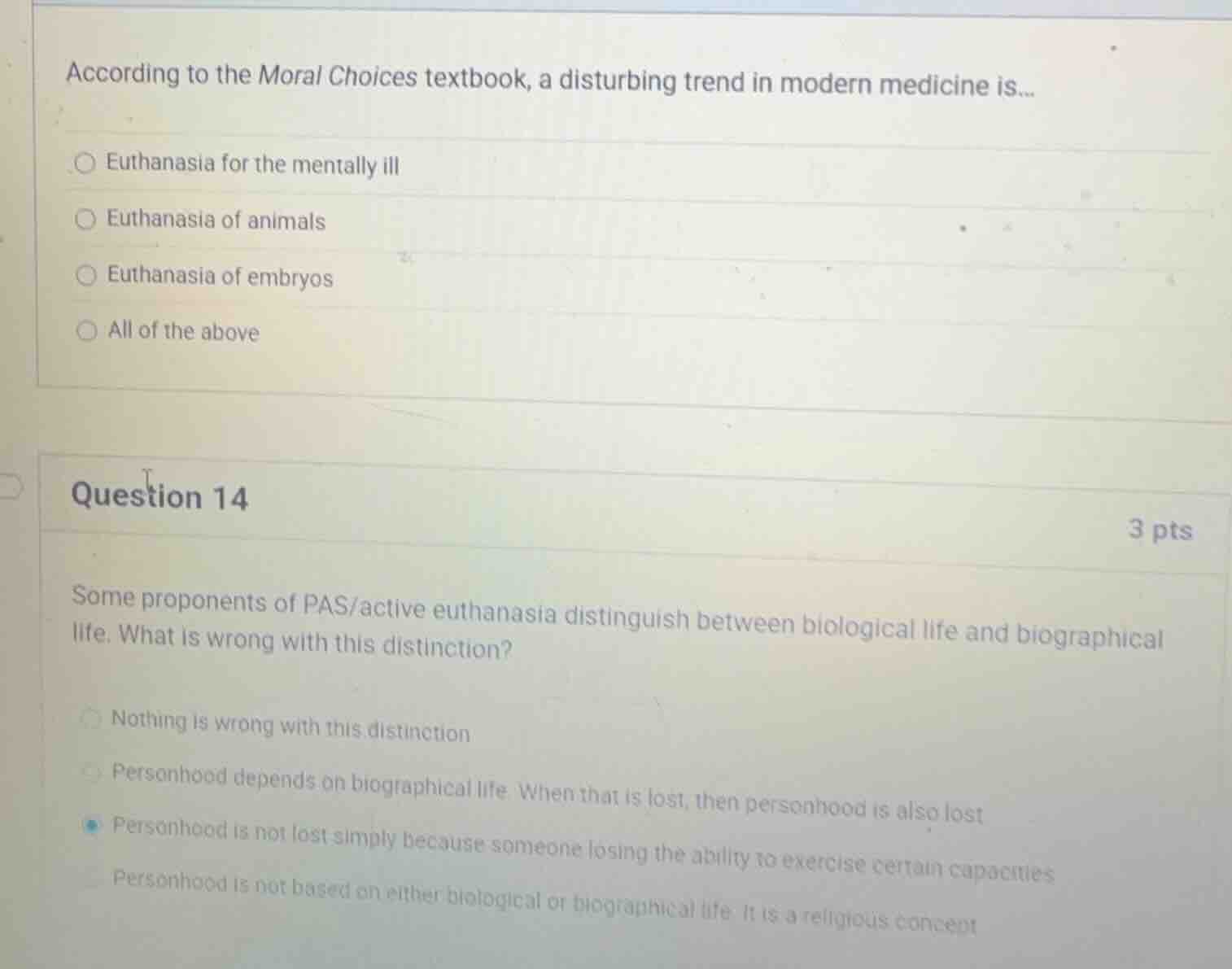
according to the moral choices textbook, a disturbing trend in modern medicine is...
euthanasia for the mentally ill
euthanasia of animals
euthanasia of embryos
all of the above
question 14
3 pts
some proponents of pas/active euthanasia distinguish between biological life and biographical life. what is wrong with this distinction?
nothing is wrong with this distinction
personhood depends on biographical life. when that is lost, then personhood is also lost
personhood is not lost simply because someone losing the ability to exercise certain capacities
personhood is not based on either biological or biographical life. it is a religious concept
🆕 New Concept Discovered: Bioethical Analysis of Personhood
Evaluating moral arguments surrounding the value of human life.
Step 1: Understand the distinction between biological and biographical life
In bioethical debates concerning Physician-Assisted Suicide (PAS) and active euthanasia, some proponents distinguish between:
- Biological life: The physical, physiological state of being alive (e.g., breathing, cell division, metabolic function).
- Biographical life: The life of relationships, memories, plans, and conscious experiences that make up a person's history.
Proponents of euthanasia often argue that when a patient's "biographical life" is effectively over (due to severe cognitive decline or permanent unconsciousness), their "personhood" is lost, even if their "biological life" continues.
Step 2: Identify the critique of this distinction
Critics of this distinction—such as the perspective presented in Christian ethics and textbooks like Moral Choices—argue that this separation is deeply problematic.
The core objection is that personhood is intrinsic to being a living human being. It is not something that is lost simply because an individual loses the functional ability to exercise certain cognitive or physical capacities (such as memory, communication, or self-awareness). Reducing personhood only to "biographical life" devalues vulnerable individuals who are disabled, comatose, or suffering from dementia.
Step 3: Evaluate the given options
- "Nothing is wrong with this distinction": Incorrect, as the question asks what is wrong with it from a critical ethical perspective.
- "Personhood depends on biographical life. When that is lost, then personhood is also lost": Incorrect, as this statement supports the distinction rather than identifying what is wrong with it.
- "Personhood is not lost simply because someone losing the ability to exercise certain capacities": Correct. This directly critiques the distinction by asserting that intrinsic personhood remains intact regardless of functional limitations.
- "Personhood is not based on either biological or biographical life. It is a religious concept": Incorrect, as personhood is also a central philosophical and legal concept, not exclusively religious.

Snap & solve any problem in the app
Get step-by-step solutions on Sovi AI
Photo-based solutions with guided steps
Explore more problems and detailed explanations
Personhood is not lost simply because someone losing the ability to exercise certain capacities