QUESTION IMAGE
Question
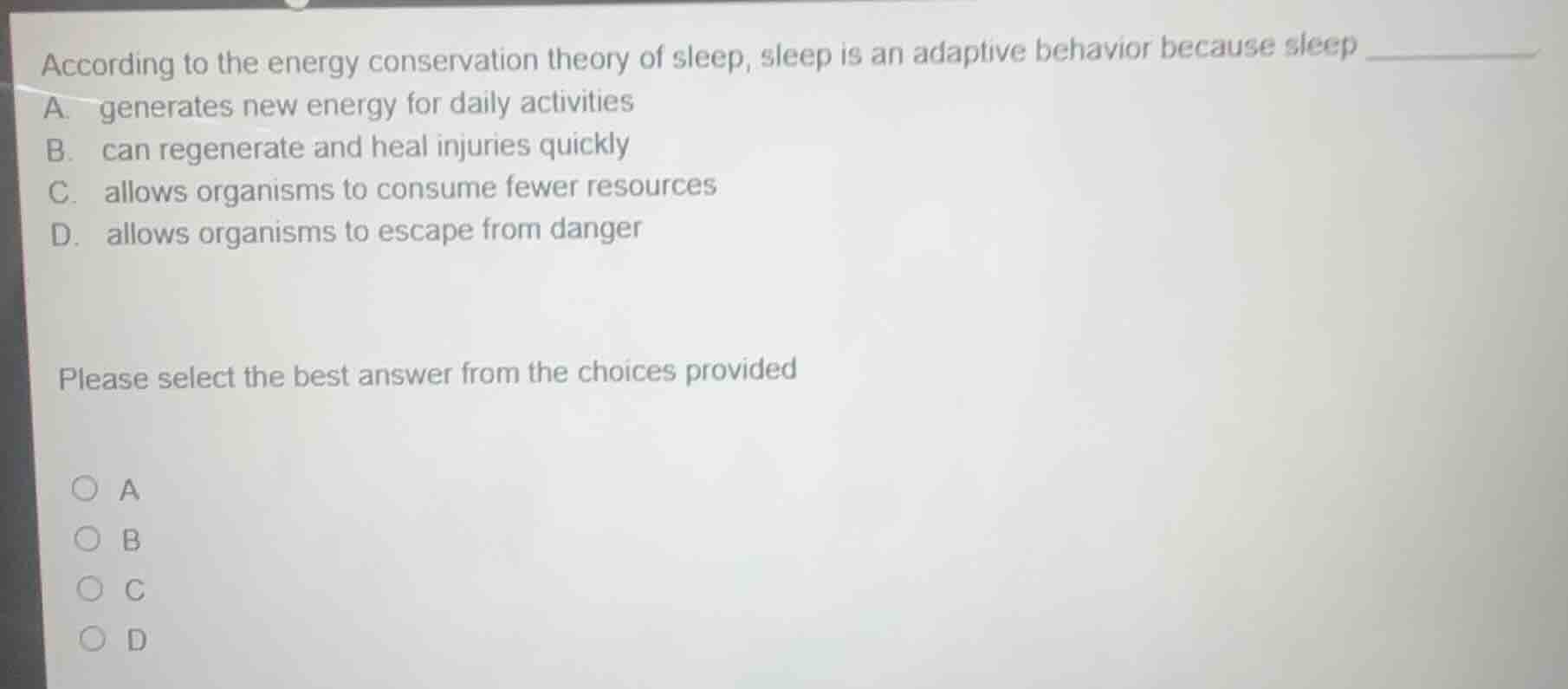
according to the energy conservation theory of sleep, sleep is an adaptive behavior because sleep _______
a. generates new energy for daily activities
b. can regenerate and heal injuries quickly
c. allows organisms to consume fewer resources
d. allows organisms to escape from danger
please select the best answer from the choices provided
a
b
c
d
<pre_analysis>
{
"quality": "clear",
"question_count": 1,
"skills_matched": [
"direct_cot",
"multiple_choice_formatter",
"explain_then_answer",
"quick"
],
"needs_drawing": false,
"concepts_used": [],
"new_concepts": [
"Energy Conservation Theory",
"Adaptive Theories of Sleep"
],
"current_concepts": [
"Energy Conservation Theory",
"Adaptive Theories of Sleep"
]
}
</pre_analysis>
<reasoning>
Analyze the core premise of the energy conservation theory of sleep
The energy conservation theory of sleep suggests that a primary function of sleep is to reduce an organism's energy expenditure during times when searching for food is least efficient or most dangerous.
Evaluate the given options against the theory
- (A) Sleep does not generate new physical energy out of nothing; it conserves existing resources.
- (B) Regeneration and healing relate to restorative theories of sleep rather than energy conservation.
- (C) Consuming fewer resources directly aligns with the concept of conserving energy by lowering metabolic rate and body temperature.
- (D) Escaping danger relates to the evolutionary/adaptive protection theory of sleep (avoiding predators).
Determine the correct choice
Option C is the only choice that directly reflects the conservation of energy resources.
</reasoning>
<answer>
<mcq-option>A. generates new energy for daily activities</mcq-option>
<mcq-option>B. can regenerate and heal injuries quickly</mcq-option>
<mcq-correct>C. allows organisms to consume fewer resources</mcq-correct>
<mcq-option>D. allows organisms to escape from danger</mcq-option>
</answer>
<post_analysis>
{
"subject": "Natural Science",
"question_type": "Multiple Choice",
"knowledge_point": [
"Natural Science",
"Biology",
"Sleep Theories"
]
}
</post_analysis>
Snap & solve any problem in the app
Get step-by-step solutions on Sovi AI
Photo-based solutions with guided steps
Explore more problems and detailed explanations
<pre_analysis>
{
"quality": "clear",
"question_count": 1,
"skills_matched": [
"direct_cot",
"multiple_choice_formatter",
"explain_then_answer",
"quick"
],
"needs_drawing": false,
"concepts_used": [],
"new_concepts": [
"Energy Conservation Theory",
"Adaptive Theories of Sleep"
],
"current_concepts": [
"Energy Conservation Theory",
"Adaptive Theories of Sleep"
]
}
</pre_analysis>
<reasoning>
Analyze the core premise of the energy conservation theory of sleep
The energy conservation theory of sleep suggests that a primary function of sleep is to reduce an organism's energy expenditure during times when searching for food is least efficient or most dangerous.
Evaluate the given options against the theory
- (A) Sleep does not generate new physical energy out of nothing; it conserves existing resources.
- (B) Regeneration and healing relate to restorative theories of sleep rather than energy conservation.
- (C) Consuming fewer resources directly aligns with the concept of conserving energy by lowering metabolic rate and body temperature.
- (D) Escaping danger relates to the evolutionary/adaptive protection theory of sleep (avoiding predators).
Determine the correct choice
Option C is the only choice that directly reflects the conservation of energy resources.
</reasoning>
<answer>
<mcq-option>A. generates new energy for daily activities</mcq-option>
<mcq-option>B. can regenerate and heal injuries quickly</mcq-option>
<mcq-correct>C. allows organisms to consume fewer resources</mcq-correct>
<mcq-option>D. allows organisms to escape from danger</mcq-option>
</answer>
<post_analysis>
{
"subject": "Natural Science",
"question_type": "Multiple Choice",
"knowledge_point": [
"Natural Science",
"Biology",
"Sleep Theories"
]
}
</post_analysis>