Sovi.AI - AI Math Tutor

Scan to solve math questions

QUESTION IMAGE

which statement is true about dopamine? a. dopamine discourages healthy…

Question

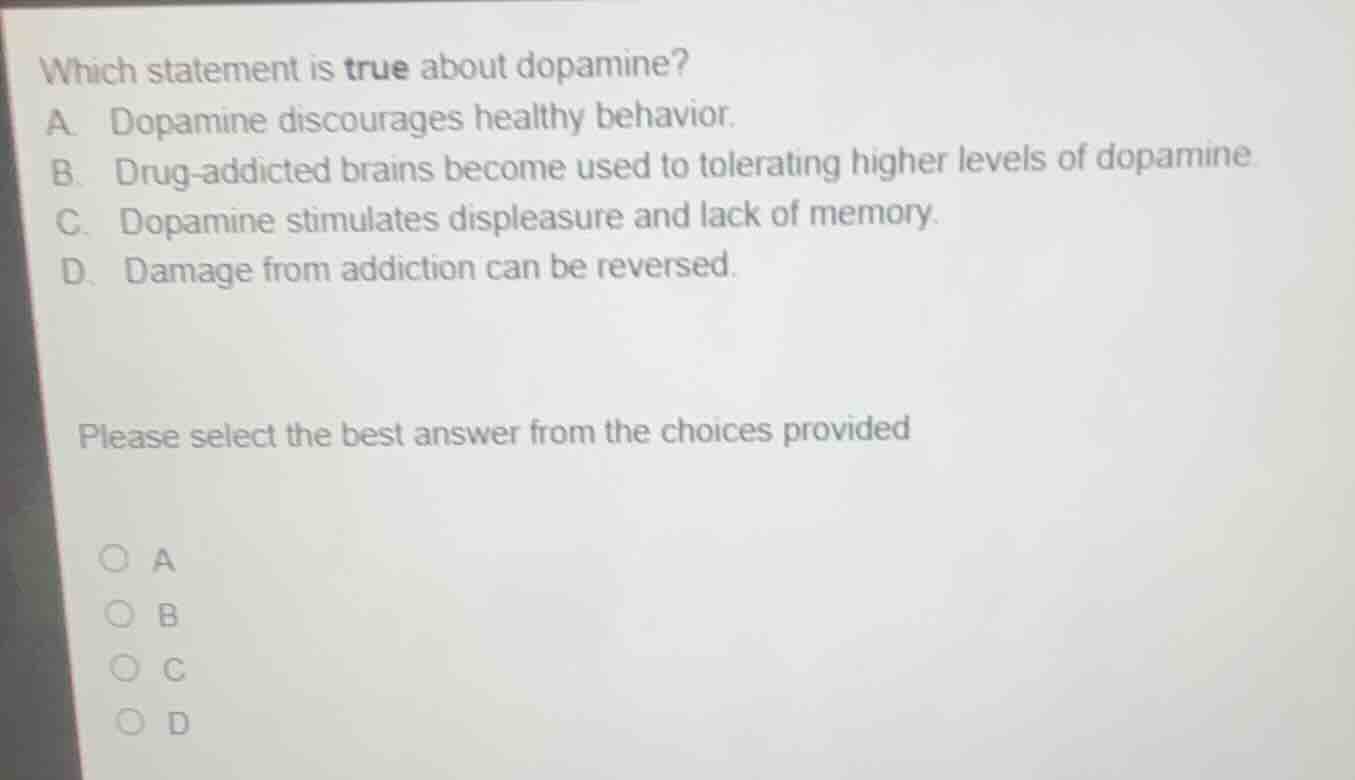
which statement is true about dopamine?
a. dopamine discourages healthy behavior.
b. drug-addicted brains become used to tolerating higher levels of dopamine.
c. dopamine stimulates displeasure and lack of memory.
d. damage from addiction can be reversed.

please select the best answer from the choices provided

a
b
c
d

Explanation:

Response

<pre_analysis>
{
"quality": "clear",
"question_count": 1,
"skills_matched": [
"direct_cot",
"multiple_choice_formatter",
"explain_then_answer",
"quick"
],
"needs_drawing": false,
"concepts_used": [
"Neurotransmitters",
"Cycle of Addiction"
],
"new_concepts": [],
"current_concepts": [
"Neurotransmitters",
"Cycle of Addiction",
"Drug Tolerance"
]
}
</pre_analysis>

<reasoning>

Analyze the options regarding dopamine and addiction

  • Option A: Dopamine is a neurotransmitter that reinforces healthy behaviors (like eating and socializing) by producing feelings of pleasure, so it does not discourage healthy behavior.
  • Option B: In drug-addicted brains, repeated surges of high levels of dopamine lead to down-regulation of dopamine receptors. The brain adapts to these abnormally high levels, developing tolerance and requiring more of the substance to achieve the same effect.
  • Option C: Dopamine is associated with pleasure, reward, and reinforcement, not displeasure.
  • Option D: While some recovery is possible, severe damage from long-term addiction is often not fully or easily reversed, making this statement less universally true or accurate than B in the context of basic neurobiology.

Determine the correct statement

  • Option B accurately describes the physiological adaptation (tolerance) that occurs in the brain's reward system due to chronic drug use.

</reasoning>

<answer>
<mcq-option>(A) Dopamine discourages healthy behavior.</mcq-option>
<mcq-correct>(B) Drug-addicted brains become used to tolerating higher levels of dopamine.</mcq-correct>
<mcq-option>(C) Dopamine stimulates displeasure and lack of memory.</mcq-option>
<mcq-option>(D) Damage from addiction can be reversed.</mcq-option>
</answer>

<post_analysis>
{
"subject": "Natural Science",
"question_type": "Multiple Choice",
"knowledge_point": [
"Natural Science",
"Biology",
"Neurobiology and Addiction"
]
}
</post_analysis>

Answer:

<pre_analysis>
{
"quality": "clear",
"question_count": 1,
"skills_matched": [
"direct_cot",
"multiple_choice_formatter",
"explain_then_answer",
"quick"
],
"needs_drawing": false,
"concepts_used": [
"Neurotransmitters",
"Cycle of Addiction"
],
"new_concepts": [],
"current_concepts": [
"Neurotransmitters",
"Cycle of Addiction",
"Drug Tolerance"
]
}
</pre_analysis>

<reasoning>

Analyze the options regarding dopamine and addiction

  • Option A: Dopamine is a neurotransmitter that reinforces healthy behaviors (like eating and socializing) by producing feelings of pleasure, so it does not discourage healthy behavior.
  • Option B: In drug-addicted brains, repeated surges of high levels of dopamine lead to down-regulation of dopamine receptors. The brain adapts to these abnormally high levels, developing tolerance and requiring more of the substance to achieve the same effect.
  • Option C: Dopamine is associated with pleasure, reward, and reinforcement, not displeasure.
  • Option D: While some recovery is possible, severe damage from long-term addiction is often not fully or easily reversed, making this statement less universally true or accurate than B in the context of basic neurobiology.

Determine the correct statement

  • Option B accurately describes the physiological adaptation (tolerance) that occurs in the brain's reward system due to chronic drug use.

</reasoning>

<answer>
<mcq-option>(A) Dopamine discourages healthy behavior.</mcq-option>
<mcq-correct>(B) Drug-addicted brains become used to tolerating higher levels of dopamine.</mcq-correct>
<mcq-option>(C) Dopamine stimulates displeasure and lack of memory.</mcq-option>
<mcq-option>(D) Damage from addiction can be reversed.</mcq-option>
</answer>

<post_analysis>
{
"subject": "Natural Science",
"question_type": "Multiple Choice",
"knowledge_point": [
"Natural Science",
"Biology",
"Neurobiology and Addiction"
]
}
</post_analysis>