QUESTION IMAGE
Question
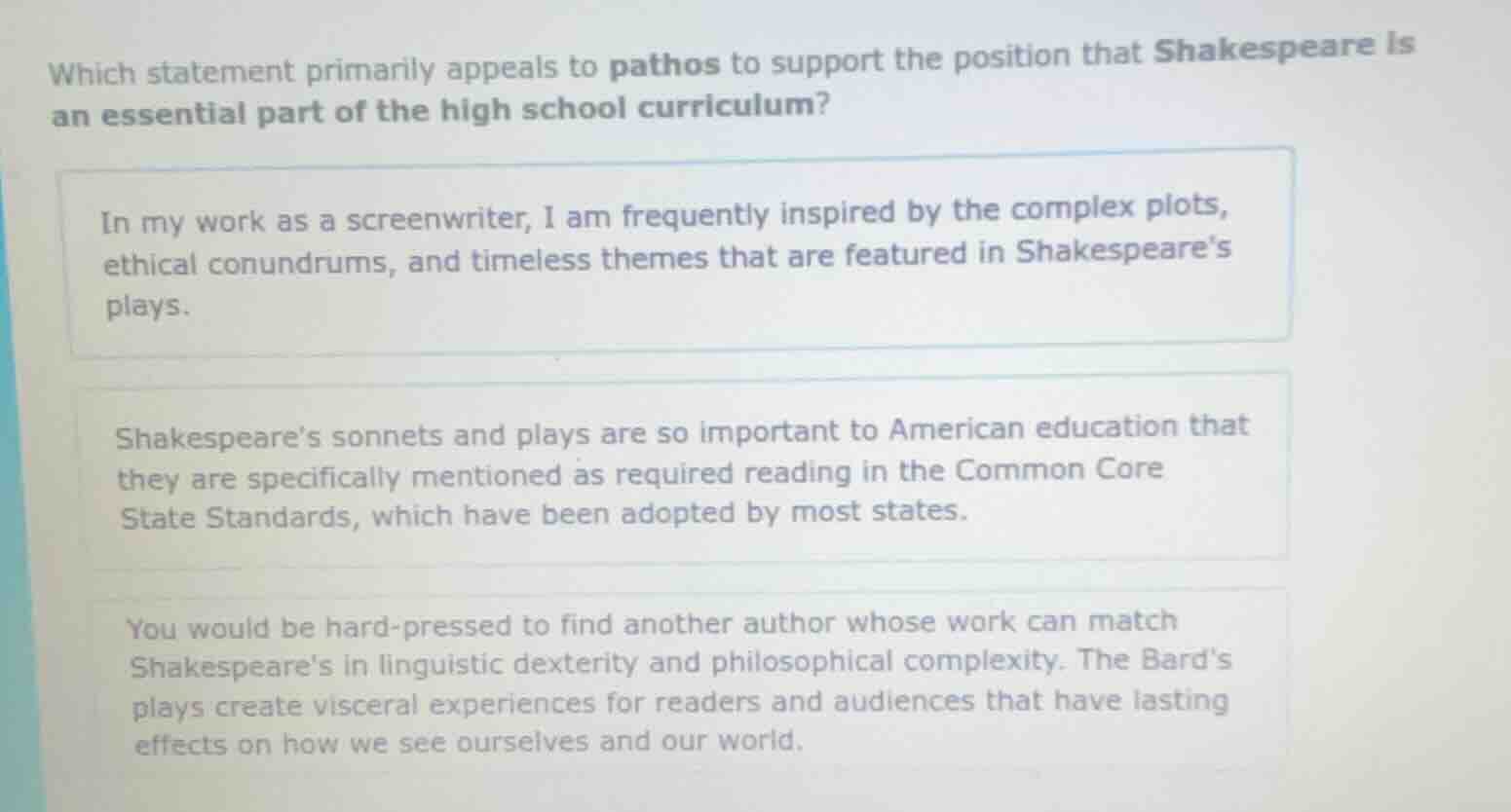
which statement primarily appeals to pathos to support the position that shakespeare is an essential part of the high school curriculum? in my work as a screenwriter, i am frequently inspired by the complex plots, ethical conundrums, and timeless themes that are featured in shakespeare’s plays. shakespeare’s sonnets and plays are so important to american education that they are specifically mentioned as required reading in the common core state standards, which have been adopted by most states. you would be hard - pressed to find another author whose work can match shakespeares in linguistic dexterity and philosophical complexity. the bard’s plays create visceral experiences for readers and audiences that have lasting effects on how we see ourselves and our world.
To determine which statement appeals to pathos (emotional appeal), we analyze each option:
- The first option focuses on the speaker's professional inspiration (more of an anecdotal or ethos - like appeal, as it's about the speaker's experience).
- The second option uses the Common Core State Standards as a reference, which is an appeal to logos (logic/authority of standards).
- The third option mentions that Shakespeare's plays "create visceral experiences for readers and audiences that have lasting effects on how we see ourselves and our world." Visceral experiences and their impact on self - perception and worldview are emotional in nature, appealing to the audience's emotions (pathos) by highlighting the emotional and psychological impact of Shakespeare's work.

Snap & solve any problem in the app
Get step-by-step solutions on Sovi AI
Photo-based solutions with guided steps
Explore more problems and detailed explanations
The statement "You would be hard - pressed to find another author whose work can match Shakespeare's in linguistic dexterity and philosophical complexity. The Bard’s plays create visceral experiences for readers and audiences that have lasting effects on how we see ourselves and our world." (the third statement)