QUESTION IMAGE
Question
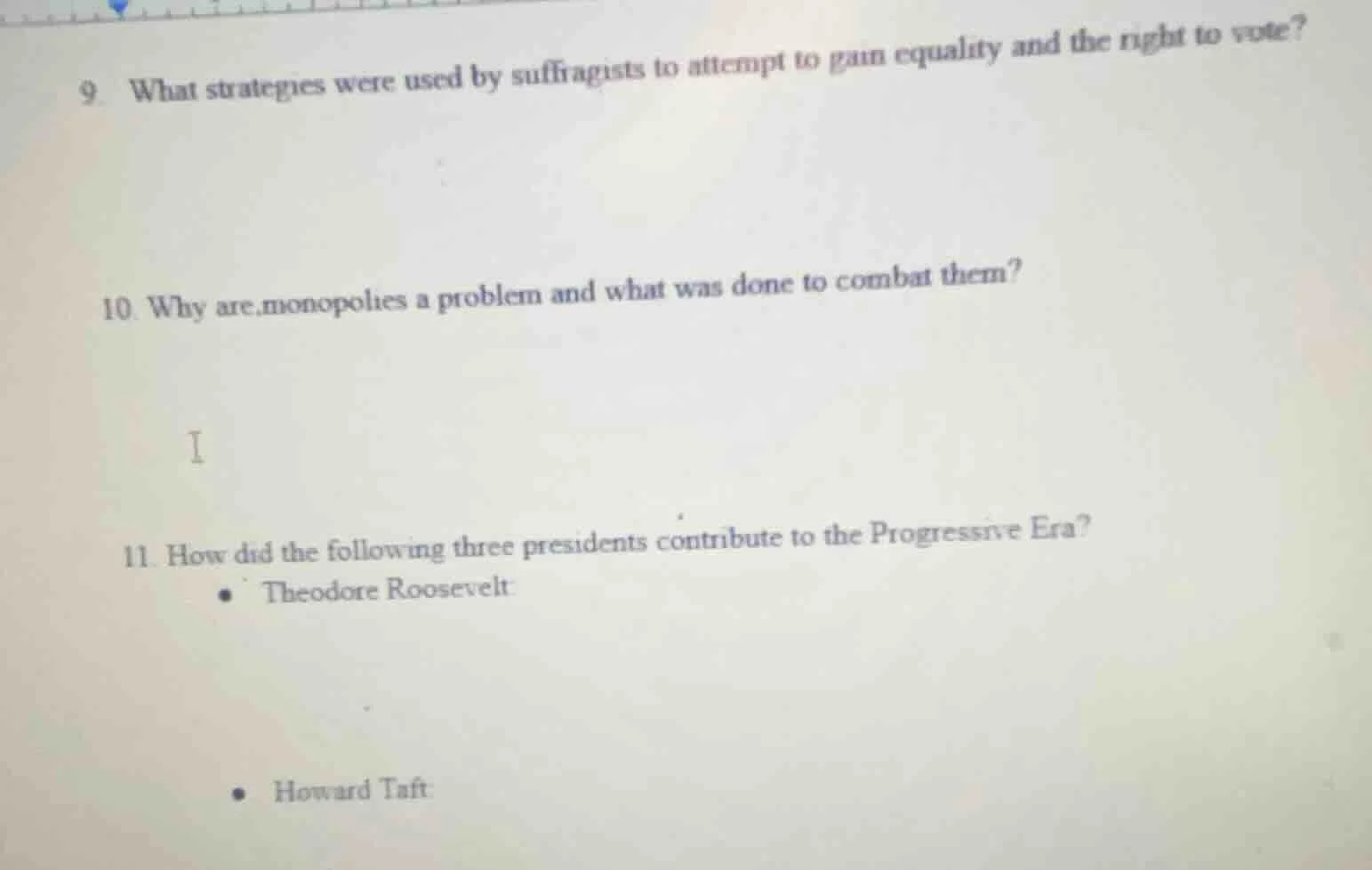
- what strategies were used by suffragists to attempt to gain equality and the right to vote?
- why are monopolies a problem and what was done to combat them?
- how did the following three presidents contribute to the progressive era?
- theodore roosevelt
- howard taft
Question 9
Suffragists (for women's suffrage) used strategies like lobbying legislators, organizing parades/rallies, picketing (e.g., outside the White House), publishing literature, and using civil disobedience. They also worked at state levels to gain voting rights and leveraged public speaking to raise awareness.
Monopolies are a problem because they reduce competition, allowing firms to set high prices, limit consumer choice, and stifle innovation. To combat them, the US passed the Sherman Antitrust Act (1890) to prohibit monopolistic practices, the Clayton Antitrust Act (1914) to strengthen antitrust laws, and the Federal Trade Commission (FTC) was created to regulate unfair business practices. Presidents like Theodore Roosevelt "busted" trusts (e.g., Standard Oil) through legal action.
Theodore Roosevelt contributed to the Progressive Era by "trust - busting" (breaking up monopolies like Standard Oil), advocating for consumer protection (Pure Food and Drug Act, Meat Inspection Act), promoting conservation (establishing national parks, forests), and advancing labor rights (mediating the 1902 coal strike). He also pushed for regulatory reforms to curb corporate abuse.

Snap & solve any problem in the app
Get step-by-step solutions on Sovi AI
Photo-based solutions with guided steps
Explore more problems and detailed explanations
Suffragists used strategies including lobbying, organizing public demonstrations (parades, rallies), picketing (e.g., at the White House), publishing propaganda/literature, engaging in civil disobedience, working for state - level suffrage victories, and using public speaking to advocate for equality and the right to vote.