QUESTION IMAGE
Question
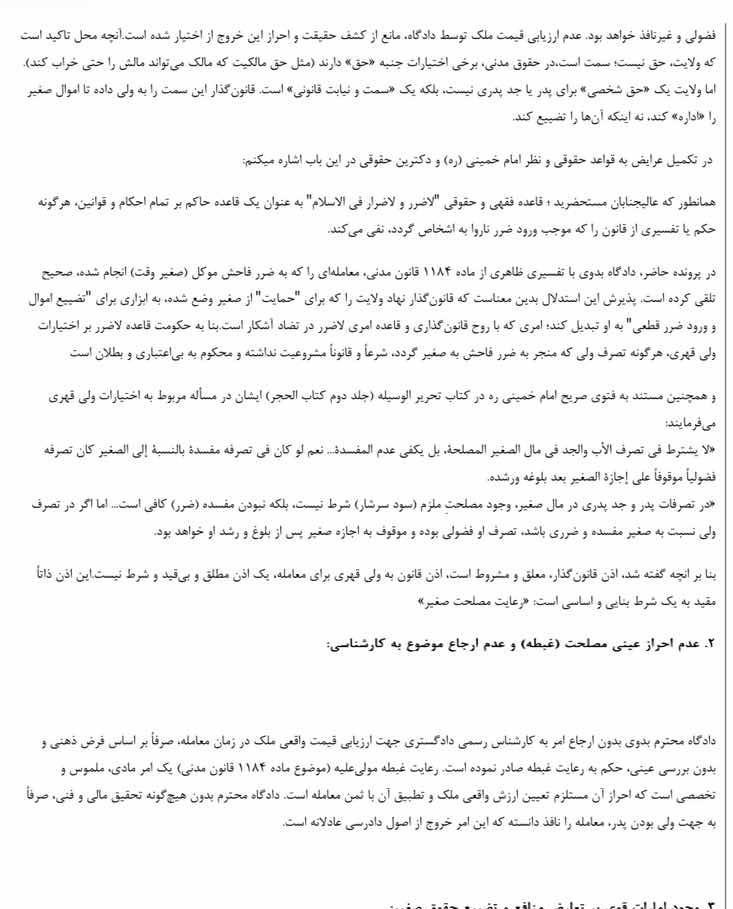
فضولی و غیرنافذ خواهد بود. عدم ارزیابی قیمت ملک توسط دادگاه، مانع از کشف حقیقت و احراز این خروج از اختیار شده است. آنچه محل تاکید است که ولایت، حق نیست؛ سمت است، در حقوق مدنی، برخی اختیارات جنبه «حق» دارند (مثل حق مالکیت که مالک میتواند مالش را حتی خراب کند). اما ولایت یک «حق شخصی» برای پدر یا جد پدری نیست، بلکه یک «سمت و نیابت قانونی» است. قانونگذار این سمت را به ولی داده تا اموال صغیر را «اداره» کند، نه اینکه آنها را تضییع کند.
در تکمیل عرایض به قواعد حقوقی و نظر امام خمینی (ره) و دکترین حقوقی در این باب اشاره میکنم:
همانطور که عالیجنابان مستحضرید ؛ قاعده فقهی و حقوقی \لاضرر و لاضرار فی الاسلام\ به عنوان یک قاعده حاکم بر تمام احکام و قوانین، هرگونه حکم یا تفسیری از قانون را که موجب ورود ضرر ناروا به اشخاص گردد، نفی میکند.
در پرونده حاضر، دادگاه بدوی با تفسیری ظاهری از ماده ۱۱۸۴ قانون مدنی، معاملهای را که به ضرر فاحش موکل (صغیر وقت) انجام شده، صحیح تلقی کرده است. پذیرش این استدلال بدین معناست که قانونگذار نهاد ولایت را که برای \حمایت\ از صغیر وضع شده، به ابزاری برای \تضییع اموال و ورود ضرر قطعی\ به او تبدیل کند؛ امری که با روح قانونگذاری و قاعده امری لاضرر در تضاد آشکار است. بنا به حکومت قاعده لاضرر بر اختیارات ولی قهری، هرگونه تصرف ولی که منجر به ضرر فاحش به صغیر گردد، شرعاً و قانوناً مشروعیت نداشته و محکوم به بیاعتباری و بطلان است
و همچنین مستند به فتوی صریح امام خمینی ره در کتاب تحریر الوسیله (جلد دوم کتاب الحجر) ایشان در مسأله مربوط به اختیارات ولی قهری می فرمایند:
«لا يشترط في تصرف الأب والجد في مال الصغير المصلحة، بل يكفي عدم المفسدة... نعم لو كان في تصرفه مفسدة بالنسبة إلى الصغير كان تصرفه فضولياً موقوفاً على إجازة الصغير بعد بلوغه ورشده.
«در تصرفات پدر و جد پدری در مال صغیر، وجود مصلحت ملزم (سود سرشار) شرط نیست، بلکه نبودن مفسده (ضرر) کافی است... اما اگر در تصرف ولی نسبت به صغیر مفسده و ضرری باشد، تصرف او فضولی بوده و موقوف به اجازه صغیر پس از بلوغ و رشد او خواهد بود.
بنا بر آنچه گفته شد، اذن قانونگذار، معلق و مشروط است، اذن قانون به ولی قهری برای معامله، یک اذن مطلق و بی قید و شرط نیست. این اذن ذاتاً مقید به یک شرط بنایی و اساسی است: «رعایت مصلحت صغیر»
۲. عدم احراز عینی مصلحت (غبطه) و عدم ارجاع موضوع به کارشناسی:
دادگاه محترم بدوی بدون ارجاع امر به کارشناس رسمی دادگستری جهت ارزیابی قیمت واقعی ملک در زمان معامله، صرفاً بر اساس فرض ذهنی و بدون بررسی عینی، حکم به رعایت غبطه صادر نموده است. رعایت غبطه مولیعلیه (موضوع ماده ۱۱۸۴ قانون مدنی) یک امر مادی، ملموس و تخصصی است که احراز آن مستلزم تعیین ارزش واقعی ملک و تطبیق آن با ثمن معامله است. دادگاه محترم بدون هیچگونه تحقیق مالی و فنی، صرفاً به جهت ولی بودن پدر، معامله را نافذ دانسته که این امر خروج از اصول دادرسی عادلانه است.
🆕 New Concept Discovered: Legal Guardianship and Minor's Best Interest (Ghibteh)
Step 1: Analyze the Legal Argument Regarding Guardianship (Vilayat)
The text argues that legal guardianship (\textit{Vilayat}) of a father or paternal grandfather over a minor is not an absolute personal right (\textit{Haqq-e Shakhsi}) that allows them to act arbitrarily. Instead, it is a legal duty and representation (\textit{Samt va Niyabat-e Qanuni}) designed solely to manage and protect the minor's assets, not to waste them.
Under Article 1184 of the Iranian Civil Code, any transaction by the guardian that causes severe financial harm (\textit{Zarar-e Fahesh}) to the minor is invalid. The text invokes the Islamic jurisprudential rule of "No Harm" (\textit{La Darar wa La Dirar}) to argue that any action by the guardian resulting in clear harm to the minor lacks religious and legal legitimacy, rendering the transaction unauthorized (\textit{Fuzuli}) and subject to invalidation unless ratified by the minor upon reaching maturity.
Step 2: Analyze the Requirement of Verifying the Minor's Best Interest (Ghibteh)
The second section of the text addresses the failure of the primary court to verify whether the transaction served the minor's best interest (\textit{Ghibteh}).
The text asserts that:
- Verifying \textit{Ghibteh} (the objective benefit or lack of harm to the minor) is a concrete, objective, and specialized matter.
- To establish whether the transaction was beneficial, the court must determine the actual market value of the property at the time of the transaction and compare it with the sale price.
- The primary court ruled that the guardian observed the minor's best interest based purely on mental assumptions, without referring the valuation of the property to an official court expert (\textit{Karshenas-e Rasmi-ye Dadgostari}).
- Failing to obtain an expert valuation to verify \textit{Ghibteh} constitutes a violation of the principles of a fair trial (\textit{Osool-e Dadrasi-ye Adelaneh}).

Snap & solve any problem in the app
Get step-by-step solutions on Sovi AI
Photo-based solutions with guided steps
Explore more problems and detailed explanations
The provided text is a legal defense or bill of petition (\textit{Layeheh-ye Defayi}) arguing against the validity of a property transaction conducted by a minor's legal guardian (father). The core arguments are:
- Limitation of Guardianship: Legal guardianship is a duty of protection, not an absolute right. Under Article 1184 of the Civil Code and the Islamic rule of "No Harm" (\textit{La Darar}), any transaction by a guardian that causes severe financial harm to a minor is unauthorized (\textit{Fuzuli}) and legally invalid.
- Failure to Verify the Minor's Best Interest (\textit{Ghibteh}): The primary court erred by assuming the transaction was beneficial to the minor solely because it was conducted by the father. To legally establish \textit{Ghibteh}, the court was required to refer the property to an official judicial expert to determine its true market value at the time of the sale. Failing to do so violates the principles of a fair trial.