QUESTION IMAGE
Question
select the correct answer.
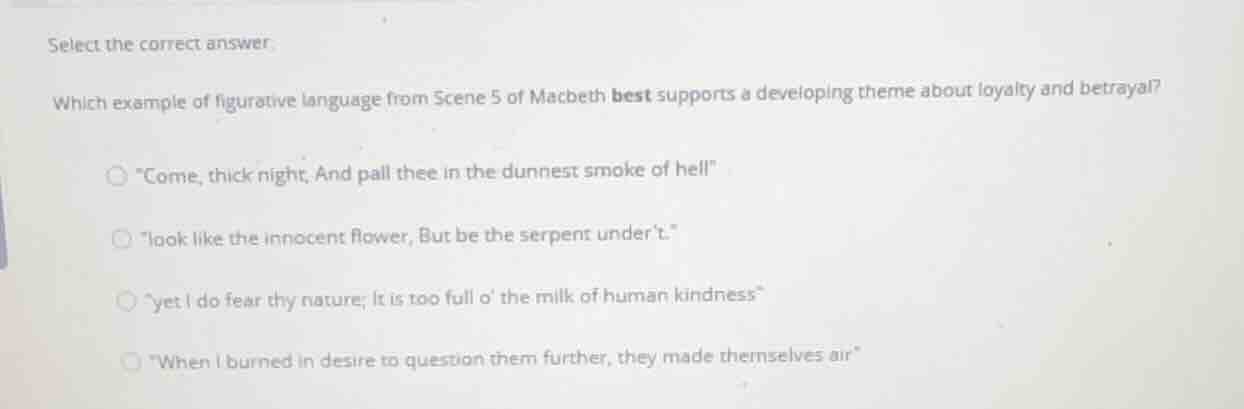
which example of figurative language from scene 5 of macbeth best supports a developing theme about loyalty and betrayal?
\come, thick night, and pall thee in the dunnest smoke of hell\
\look like the innocent flower, but be the serpent undert.\
\yet i do fear thy nature; it is too full o the milk of human kindness\
\when i burned in desire to question them further, they made themselves air\
Analyze the theme of loyalty and betrayal
The question asks for an example of figurative language from Act 1, Scene 5 of Macbeth that best supports a developing theme about loyalty and betrayal.
Evaluate the given options
- "Come, thick night, And pall thee in the dunnest smoke of hell": This quote uses personification and dark imagery to show Lady Macbeth calling upon darkness to mask her murderous intentions, which relates to ambition and evil rather than directly contrasting loyalty with betrayal.
- "look like the innocent flower, But be the serpent under't.": This quote uses a simile ("look like the innocent flower") and a metaphor ("be the serpent under't") to advise Macbeth to project a false image of loyalty (the innocent flower) while hiding his treacherous intent to betray King Duncan (the serpent). This directly addresses the theme of appearance versus reality in the context of loyalty and betrayal.
- "yet I do fear thy nature; It is too full o' the milk of human kindness": This metaphor describes Macbeth's gentle nature, which Lady Macbeth fears will prevent him from seizing the crown, rather than illustrating betrayal itself.
- "When I burned in desire to question them further, they made themselves air": This describes Macbeth's reaction to the witches vanishing, which relates to the supernatural and ambition.
Select the best supporting evidence
The advice to "look like the innocent flower, But be the serpent under't" is the quintessential representation of deceit, duplicity, and the betrayal of a loyal subject's duty to his king.

Snap & solve any problem in the app
Get step-by-step solutions on Sovi AI
Photo-based solutions with guided steps
Explore more problems and detailed explanations
- (A) "Come, thick night, And pall thee in the dunnest smoke of hell"
- (B) "look like the innocent flower, But be the serpent under't." (Correct answer)
- (C) "yet I do fear thy nature; It is too full o' the milk of human kindness"
- (D) "When I burned in desire to question them further, they made themselves air"