QUESTION IMAGE
Question
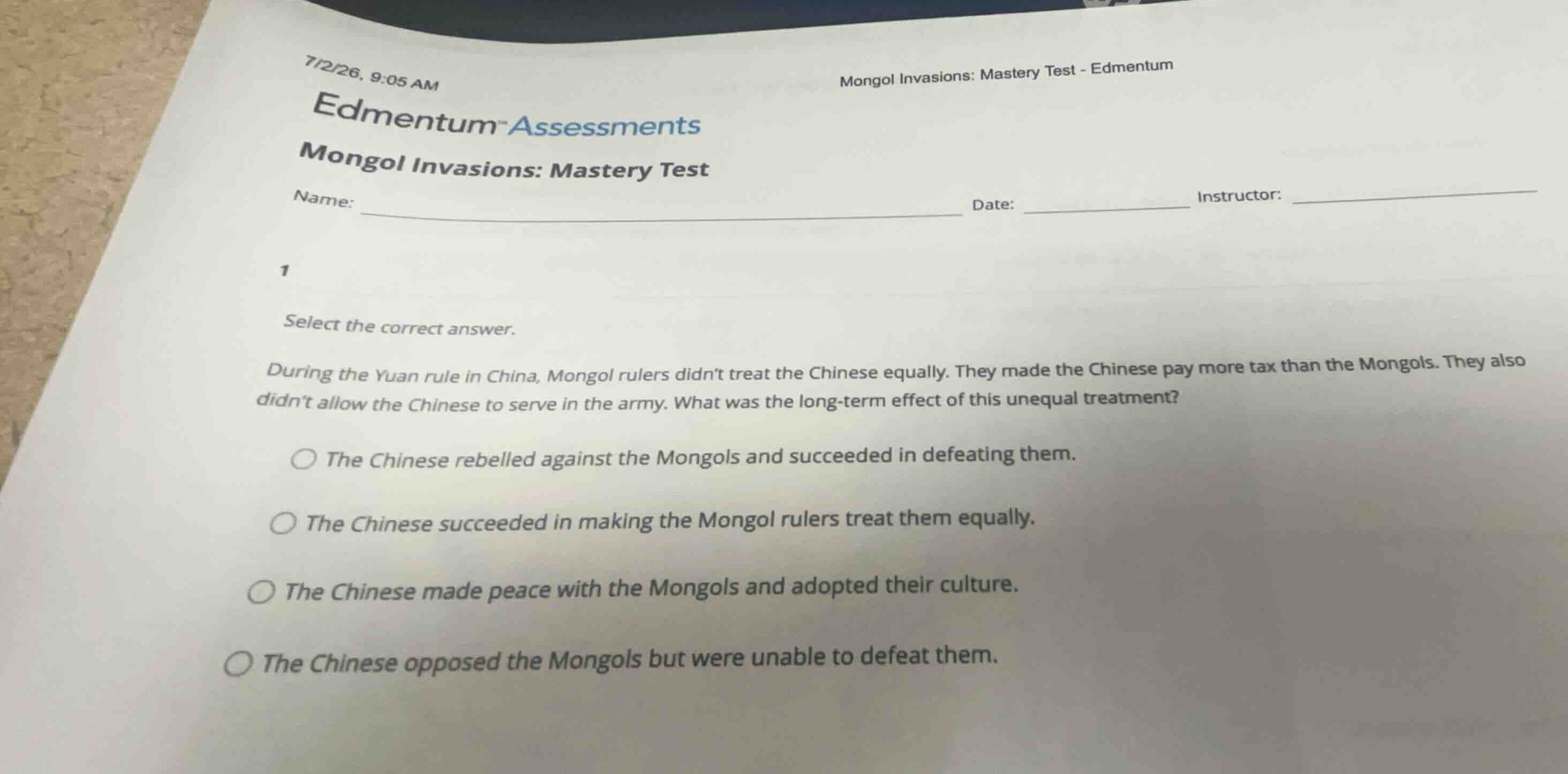
select the correct answer.
during the yuan rule in china, mongol rulers didnt treat the chinese equally. they made the chinese pay more tax than the mongols. they also didnt allow the chinese to serve in the army. what was the long-term effect of this unequal treatment?
- the chinese rebelled against the mongols and succeeded in defeating them.
- the chinese succeeded in making the mongol rulers treat them equally.
- the chinese made peace with the mongols and adopted their culture.
- the chinese opposed the mongols but were unable to defeat them.
Analyze the historical context of Yuan rule
During the Yuan Dynasty (1271–1368), Mongol rulers established a strict four-class social hierarchy. Ethnic Han Chinese, especially those from the former Southern Song, were placed at the bottom. They faced heavy taxation, legal discrimination, and were barred from holding high government offices or serving in the military.
Evaluate the consequences of unequal treatment
This systematic discrimination, combined with economic instability, inflation, and natural disasters, fostered deep resentment among the Chinese population. The exclusion of Chinese from military service and administration meant the rulers remained isolated from the majority population they governed.
Identify the long-term historical outcome
The widespread discontent eventually culminated in peasant uprisings, most notably the Red Turban Rebellion. These rebellions successfully overthrew the Mongol-led Yuan Dynasty in 1368, leading to the establishment of the native Chinese Ming Dynasty.
Assess the given multiple-choice options
- Option 1: "The Chinese rebelled against the Mongols and succeeded in defeating them." This matches the historical reality of the Red Turban Rebellion and the rise of the Ming Dynasty.
- Option 2: "The Chinese succeeded in making the Mongol rulers treat them equally." This is historically incorrect; the social hierarchy remained rigid until the dynasty fell.
- Option 3: "The Chinese made peace with the Mongols and adopted their culture." This is incorrect; the Chinese largely maintained their own cultural traditions, and the Yuan fell due to conflict, not peaceful assimilation.
- Option 4: "The Chinese opposed the Mongols but were unable to defeat them." This is incorrect because the rebellions were successful in overthrowing the Yuan Dynasty.

Snap & solve any problem in the app
Get step-by-step solutions on Sovi AI
Photo-based solutions with guided steps
Explore more problems and detailed explanations
- (A) The Chinese rebelled against the Mongols and succeeded in defeating them. (Correct answer)
- (B) The Chinese succeeded in making the Mongol rulers treat them equally.
- (C) The Chinese made peace with the Mongols and adopted their culture.
- (D) The Chinese opposed the Mongols but were unable to defeat them.