QUESTION IMAGE
Question
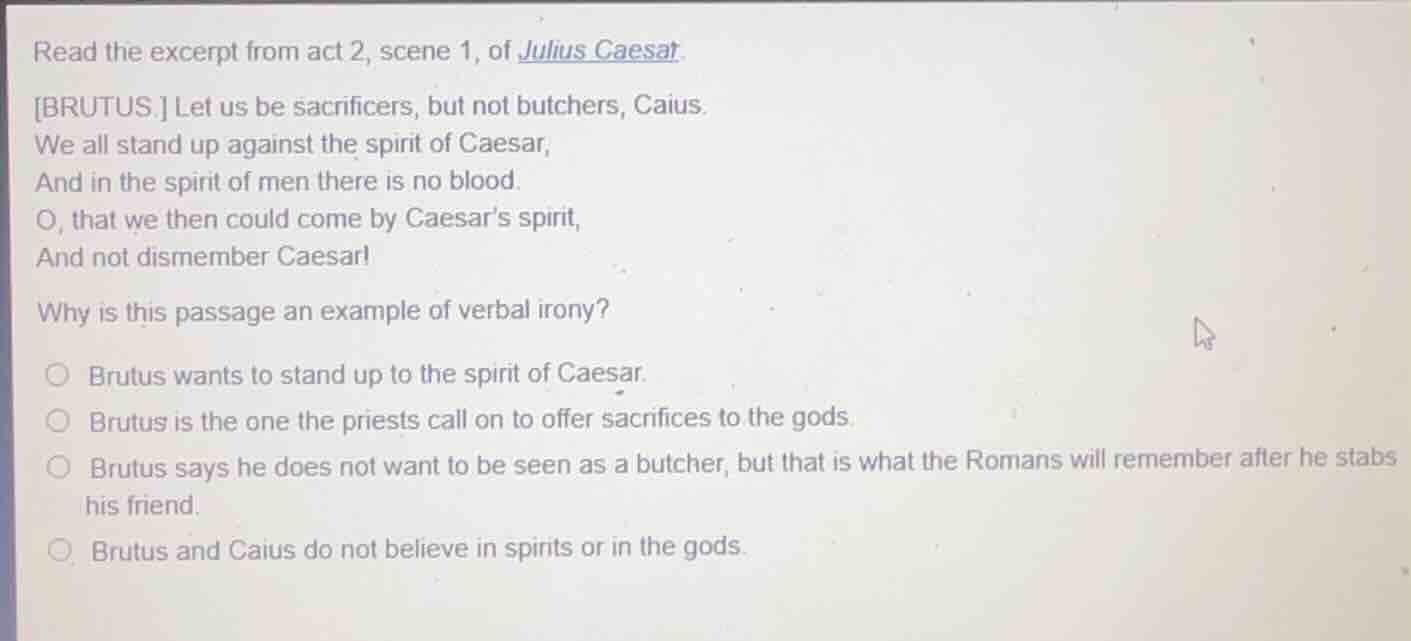
read the excerpt from act 2, scene 1, of julius caesar.brutus. let us be sacrificers, but not butchers, caius.we all stand up against the spirit of caesar,and in the spirit of men there is no blood.o, that we then could come by caesar’s spirit,and not dismember caesar!why is this passage an example of verbal irony?brutus wants to stand up to the spirit of caesar.brutus is the one the priests call on to offer sacrifices to the gods.brutus says he does not want to be seen as a butcher, but that is what the romans will remember after he stabs his friend.brutus and caius do not believe in spirits or in the gods.
Verbal irony occurs when a speaker's words contrast with the actual outcome or truth. Brutus claims the conspirators should be "sacrificers, but not butchers," framing their act as a noble, bloodless strike against Caesar's ambition. However, the violent act of stabbing Caesar will lead Romans to remember him as a brutal butcher, creating a sharp contrast between his stated intent and the reality of his actions.

Snap & solve any problem in the app
Get step-by-step solutions on Sovi AI
Photo-based solutions with guided steps
Explore more problems and detailed explanations
Brutus says he does not want to be seen as a butcher, but that is what the Romans will remember after he stabs his friend.