QUESTION IMAGE
Question
question 23
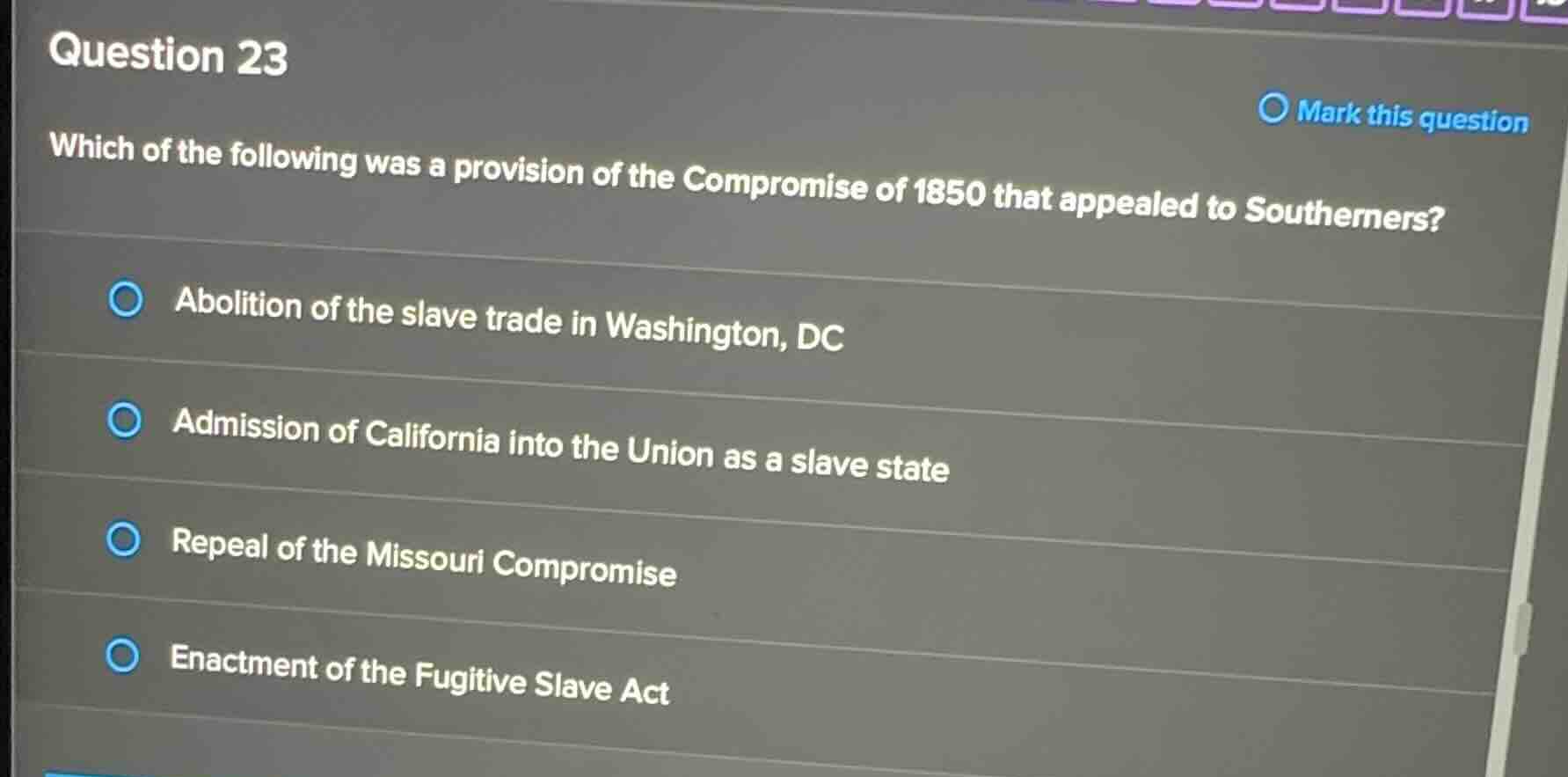
which of the following was a provision of the compromise of 1850 that appealed to southerners?
abolition of the slave trade in washington, dc
admission of california into the union as a slave state
repeal of the missouri compromise
enactment of the fugitive slave act
Analyze the Compromise of 1850
The Compromise of 1850 was a package of five separate bills passed by the United States Congress in September 1850 to defuse a political confrontation between slave and free states. To understand which provision appealed to Southerners, we must evaluate the key components of the compromise and their regional impacts.
Evaluate the options
- Abolition of the slave trade in Washington, DC: This provision banned the slave trade (but not slavery itself) in the nation's capital. This was a concession to Northern abolitionists and did not appeal to Southern slaveholders.
- Admission of California into the Union as a slave state: California was actually admitted as a free state, which was a major victory for the North and upset the sectional balance in the Senate, angering the South.
- Repeal of the Missouri Compromise: The repeal of the Missouri Compromise occurred later with the Kansas-Nebraska Act of 1854, not the Compromise of 1850.
- Enactment of the Fugitive Slave Act: To appease Southern states angry about California's admission as a free state, a highly stringent Fugitive Slave Act was passed. It required federal judicial officials and citizens of free states to assist in the capture and return of escaped slaves, which strongly appealed to Southern slaveholders.

Snap & solve any problem in the app
Get step-by-step solutions on Sovi AI
Photo-based solutions with guided steps
Explore more problems and detailed explanations
- Abolition of the slave trade in Washington, DC
- Admission of California into the Union as a slave state
- Repeal of the Missouri Compromise
- Enactment of the Fugitive Slave Act (Correct answer)