QUESTION IMAGE
Question
question 1 of 10
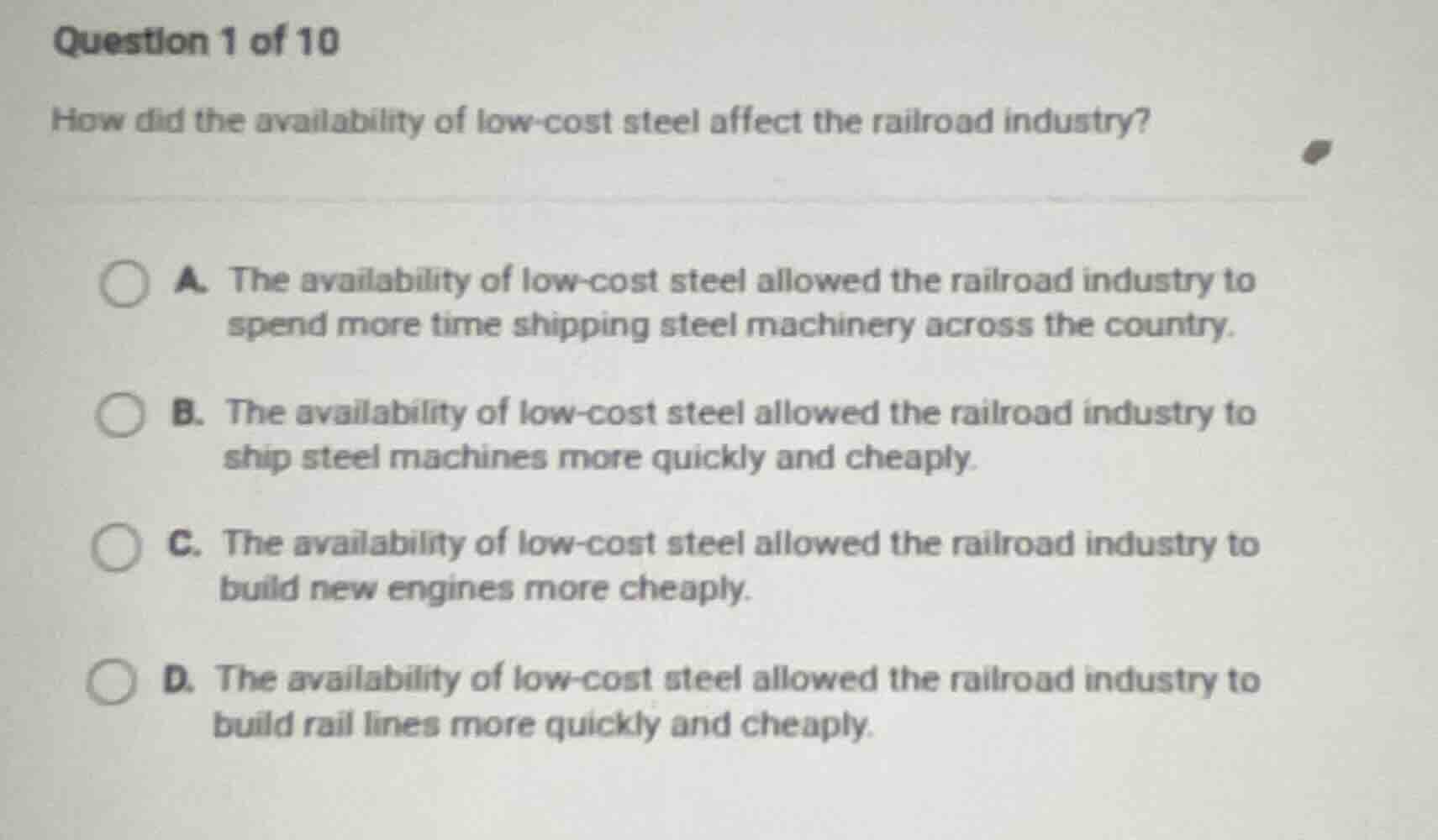
how did the availability of low-cost steel affect the railroad industry?
a. the availability of low-cost steel allowed the railroad industry to spend more time shipping steel machinery across the country.
b. the availability of low-cost steel allowed the railroad industry to ship steel machines more quickly and cheaply.
c. the availability of low-cost steel allowed the railroad industry to build new engines more cheaply.
d. the availability of low-cost steel allowed the railroad industry to build rail lines more quickly and cheaply.
Analyze the impact of cheap steel on railroads
The Bessemer process made mass-producing high-quality steel inexpensive. Steel was much stronger and more durable than the iron previously used for tracks.
Evaluate the options
- Option A and B focus on shipping steel machinery, which is not the primary direct impact on the railroad infrastructure itself.
- Option C mentions building engines, but the most transformative impact was on the tracks.
- Option D correctly identifies that cheap steel allowed railroads to lay down stronger, more durable rail lines much faster and at a lower cost, fueling the rapid expansion of the national network.

Snap & solve any problem in the app
Get step-by-step solutions on Sovi AI
Photo-based solutions with guided steps
Explore more problems and detailed explanations
- (A) The availability of low-cost steel allowed the railroad industry to spend more time shipping steel machinery across the country.
- (B) The availability of low-cost steel allowed the railroad industry to ship steel machines more quickly and cheaply.
- (C) The availability of low-cost steel allowed the railroad industry to build new engines more cheaply.
- (D) The availability of low-cost steel allowed the railroad industry to build rail lines more quickly and cheaply. (Correct answer)