QUESTION IMAGE
Question
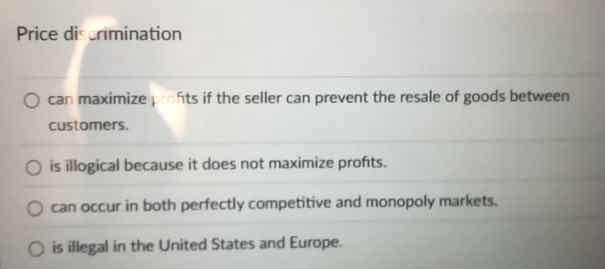
price discrimination
○ can maximize profits if the seller can prevent the resale of goods between
customers.
○ is illogical because it does not maximize profits.
○ can occur in both perfectly competitive and monopoly markets.
○ is illegal in the united states and europe.
Brief Explanations
- Analyze the first option: Price discrimination (charging different prices to different customers) can maximize profits when the seller can prevent resale (so customers can't buy at a lower price and resell at a higher one, undermining the price differences).
- Analyze the second option: Price discrimination is a way to maximize profits (by capturing more consumer surplus), so this is incorrect.
- Analyze the third option: Perfectly competitive markets have many firms with identical products, so price discrimination isn't possible (firms are price takers). It's more common in monopoly or monopolistic competition, so this is incorrect.
- Analyze the fourth option: Price discrimination isn't illegal in general in the US and Europe; there are legal forms (e.g., student discounts, senior discounts), so this is incorrect.

Snap & solve any problem in the app
Get step-by-step solutions on Sovi AI
Photo-based solutions with guided steps
Explore more problems and detailed explanations
A. can maximize profits if the seller can prevent the resale of goods between customers.