Sovi.AI - AI Math Tutor

Scan to solve math questions

QUESTION IMAGE

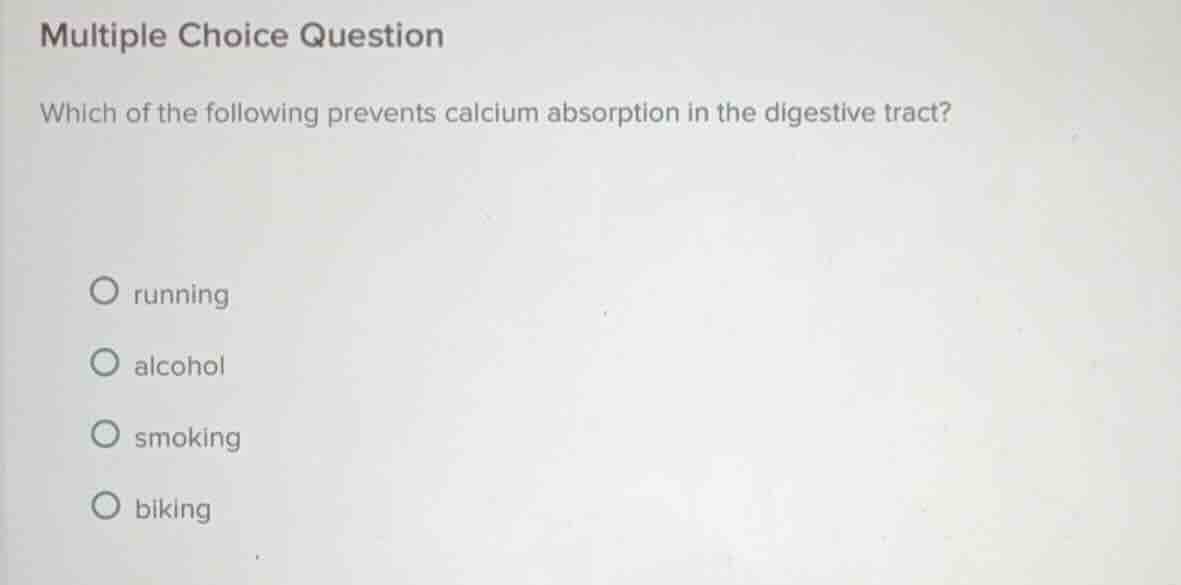
multiple choice question which of the following prevents calcium absorp…

Question

multiple choice question

which of the following prevents calcium absorption in the digestive tract?

running
alcohol
smoking
biking

Explanation:

Response

<pre_analysis>
{
"quality": "clear",
"question_count": 1,
"skills_matched": [
"direct_cot",
"multiple_choice_formatter",
"explain_then_answer",
"tutor",
"mastery_adaptive_brevity"
],
"needs_drawing": false,
"concepts_used": [
"Calcium Nutrition",
"Calcium Sources"
],
"new_concepts": [
"Calcium Inhibitors",
"Gastrointestinal Absorption Factors"
],
"current_concepts": [
"Calcium Nutrition",
"Calcium Sources",
"Calcium Inhibitors",
"Gastrointestinal Absorption Factors"
]
}
</pre_analysis>

<reasoning>

Analyze the physiological factors of calcium absorption

Using the Calcium Sources and Calcium Nutrition knowledge points

  • Active transport of calcium in the duodenum requires active vitamin D (calcitriol).
  • Alcohol consumption directly inhibits the expression of duodenal calcium transport proteins and interferes with vitamin D activation in the liver and kidneys.
  • Physical activities like running and biking promote bone remodeling but do not inhibit digestive absorption.
  • Smoking negatively impacts bone density primarily through osteoblast activity rather than direct digestive tract absorption inhibition.

Evaluate the given options

  • running: Weight-bearing exercise that stimulates bone deposition.
  • alcohol: Directly impairs intestinal calcium absorption and vitamin D metabolism.
  • smoking: Decreases bone density but is not the primary direct inhibitor of digestive tract calcium absorption compared to alcohol.
  • biking: Non-weight-bearing exercise with no inhibitory effect on calcium absorption.

</reasoning>

<answer>
<mcq-option>running</mcq-option>
<mcq-correct>alcohol</mcq-correct>
<mcq-option>smoking</mcq-option>
<mcq-option>biking</mcq-option>
</answer>

<post_analysis>
{
"subject": "Natural Science",
"question_type": "Multiple Choice",
"knowledge_point": [
"Natural Science",
"Biology",
"Human Physiology"
]
}
</post_analysis>

Answer:

<pre_analysis>
{
"quality": "clear",
"question_count": 1,
"skills_matched": [
"direct_cot",
"multiple_choice_formatter",
"explain_then_answer",
"tutor",
"mastery_adaptive_brevity"
],
"needs_drawing": false,
"concepts_used": [
"Calcium Nutrition",
"Calcium Sources"
],
"new_concepts": [
"Calcium Inhibitors",
"Gastrointestinal Absorption Factors"
],
"current_concepts": [
"Calcium Nutrition",
"Calcium Sources",
"Calcium Inhibitors",
"Gastrointestinal Absorption Factors"
]
}
</pre_analysis>

<reasoning>

Analyze the physiological factors of calcium absorption

Using the Calcium Sources and Calcium Nutrition knowledge points

  • Active transport of calcium in the duodenum requires active vitamin D (calcitriol).
  • Alcohol consumption directly inhibits the expression of duodenal calcium transport proteins and interferes with vitamin D activation in the liver and kidneys.
  • Physical activities like running and biking promote bone remodeling but do not inhibit digestive absorption.
  • Smoking negatively impacts bone density primarily through osteoblast activity rather than direct digestive tract absorption inhibition.

Evaluate the given options

  • running: Weight-bearing exercise that stimulates bone deposition.
  • alcohol: Directly impairs intestinal calcium absorption and vitamin D metabolism.
  • smoking: Decreases bone density but is not the primary direct inhibitor of digestive tract calcium absorption compared to alcohol.
  • biking: Non-weight-bearing exercise with no inhibitory effect on calcium absorption.

</reasoning>

<answer>
<mcq-option>running</mcq-option>
<mcq-correct>alcohol</mcq-correct>
<mcq-option>smoking</mcq-option>
<mcq-option>biking</mcq-option>
</answer>

<post_analysis>
{
"subject": "Natural Science",
"question_type": "Multiple Choice",
"knowledge_point": [
"Natural Science",
"Biology",
"Human Physiology"
]
}
</post_analysis>