QUESTION IMAGE
Question
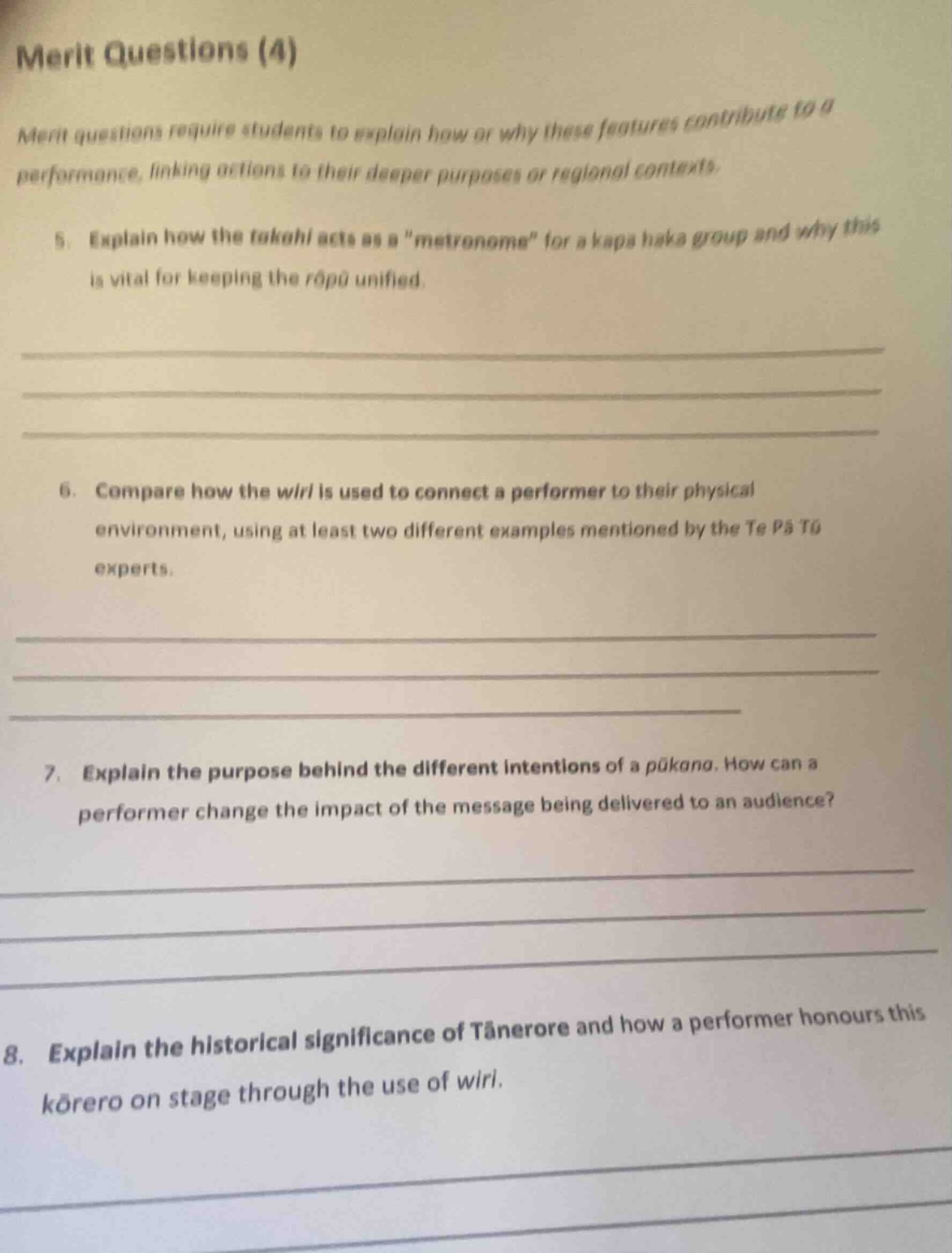
merit questions (4)
merit questions require students to explain how or why these features contribute to a performance, linking actions to their deeper purposes or regional contexts.
- explain how the takahi acts as a \metronome\ for a kapa haka group and why this is vital for keeping the rōpū unified.
- compare how the wiri is used to connect a performer to their physical environment, using at least two different examples mentioned by the te pā tū experts.
- explain the purpose behind the different intentions of a pūkana. how can a performer change the impact of the message being delivered to an audience?
- explain the historical significance of tānerore and how a performer honours this kōrero on stage through the use of wiri.
Takahi as a metronome
The takahi (rhythmic foot stamping) establishes a steady, physical beat that anchors the performance, ensuring all performers synchronize their movements, singing, and breathing to keep the rōpū (group) unified.
Wiri and physical environment
The wiri (quivering of the hands) represents the shimmering of heat waves (Te Hāhana) or wind rustling leaves, connecting the performer to natural elements by physically channeling these environmental phenomena on stage.
Intentions of pūkana
The pūkana (facial expressions/grimacing) serves to emphasize words, convey intense emotions (such as passion, anger, or joy), and project the inner life force (mauri); performers alter its intensity, eye dilation, or tongue protrusion to shift the message's impact from welcoming to fierce defiance.
Historical significance of Tānerore
Tānerore is the deity of the shimmering heat haze, born of Hineraumati (the Summer Maid) and Tama-nui-te-rā (the Sun Science); performers honour this kōrero (story) by performing the wiri, which mimics his dancing, shimmering heat waves.

Snap & solve any problem in the app
Get step-by-step solutions on Sovi AI
Photo-based solutions with guided steps
Explore more problems and detailed explanations
Question 5
The takahi acts as a metronome by providing a continuous, audible, and physical foot-stamping beat. This keeps the rōpū unified by ensuring everyone performs at the same tempo, synchronizing their actions, vocals, and timing.
Question 6
The wiri connects a performer to the physical environment by mimicking natural phenomena. Two examples include representing the shimmering heat waves rising from the ground on a hot summer day and representing the wind rustling through the leaves of trees.
Question 7
The purpose of the pūkana is to emphasize the lyrics, convey deep emotions, and project the performer's mauri (life force). A performer can change the impact of their message by adjusting the intensity of the expression—such as widening the eyes to show passion or protruding the tongue to project defiance and power.
Question 8
Tānerore is the personification of shimmering heat waves, born to Hineraumati (the Summer Maid) and Tama-nui-te-rā (the Sun). Performers honour this kōrero on stage through the wiri, which physically represents the shimmering heat waves created by Tānerore dancing for his mother.