QUESTION IMAGE
Question
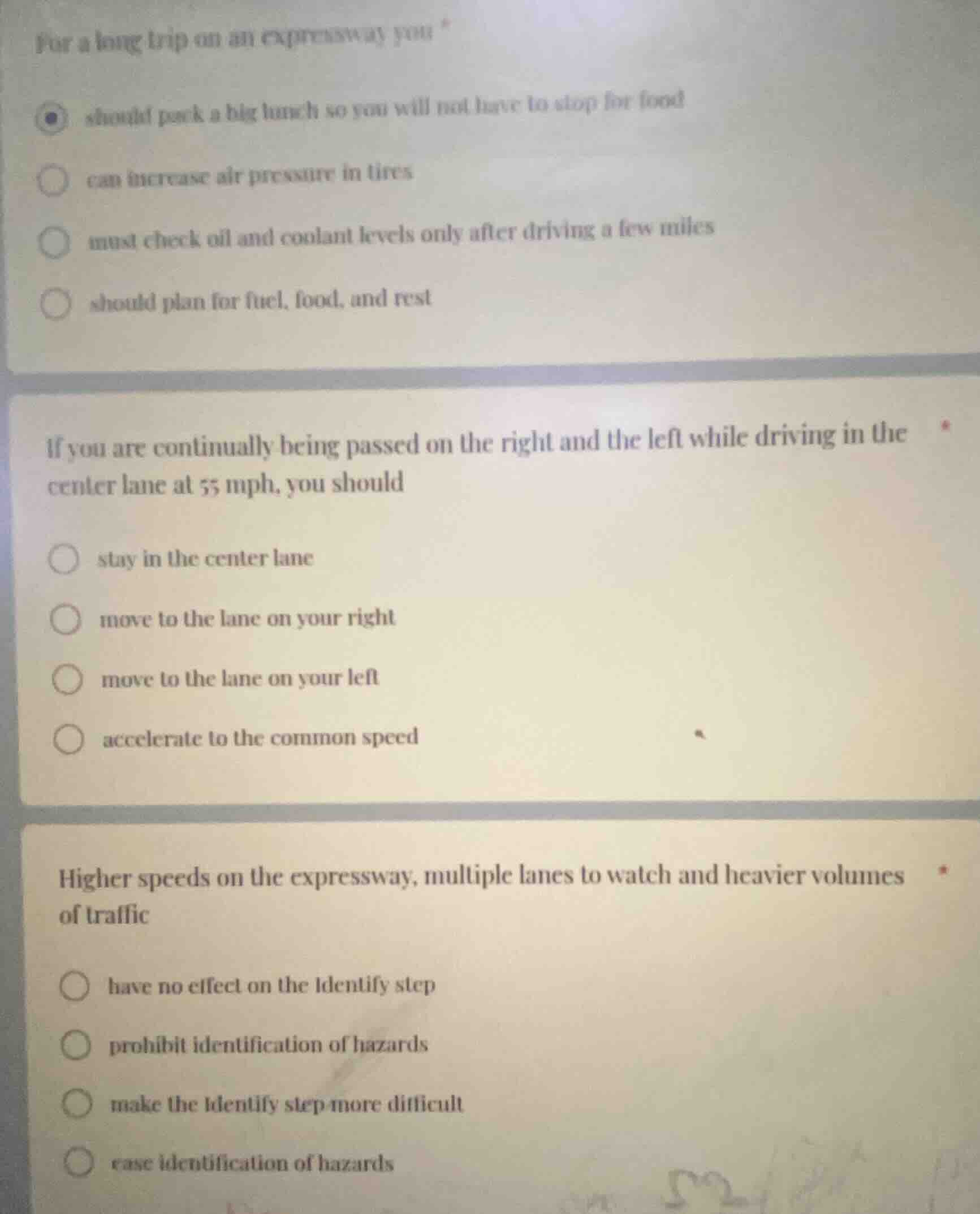
for a long trip on an expressway you *
should pack a big lunch so you will not have to stop for food
can increase air pressure in tires
must check oil and coolant levels only after driving a few miles
should plan for fuel, food, and rest
if you are continually being passed on the right and the left while driving in the center lane at 55 mph, you should *
stay in the center lane
move to the lane on your right
move to the lane on your left
accelerate to the common speed
higher speeds on the expressway, multiple lanes to watch and heavier volumes of traffic *
have no effect on the identify step
prohibit identification of hazards
make the identify step more difficult
ease identification of hazards
Analyze long trip preparation on expressways
Preparing for a long trip on an expressway requires comprehensive planning to ensure safety and vehicle reliability. Packing a large lunch does not address vehicle needs, increasing tire pressure beyond specifications is dangerous, and checking fluids should be done before starting, not after driving. Therefore, proper trip planning must include scheduling stops for fuel, food, and rest to prevent fatigue and vehicle breakdown. This aligns with Defensive Driving principles.
Determine correct action when being passed on both sides
When driving in the center lane and being continually passed on both the right and left, it indicates that your speed is slower than the flow of traffic, creating a hazard. Under standard highway lane discipline, slower traffic should keep to the far right lane to allow faster vehicles to pass safely on the left. Moving to the right lane resolves the conflict and restores proper traffic flow, which is a key aspect of Speed Management.
Evaluate the impact of expressway conditions on hazard identification
The IPDE (Identify, Predict, Decide, Execute) process is a fundamental defensive driving strategy. Higher speeds, multiple lanes, and heavy traffic volumes increase the amount of visual information a driver must process. This does not prohibit hazard identification entirely, nor does it have no effect or make it easier; rather, the increased complexity and rapid rate of travel make the "Identify" step significantly more difficult, requiring heightened alertness.

Snap & solve any problem in the app
Get step-by-step solutions on Sovi AI
Photo-based solutions with guided steps
Explore more problems and detailed explanations
Question 1
- (A) should pack a big lunch so you will not have to stop for food
- (B) can increase air pressure in tires
- (C) must check oil and coolant levels only after driving a few miles
- (D) should plan for fuel, food, and rest (Correct answer)
Question 2
- (A) stay in the center lane
- (B) move to the lane on your right (Correct answer)
- (C) move to the lane on your left
- (D) accelerate to the common speed
Question 3
- (A) have no effect on the Identify step
- (B) prohibit identification of hazards
- (C) make the Identify step more difficult (Correct answer)
- (D) ease identification of hazards