QUESTION IMAGE
Question
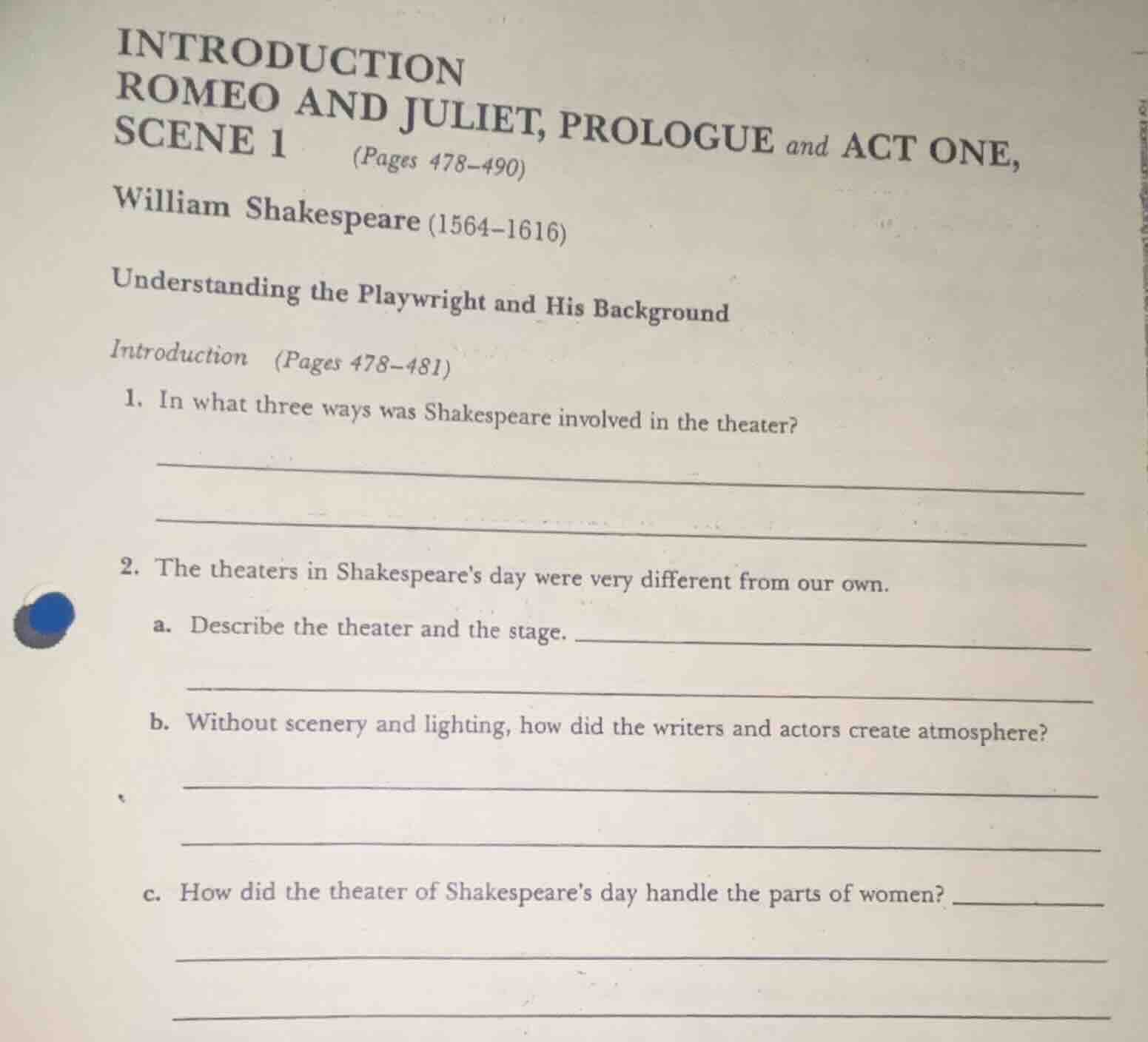
introduction
romeo and juliet, prologue and act one,
scene 1 (pages 478-490)
william shakespeare (1564-1616)
understanding the playwright and his background
introduction (pages 478-481)
- in what three ways was shakespeare involved in the theater?
- the theaters in shakespeares day were very different from our own.
a. describe the theater and the stage.
b. without scenery and lighting, how did the writers and actors create atmosphere?
c. how did the theater of shakespeares day handle the parts of women?
- For Shakespeare's theater roles: He worked as a playwright (writing plays), an actor (performing in productions), and a shareholder/theater manager (owning a stake in acting companies like the Lord Chamberlain's Men).
2a. Shakespearean theaters were open-air, circular/oval wooden structures (like the Globe) with three tiers of seating around a raised, uncovered thrust stage that extended into the audience. The stage had a trapdoor, an upper gallery for balcony scenes, and minimal fixed structures.
2b. Writers used vivid, descriptive dialogue and soliloquies to set scenes and mood; actors relied on exaggerated gestures, vocal tone, and elaborate costumes to convey atmosphere and setting to the audience.
2c. Female roles were performed by young boys or adolescent men, as women were not allowed to act on public stages during Shakespeare's era.

Snap & solve any problem in the app
Get step-by-step solutions on Sovi AI
Photo-based solutions with guided steps
Explore more problems and detailed explanations
- Shakespeare was involved in the theater as a playwright, an actor, and a shareholder/theater manager.
2a. Shakespearean theaters were open-air, circular wooden buildings with a thrust stage that jutted into the audience; the stage had an upper gallery and trapdoor, with tiered seating surrounding the performance area.
2b. Writers used rich, descriptive language to establish setting/mood, while actors used expressive gestures, vocal delivery, and detailed costumes to build atmosphere.
2c. All female roles were played by young male actors, since women were prohibited from performing on public stages at that time.