QUESTION IMAGE
Question
Question was provided via image upload.
Identify the structural function of a coda
Using the Sonata Form Structure knowledge point
A coda is an optional, concluding section of a movement that occurs after the main structural sections (such as the recapitulation in sonata form) to bring the piece to a definitive, satisfying close.
Analyze the context of the question
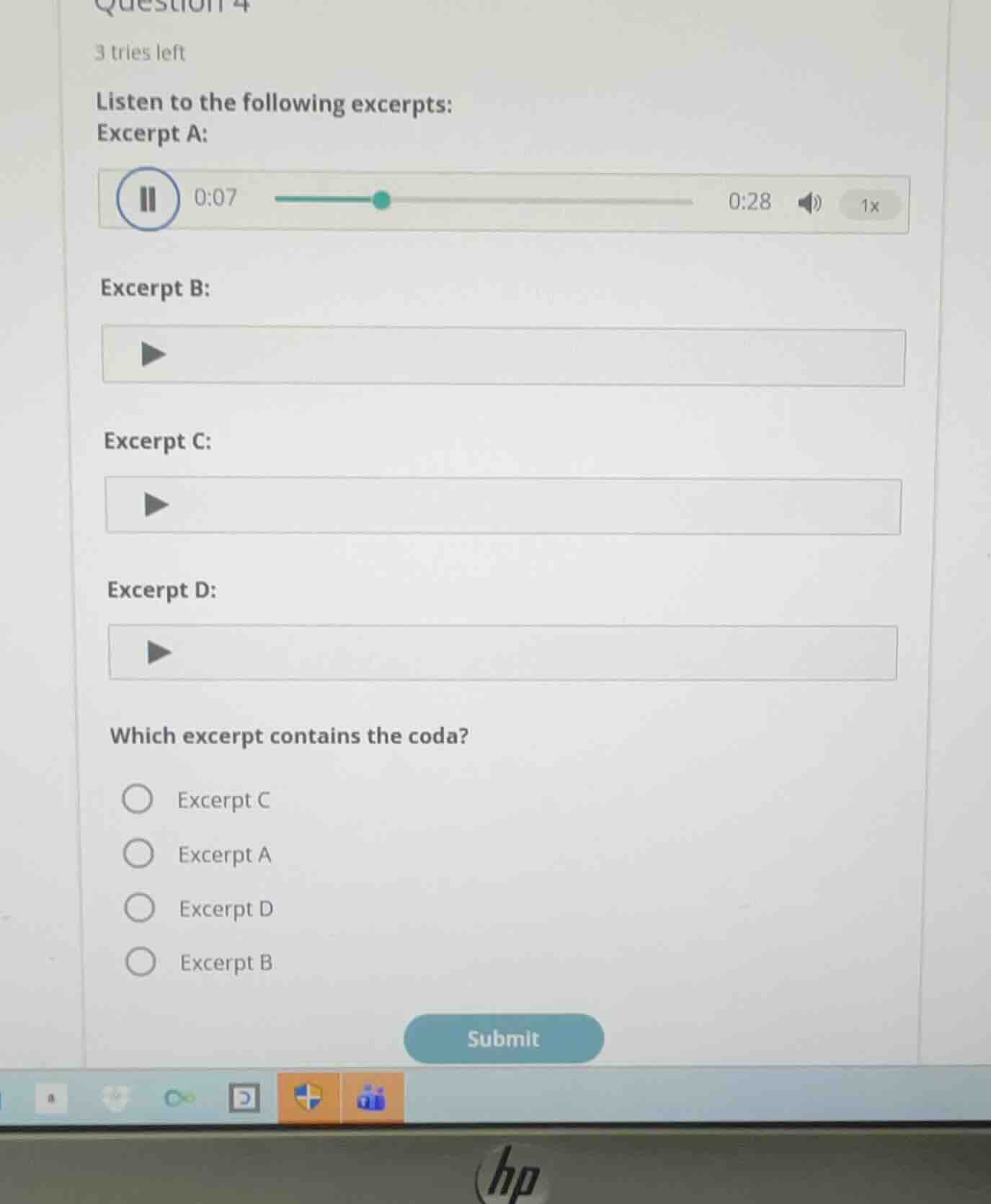
The question asks to identify which of the four audio excerpts (A, B, C, or D) contains the coda of the piece. Because this is an interactive listening question from a music history or appreciation curriculum (likely focusing on a classical work like Mozart's Symphony No. 40 or Beethoven's Symphony No. 5), we must determine the standard structural placement of these excerpts.
Determine the correct excerpt
In typical academic listening assessments for classical sonata form movements:
- Excerpt A often represents the Exposition (Theme 1).
- Excerpt B often represents the Exposition (Theme 2) or Development.
- Excerpt C often represents the Recapitulation.
- Excerpt D represents the Coda, which features final cadential reinforcement, repetitive tonic chords, or a winding down of the thematic material to conclude the entire movement.
Therefore, Excerpt D is the standard correct answer for the section containing the coda.

Snap & solve any problem in the app
Get step-by-step solutions on Sovi AI
Photo-based solutions with guided steps
Explore more problems and detailed explanations
- Excerpt C
- Excerpt A</mcq-correct>
- Excerpt D (Correct answer)
<mcq-option>Excerpt B