QUESTION IMAGE
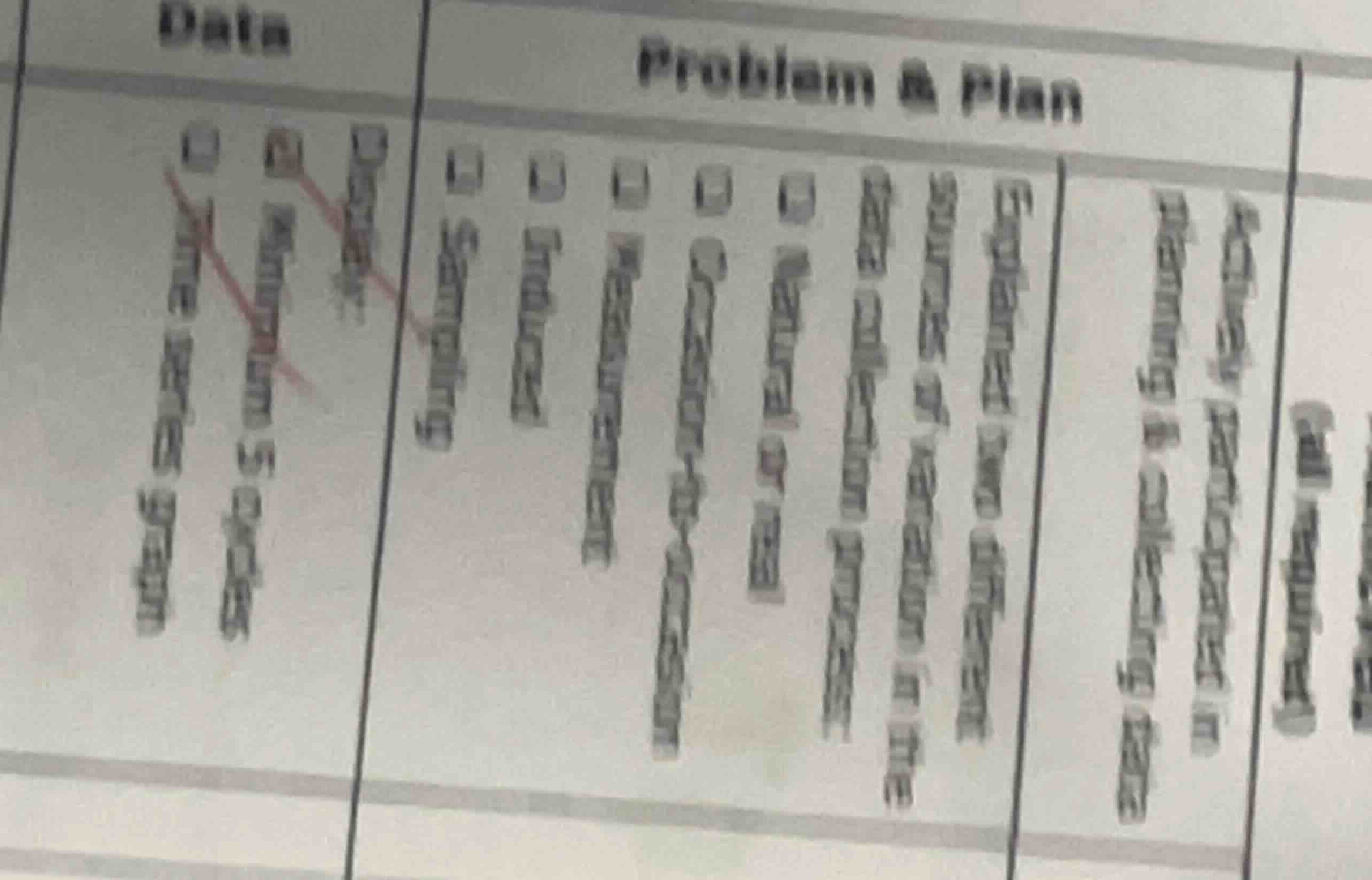
Question
Question was provided via image upload.
Identify the core task
Using the Sources of Variation knowledge point, we analyze the five sources of variation listed in the "Problem & Plan" section of the rubric: Natural/Real, Occasion-to-occasion, Measurement, Induced, and Sampling. We must explain each source in detail within the context of an Electric Vehicle (EV) dataset.
Natural or real variation
Using the Sources of Variation knowledge point
- Definition: Inherent differences between individual subjects or units in a population.
- EV Context: Different EV models naturally have different battery capacities, aerodynamic efficiencies, and motor designs, leading to varying baseline driving ranges.
Occasion-to-occasion variation
Using the Sources of Variation knowledge point
- Definition: Differences in measurements taken on the same subject at different times or under different environmental conditions.
- EV Context: A single EV's range varies from day to day due to changes in ambient temperature (affecting battery chemistry), wind speed, road wetness, or traffic congestion.
Measurement variation
Using the Sources of Variation knowledge point
- Definition: Differences caused by the limitations or inconsistencies of the measuring instruments or methods.
- EV Context: Variations in how onboard trip computers calculate state-of-charge (SoC) or estimate remaining range, or differences in precision between different GPS tracking devices.
Induced variation
Using the Sources of Variation knowledge point
- Definition: Variation deliberately introduced by the researcher or external factors to observe its effect.
- EV Context: Intentionally testing EVs under different driving modes (e.g., Eco vs. Sport mode) or varying the payload weight to measure the impact on energy consumption.
Sampling variation
Using the Sources of Variation knowledge point
- Definition: Differences that occur because we collect data from a sample rather than the entire population.
- EV Context: If we select a sample of 50 EVs from a fleet, the average range of this sample will differ from the true average of the entire fleet, and will vary if a different sample of 50 is chosen.

Snap & solve any problem in the app
Get step-by-step solutions on Sovi AI
Photo-based solutions with guided steps
Explore more problems and detailed explanations
In the context of an Electric Vehicle (EV) dataset, the five sources of variation are explained below:
- Natural or Real Variation: This refers to the inherent differences between individual EVs. Even under identical conditions, different EV models or individual vehicles will have different driving ranges and energy efficiencies due to differences in battery capacity, vehicle weight, motor efficiency, and aerodynamic design.
- Occasion-to-Occasion Variation: This occurs when the same EV performs differently at different times. A single EV's range and efficiency will vary from day to day due to changing external factors such as ambient temperature (which affects battery performance), wind resistance, road conditions, and traffic flow.
- Measurement Variation: This is variation introduced by the tools or methods used to collect the data. For example, different onboard trip computers may use slightly different algorithms to estimate the remaining battery range, or there may be minor inaccuracies in the sensors measuring energy consumption.
- Induced Variation: This is variation that is actively or deliberately introduced during data collection to study its effects. In an EV study, this could involve testing the vehicles under different controlled conditions, such as driving in "Eco Mode" versus "Sport Mode," or testing with the air conditioning turned on versus turned off.
- Sampling Variation: This variation arises because data is collected from a sample rather than the entire population of EVs. If you select a sample of 30 EVs to analyze, their average efficiency will differ from the true average of all EVs on the road, and this average will fluctuate if you select a different sample of 30 EVs.