QUESTION IMAGE
Question
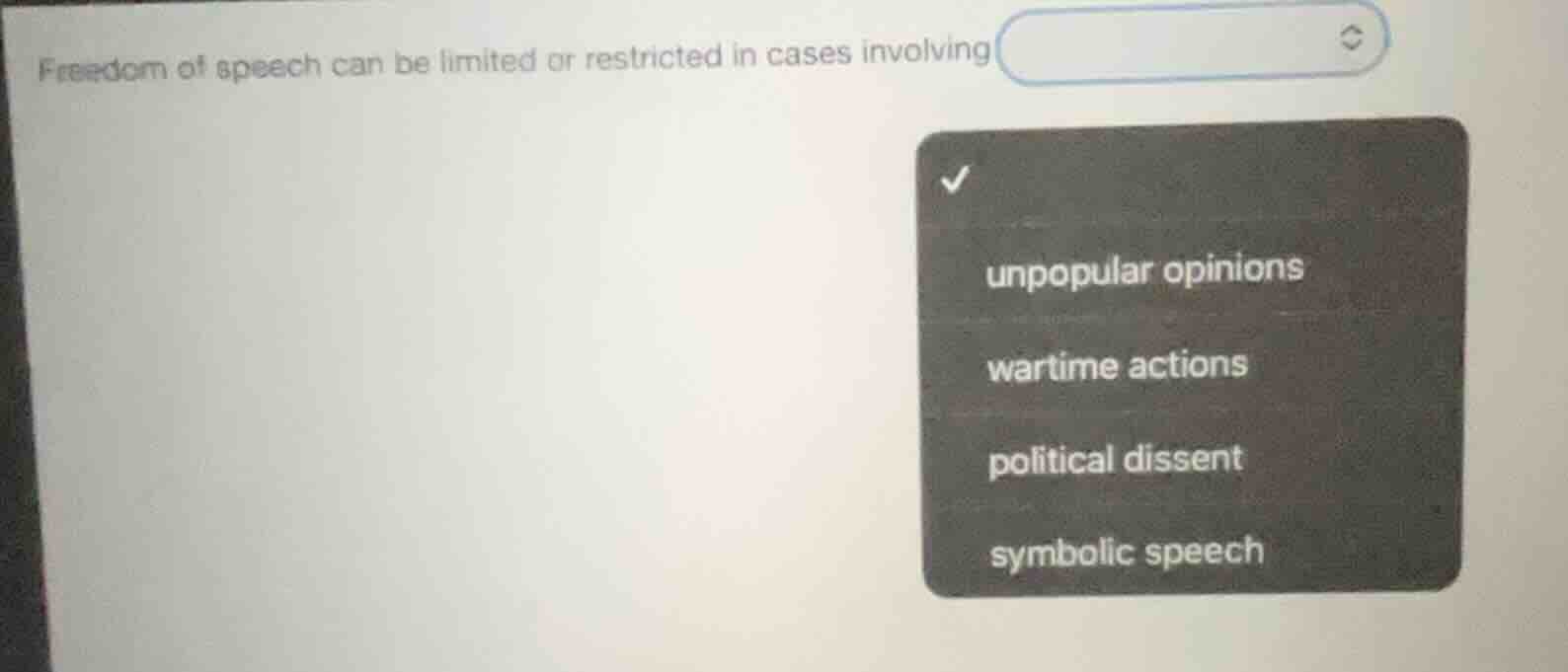
freedom of speech can be limited or restricted in cases involving
unpopular opinions
wartime actions
political dissent
symbolic speech
Analyze the constitutional limits on free speech
The First Amendment protects freedom of speech, but this right is not absolute. The Supreme Court has established that speech can be restricted under specific, narrow circumstances, particularly when it poses a clear and present danger to national security or public safety.
Evaluate the given options
- unpopular opinions: Protected under the First Amendment to prevent a "tyranny of the majority."
- wartime actions: Historically, the government has been permitted to restrict speech that directly interferes with military operations or national security during war (e.g., Schenck v. United States).
- political dissent: Core political speech is highly protected, even when critical of the government.
- symbolic speech: Protected under the First Amendment (e.g., Tinker v. Des Moines).
Determine the correct choice
Among the choices, "wartime actions" represents a recognized category where national security concerns can justify government restrictions on speech.

Snap & solve any problem in the app
Get step-by-step solutions on Sovi AI
Photo-based solutions with guided steps
Explore more problems and detailed explanations
- unpopular opinions
- wartime actions (Correct answer)
- political dissent
- symbolic speech