QUESTION IMAGE
Question
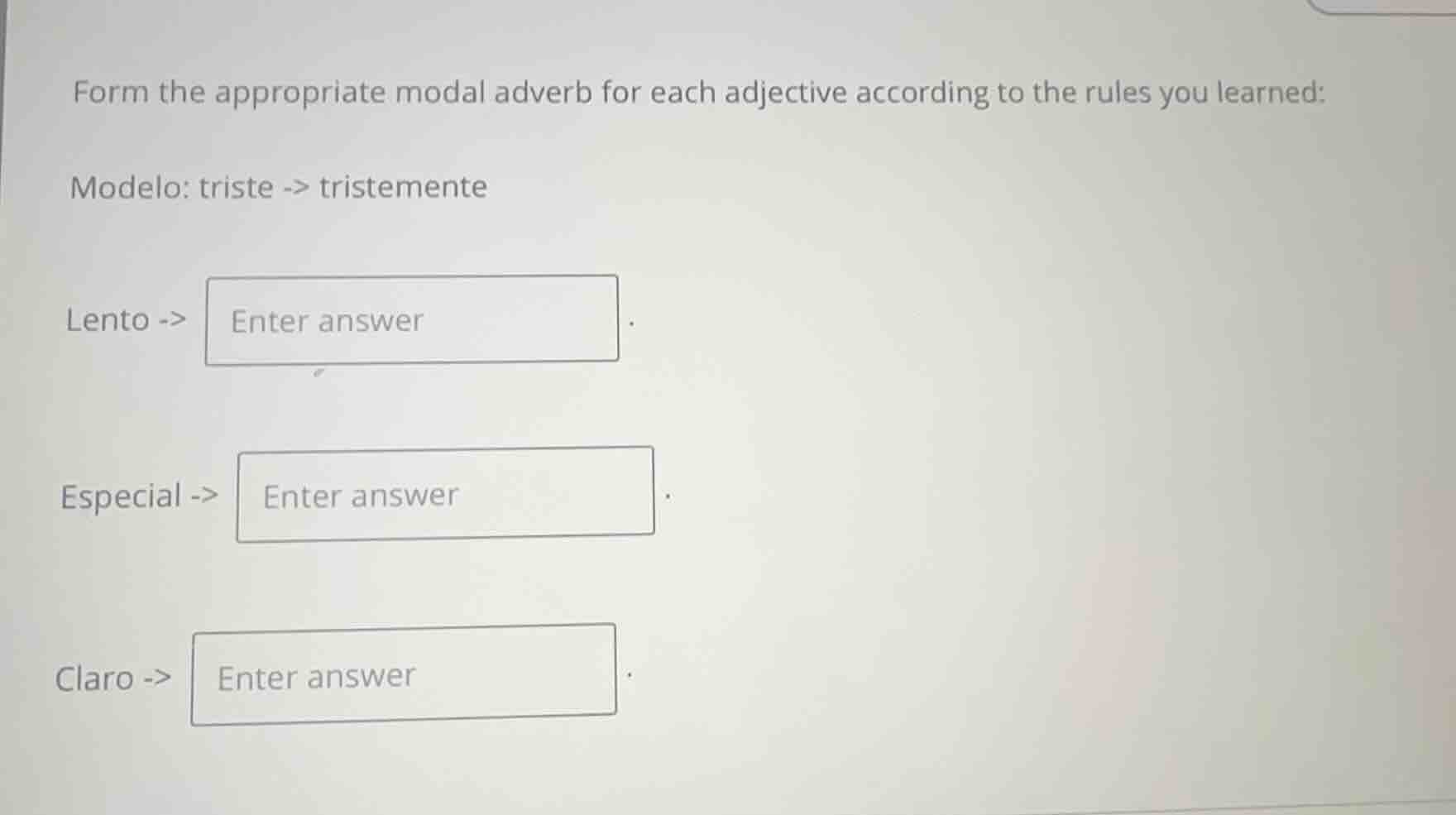
form the appropriate modal adverb for each adjective according to the rules you learned:
modelo: triste -> tristemente
lento ->
especial ->
claro ->
Understand the rule
To form modal adverbs in Spanish, we add the suffix "-mente" to the feminine singular form of the adjective. If the adjective ends in "-o", change it to "-a" before adding "-mente". If it ends in "-e" or a consonant, add "-mente" directly to the singular form.
Form adverb for Lento
The adjective "lento" ends in "-o". We change "-o" to "-a" to get the feminine form "lenta", then add "-mente" to form "lentamente".
Form adverb for Especial
The adjective "especial" ends in a consonant. We add "-mente" directly to the singular form to get "especialmente".
Form adverb for Claro
The adjective "claro" ends in "-o". We change "-o" to "-a" to get the feminine form "clara", then add "-mente" to form "claramente".

Snap & solve any problem in the app
Get step-by-step solutions on Sovi AI
Photo-based solutions with guided steps
Explore more problems and detailed explanations
Form the appropriate modal adverb for each adjective according to the rules you learned:
Modelo: triste -> tristemente
Lento -> <blank>lentamente</blank>.
Especial -> <blank>especialmente</blank>.
Claro -> <blank>claramente</blank>.