QUESTION IMAGE
Question
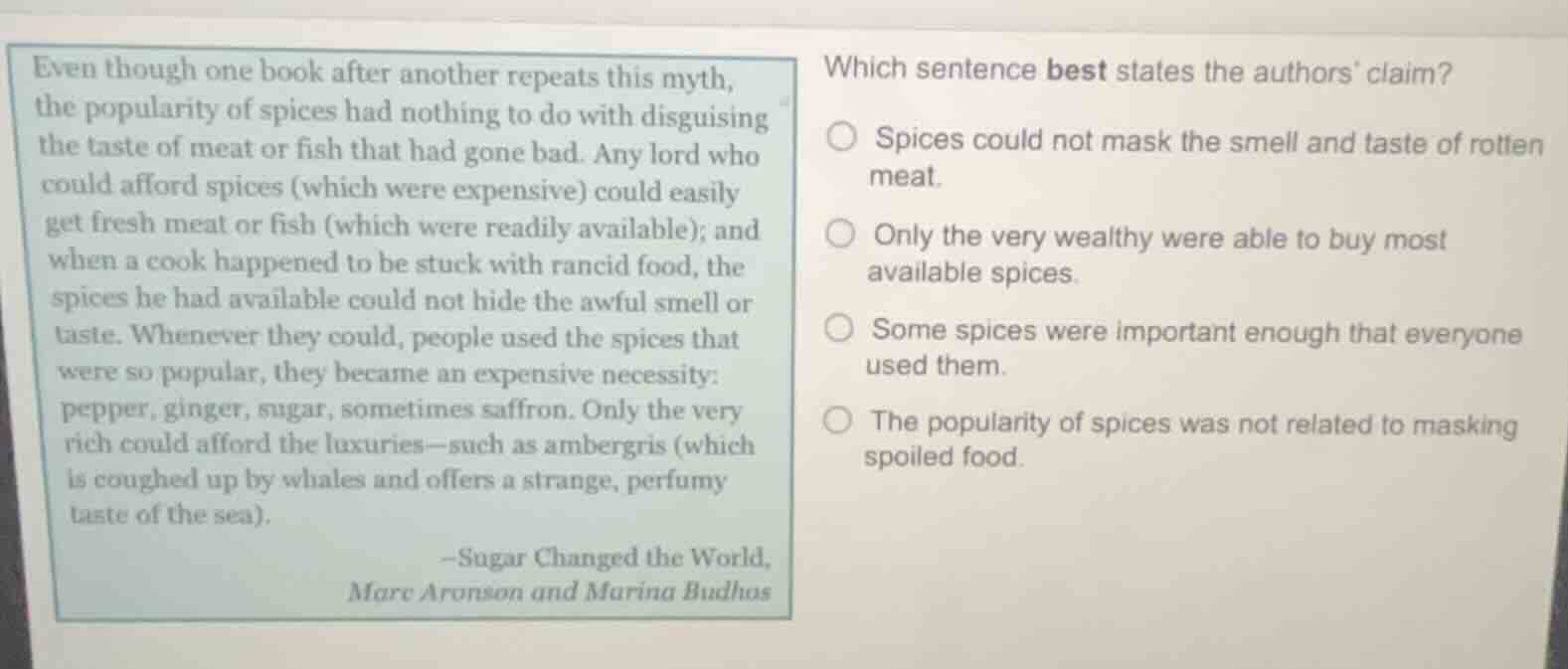
even though one book after another repeats this myth, the popularity of spices had nothing to do with disguising the taste of meat or fish that had gone bad. any lord who could afford spices (which were expensive) could easily get fresh meat or fish (which were readily available); and when a cook happened to be stuck with rancid food, the spices he had available could not hide the awful smell or taste. whenever they could, people used the spices that were so popular, they became an expensive necessity: pepper, ginger, sugar, sometimes saffron. only the very rich could afford the luxuries—such as ambergris (which is coughed up by whales and offers a strange, perfumy taste of the sea).
--sugar changed the world, marc aronson and marina budhos
which sentence best states the authors’ claim?
○ spices could not mask the smell and taste of rotten meat.
○ only the very wealthy were able to buy most available spices.
○ some spices were important enough that everyone used them.
○ the popularity of spices was not related to masking spoiled food.
The passage's main claim is that the popularity of spices was not related to masking spoiled food. The first sentence of the passage directly states this, and the subsequent details (like wealthy lords could get fresh meat, spices couldn't hide rancid food smells/tastes) support this claim. The other options either focus on secondary details (like who could buy spices, or a specific ability of spices) rather than the main claim about the relationship between spice popularity and masking spoiled food.

Snap & solve any problem in the app
Get step-by-step solutions on Sovi AI
Photo-based solutions with guided steps
Explore more problems and detailed explanations
D. The popularity of spices was not related to masking spoiled food.