QUESTION IMAGE
Question
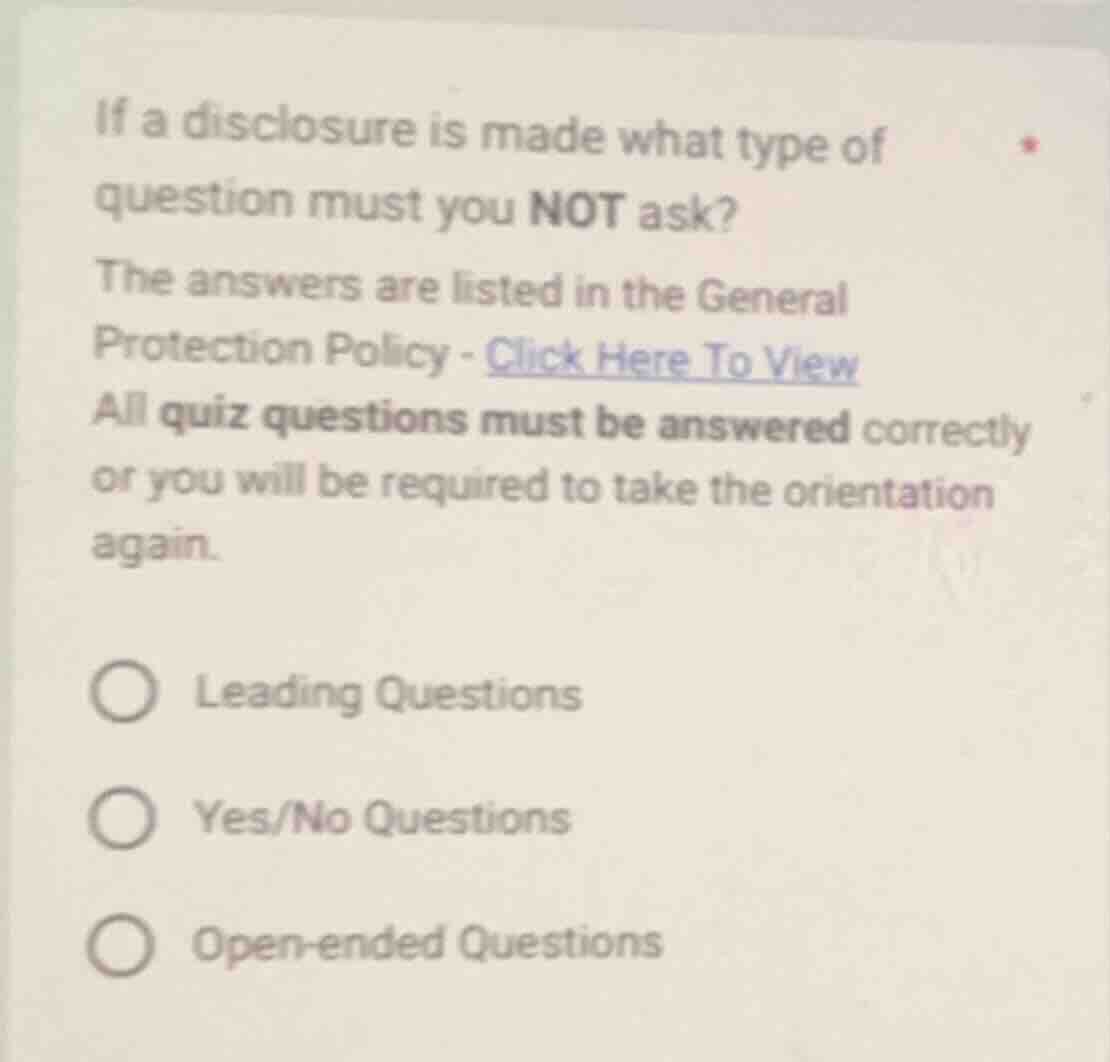
if a disclosure is made what type of question must you not ask?
the answers are listed in the general protection policy - click here to view
all quiz questions must be answered correctly or you will be required to take the orientation again.
leading questions
yes/no questions
open-ended questions
Analyze the context of a disclosure
Using the Child Protection Policies knowledge point
When a child or vulnerable individual makes a disclosure regarding abuse or harm, standard safeguarding protocols dictate how to respond. The primary goal is to listen supportively without investigating or influencing their account.
Evaluate the types of questions
Using the Child Protection Policies knowledge point
- Leading Questions: These suggest a specific answer or put words into the person's mouth (e.g., "Did they hit you?"). These must NOT be asked because they can contaminate evidence and compromise subsequent legal or professional investigations.
- Yes/No Questions: While sometimes limiting, they are not strictly prohibited, though open-ended questions are preferred.
- Open-ended Questions: These are highly encouraged (e.g., "Can you tell me what happened?") because they allow the individual to explain in their own words.
Determine the correct option
Using the Child Protection Policies knowledge point
Since leading questions can distort the disclosure and invalidate the individual's testimony during formal investigations, they are the type of question you must NOT ask.

Snap & solve any problem in the app
Get step-by-step solutions on Sovi AI
Photo-based solutions with guided steps
Explore more problems and detailed explanations
- (A) Leading Questions (Correct answer)
- (B) Yes/No Questions
- (C) Open-ended Questions