QUESTION IMAGE
Question
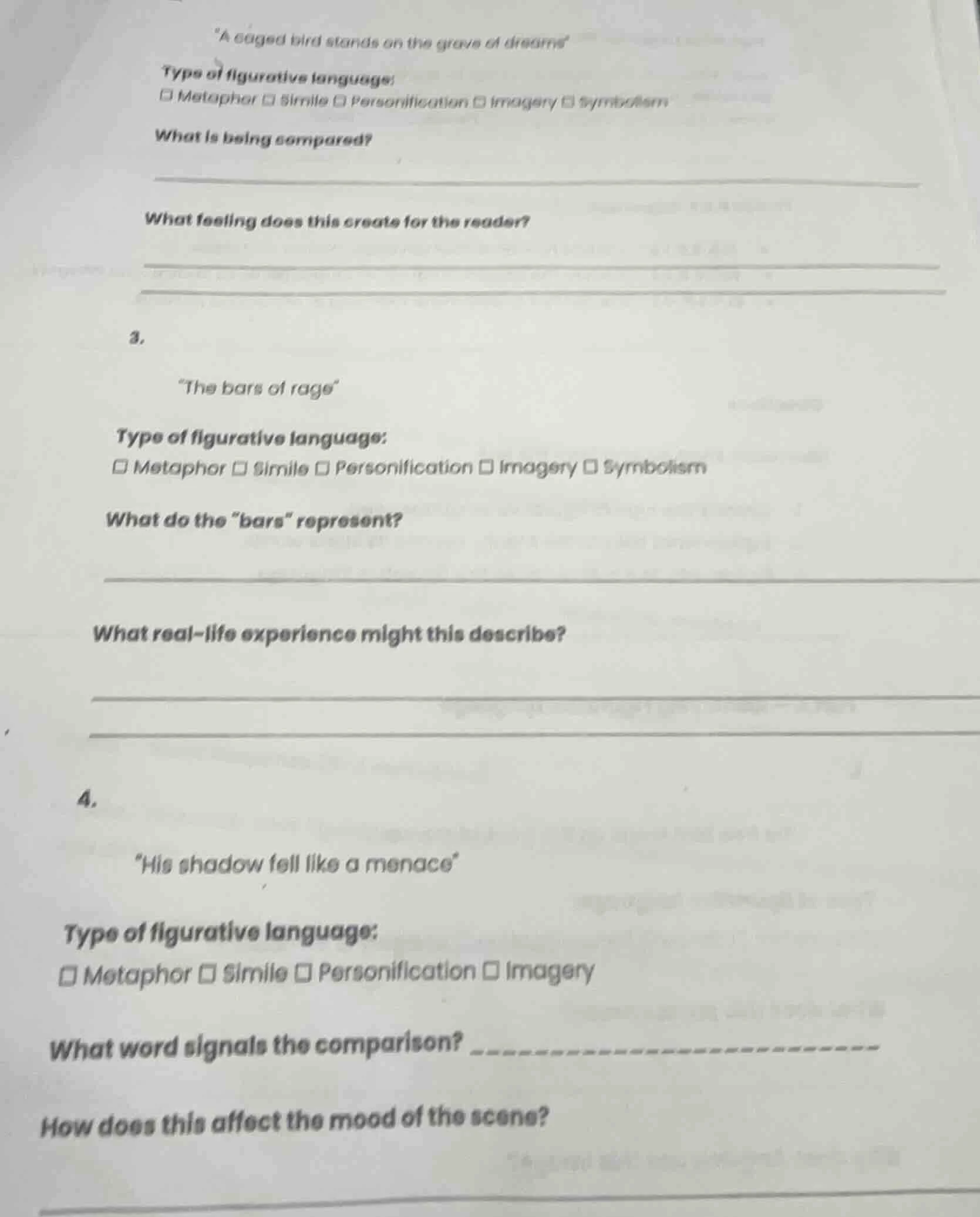
a caged bird stands on the grave of dreams
type of figurative language:
☐ metaphor ☐ simile ☐ personification ☐ imagery ☐ symbolism
what is being compared?
what feeling does this create for the reader?
3.
\the bars of rage\
type of figurative language:
☐ metaphor ☐ simile ☐ personification ☐ imagery ☐ symbolism
what do the \bars\ represent?
what real - life experience might this describe?
4.
\his shadow fell like a menace\
type of figurative language:
☐ metaphor ☐ simile ☐ personification ☐ imagery
what word signals the comparison?
how does this affect the mood of the scene?
For quote 1: "A caged bird stands on the grave of dreams"
- This uses symbolism and metaphor: the caged bird symbolizes oppressed people, the grave of dreams represents crushed hopes. It compares lost/unattainable dreams to a grave (a final, resting place for something dead). This evokes sorrow, hopelessness, and a sense of despair for the reader, as it conveys that dreams have been completely destroyed.
For quote 3: "The bars of rage"
- This is a metaphor and symbolism. The "bars" represent the internal, emotional barriers of anger and frustration, or external systems that trap and provoke rage in a person. This could describe the experience of marginalized people trapped in oppressive systems (like racism, poverty) who feel powerless and full of unexpressed anger, or anyone trapped in a situation that fills them with constant, caged rage.
For quote 4: "His shadow fell like a menace"
- This is a simile, identified by the comparison signal word "like". It frames the shadow as a threatening presence, which creates a tense, ominous, and unsettled mood, making the scene feel dangerous or foreboding.

Snap & solve any problem in the app
Get step-by-step solutions on Sovi AI
Photo-based solutions with guided steps
Explore more problems and detailed explanations
- Type of figurative language: ☑ Metaphor, ☑ Symbolism
What is being compared? Crushed, unfulfilled dreams are compared to a grave (a place of death/final rest).
What feeling does this create for the reader? Sorrow, hopelessness, and despair.
- Type of figurative language: ☑ Metaphor, ☑ Symbolism
What do the "bars" represent? The "bars" represent internal, pent-up anger and frustration, or external oppressive forces that trap a person and fuel their rage.
What real-life experience might this describe? The experience of marginalized or oppressed people (e.g., victims of systemic racism, people trapped in cycles of poverty) who feel powerless and trapped in a situation that fills them with unrelenting rage, or anyone stuck in a suffocating, unchangeable situation that sparks constant anger.
- Type of figurative language: ☑ Simile
What word signals the comparison? like
How does this affect the mood of the scene? It creates an ominous, tense, and foreboding mood, making the scene feel threatening or unsettling.