QUESTION IMAGE
Question
bring on the beets
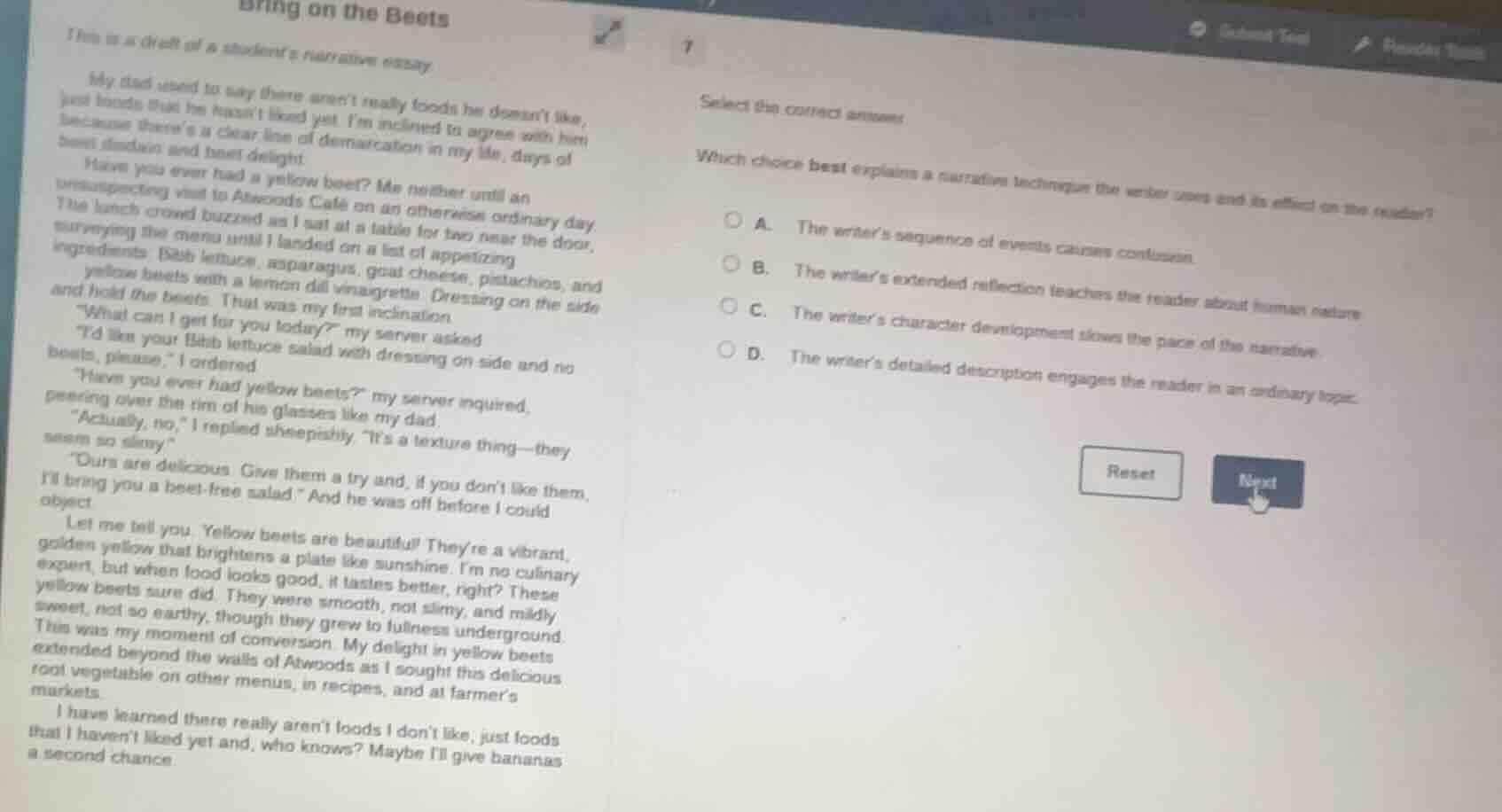
this is a draft of a student’s narrative essay.
my dad used to say there aren’t really foods he doesn’t like, just foods that he hasn’t liked yet. i’m inclined to agree with him, because there’s a clear line of demarcation in my life: days of beet disdain and beet delight.
have you ever had a yellow beet? me neither until an unexpected visit to atwoods café on an otherwise ordinary day. the lunch crowd buzzed as i sat at a table for two near the door, surveying the menu until i landed on a list of appetizing ingredients: bibb lettuce, asparagus, goat cheese, pistachios, and yellow beets with a lemon dill vinaigrette. dressing on the side and hold the beets. that was my first inclination.
“what can i get for you today?” my server asked.
“i’d like your bibb lettuce salad with dressing on side and no beets, please,” i ordered.
“have you ever had yellow beets?” my server inquired, peering over the rim of his glasses like my dad.
“actually, no,” i replied sheepishly. “it’s a texture thing—they seem so slimy.”
“darn are delicious. give them a try and, if you don’t like them, i’ll bring you a beet - free salad.” and he was off before i could object.
let me tell you. yellow beets are beautiful! they’re a vibrant, golden yellow that brightens a plate like sunshine. i’m no culinary expert, but when food looks good, it tastes better, right? these yellow beets sure did. they were smooth, not slimy, and mildly sweet, not so earthy, though they grew to fullness underground. this was my moment of conversion. my delight in yellow beets extended beyond the walls of atwoods as i sought this delicious root vegetable on other menus, in recipes, and at farmer’s markets.
i have learned there really aren’t foods i don’t like, just foods that i haven’t liked yet and, who knows? maybe i’ll give bananas a second chance.
select the correct answer.
which choice best explains a narrative technique the writer uses and its effect on the reader?
a. the writer’s sequence of events causes confusion.
b. the writer’s extended reflection teaches the reader about human nature.
c. the writer’s character development slows the pace of the narrative.
d. the writer’s detailed description engages the reader in an ordinary topic.
- Option A is incorrect: The sequence of events (initial dislike of beets, café visit, trying yellow beets, changing opinion) is clear and does not cause confusion.
- Option B is incorrect: The reflection is personal about food preferences, not a broad lesson on human nature.
- Option C is incorrect: There is no significant character development; the focus is on a change in food preference, not deepening a character, and it does not slow the narrative.
- Option D is correct: The writer uses detailed descriptions (e.g., the vibrant golden color of yellow beets, their texture of being smooth and mildly sweet) to turn a mundane topic of trying a new food into an engaging story that draws the reader in.

Snap & solve any problem in the app
Get step-by-step solutions on Sovi AI
Photo-based solutions with guided steps
Explore more problems and detailed explanations
D. The writer's detailed description engages the reader in an ordinary topic.