QUESTION IMAGE
Question
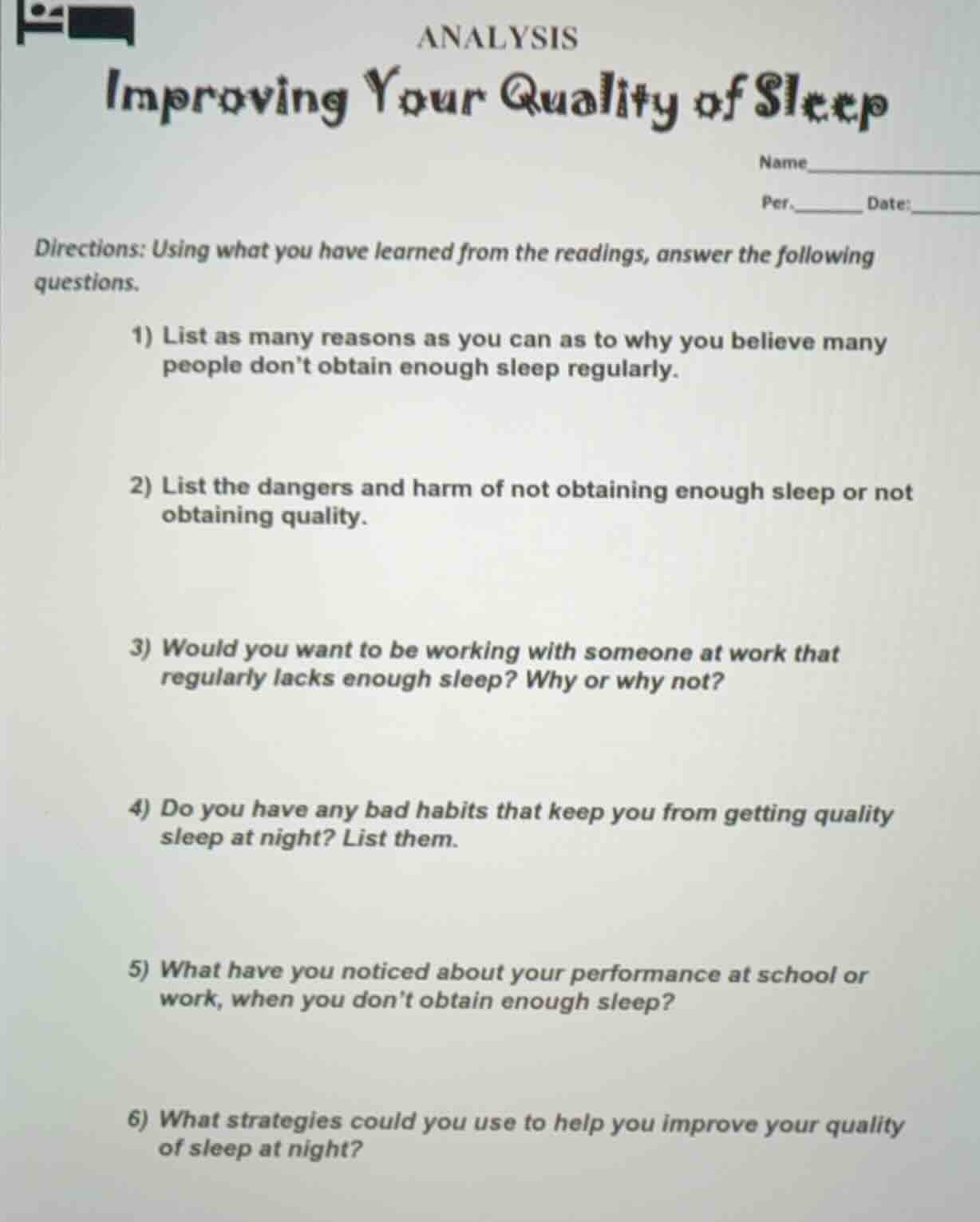
analysis
improving your quality of sleep
name
per. date:
directions: using what you have learned from the readings, answer the following questions.
- list as many reasons as you can as to why you believe many people dont obtain enough sleep regularly.
- list the dangers and harm of not obtaining enough sleep or not obtaining quality.
- would you want to be working with someone at work that regularly lacks enough sleep? why or why not?
- do you have any bad habits that keep you from getting quality sleep at night? list them.
- what have you noticed about your performance at school or work, when you dont obtain enough sleep?
- what strategies could you use to help you improve your quality of sleep at night?
Analyze reasons for insufficient sleep
We will explore common societal and behavioral factors that prevent individuals from getting enough sleep. This relates directly to Sleep Hygiene practices. Key factors include high stress, demanding work or school schedules, excessive screen time before bed, and caffeine consumption late in the day.
Identify dangers of sleep deprivation
We will examine the physiological and psychological impacts of chronic sleep loss. Lack of quality sleep impairs cognitive function, weakens the immune system, increases the risk of chronic illnesses (like cardiovascular disease), and contributes to mood disorders such as anxiety and depression.
Evaluate workplace safety and collaboration
We will analyze how sleep deprivation affects professional environments. Sleep-deprived individuals experience slower reaction times, impaired decision-making, and decreased emotional regulation, which increases workplace hazards and reduces team productivity.
Reflect on personal sleep habits
We will identify common personal behaviors that disrupt sleep patterns. These typically include irregular sleep schedules, using electronic devices in bed, and consuming heavy meals or stimulants close to bedtime.
Assess performance impacts
We will connect sleep quality to daily academic or professional performance. Insufficient sleep leads to difficulty concentrating, memory lapses, reduced motivation, and a higher rate of errors.
Formulate sleep improvement strategies
We will outline actionable methods to enhance sleep quality. These strategies focus on establishing a consistent sleep schedule, optimizing the sleep environment (dark, cool, quiet), and avoiding screens before bed to support healthy Sleep Hygiene.

Snap & solve any problem in the app
Get step-by-step solutions on Sovi AI
Photo-based solutions with guided steps
Explore more problems and detailed explanations
Question 1
Many people fail to obtain enough sleep regularly due to several common factors:
- Demanding Schedules: Long work hours, school commitments, and extracurricular activities limit available sleep time.
- Technology Use: Blue light from smartphones, tablets, and computers suppresses melatonin production, delaying sleep onset.
- Stress and Anxiety: Mental worry and racing thoughts make it difficult to relax and fall asleep.
- Poor Sleep Habits: Consuming caffeine or heavy meals close to bedtime, and maintaining an irregular sleep schedule.
Question 2
Not obtaining enough quality sleep carries significant dangers and harms:
- Cognitive Impairment: Reduced concentration, slower reaction times, and memory lapses.
- Mental Health Issues: Increased risk of mood swings, depression, anxiety, and irritability.
- Physical Health Risks: Weakened immune system, increased risk of obesity, heart disease, type 2 diabetes, and high blood pressure.
- Safety Hazards: Higher likelihood of accidents while driving or operating machinery.
Question 3
No, working with someone who regularly lacks sleep is undesirable because:
- Safety Concerns: Their slowed reaction times and impaired judgment increase the risk of workplace accidents.
- Decreased Productivity: Sleep-deprived individuals are more prone to making errors, requiring others to double-check or redo work.
- Strained Communication: Lack of sleep often leads to irritability and poor emotional regulation, which can harm team dynamics.
Question 4
Common bad habits that disrupt sleep quality include:
- Late-Night Screen Time: Scrolling through social media or watching videos in bed.
- Irregular Sleep Schedule: Going to bed and waking up at vastly different times on weekends compared to weekdays.
- Late Caffeine Consumption: Drinking coffee, energy drinks, or soda in the late afternoon or evening.
- Using the Bed for Non-Sleep Activities: Working or studying in bed, which prevents the brain from associating the bed with rest.
Question 5
When sleep is insufficient, performance at school or work typically suffers in the following ways:
- Difficulty Focusing: Struggling to pay attention during lectures, meetings, or while reading.
- Slower Processing: Taking longer to complete routine tasks and solve problems.
- Forgetfulness: Difficulty recalling information or forgetting scheduled tasks.
- Low Energy: Feeling physically fatigued and lacking the motivation to participate actively.
Question 6
To improve sleep quality at night, the following strategies can be implemented:
- Maintain a Consistent Schedule: Go to bed and wake up at the same time every day, even on weekends.
- Create a Relaxing Bedtime Routine: Read a book, practice deep breathing, or take a warm bath before bed.
- Optimize the Sleep Environment: Keep the bedroom dark, quiet, and cool.
- Limit Screen Exposure: Turn off electronic devices at least 30 to 60 minutes before sleeping.
- Avoid Stimulants: Restrict caffeine and heavy meals in the hours leading up to bedtime.