QUESTION IMAGE
Question
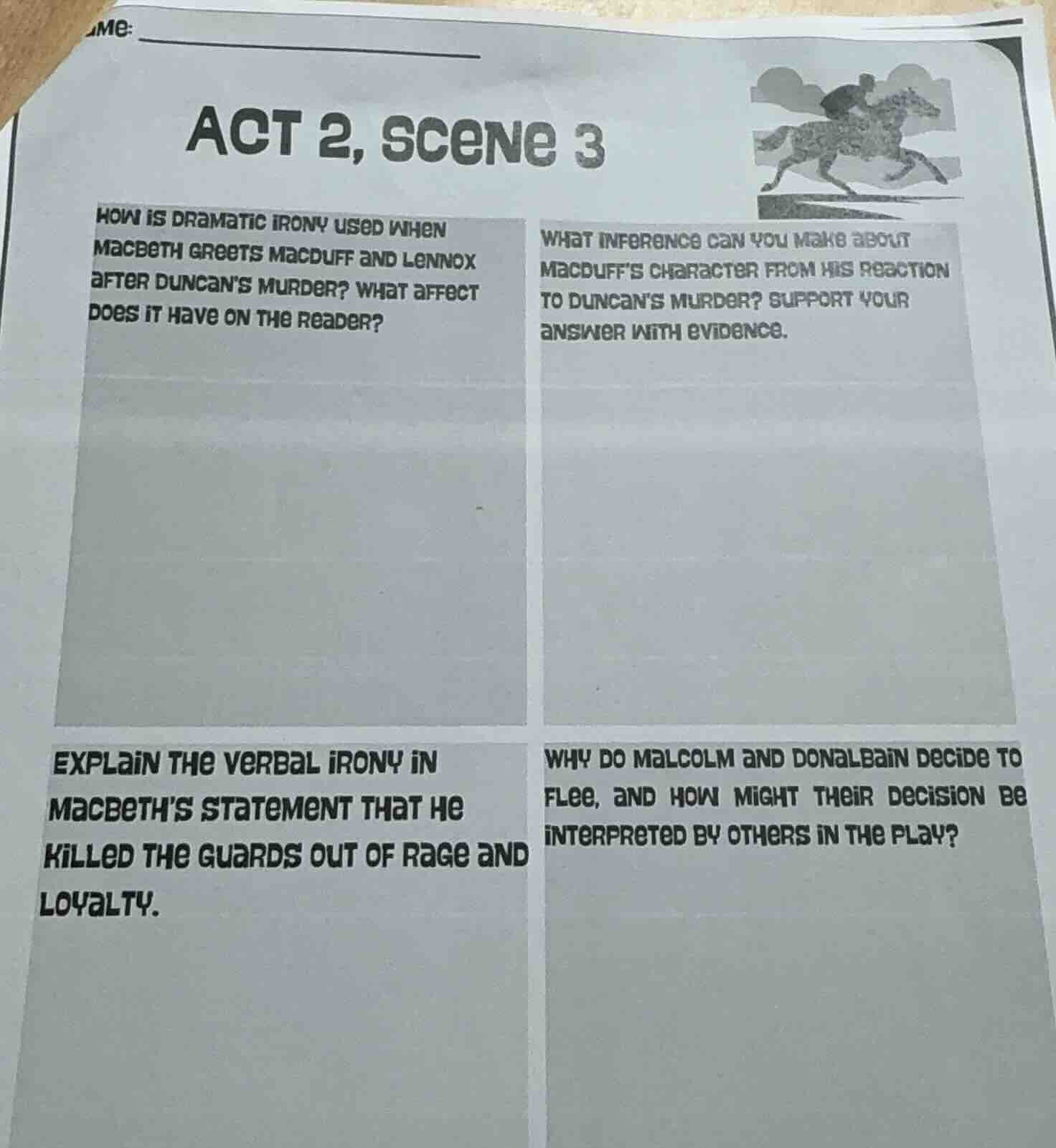
act 2, scene 3
how is dramatic irony used when macbeth greets macduff and lennox after duncans murder? what affect does it have on the reader?
what inference can you make about macduffs character from his reaction to duncans murder? support your answer with evidence.
explain the verbal irony in macbeths statement that he killed the guards out of rage and loyalty.
why do malcolm and donalbain decide to flee, and how might their decision be interpreted by others in the play?
Analyze dramatic irony in Macbeth's greeting
- Macbeth greets Macduff and Lennox casually while the audience knows he has just murdered King Duncan.
- This creates intense tension and suspense for the reader/audience.
Infer Macduff's character from his reaction
- Macduff's genuine horror and grief ("O horror, horror, horror!") show his deep loyalty to the king and his moral integrity.
- His refusal to repeat the news to Lady Macbeth because she is a woman shows his traditional, protective nature.
Explain verbal irony in Macbeth's confession
- Macbeth claims he killed the guards out of furious loyalty and love for Duncan.
- The irony is that he actually killed them to silence them and cover up his own treasonous murder of the king.
Analyze Malcolm and Donalbain's flight
- They flee (to England and Ireland) to protect their own lives, fearing the murderer is still among them ("There's daggers in men's smiles").
- Others in the play interpret their sudden flight as a sign of guilt, suspecting them of hiring the guards to kill their father.

Snap & solve any problem in the app
Get step-by-step solutions on Sovi AI
Photo-based solutions with guided steps
Explore more problems and detailed explanations
Question 1
Macbeth greets Macduff and Lennox with calm hospitality while the audience already knows he has just murdered King Duncan. This dramatic irony heightens the suspense and tension, making the audience anxious about when and how the crime will be discovered.
Question 2
Macduff's reaction reveals he is deeply loyal, honorable, and genuinely devastated by the king's death. His exclamation, "O horror, horror, horror! Tongue nor heart cannot conceive nor name thee!" demonstrates his sincere grief and devotion to Duncan, contrasting sharply with Macbeth's feigned sorrow.
Question 3
Macbeth claims he killed the chamberlains out of an uncontrollable rage of love and loyalty for the murdered Duncan. The verbal irony lies in the fact that he actually killed them to prevent them from defending themselves or exposing his own guilt.
Question 4
Malcolm and Donalbain flee because they realize they are the next targets and cannot trust anyone around them ("There's daggers in men's smiles"). However, their sudden departure is interpreted by others, like Macduff and Ross, as a suspicious act, making them the prime suspects in their father's murder.