QUESTION IMAGE
Question
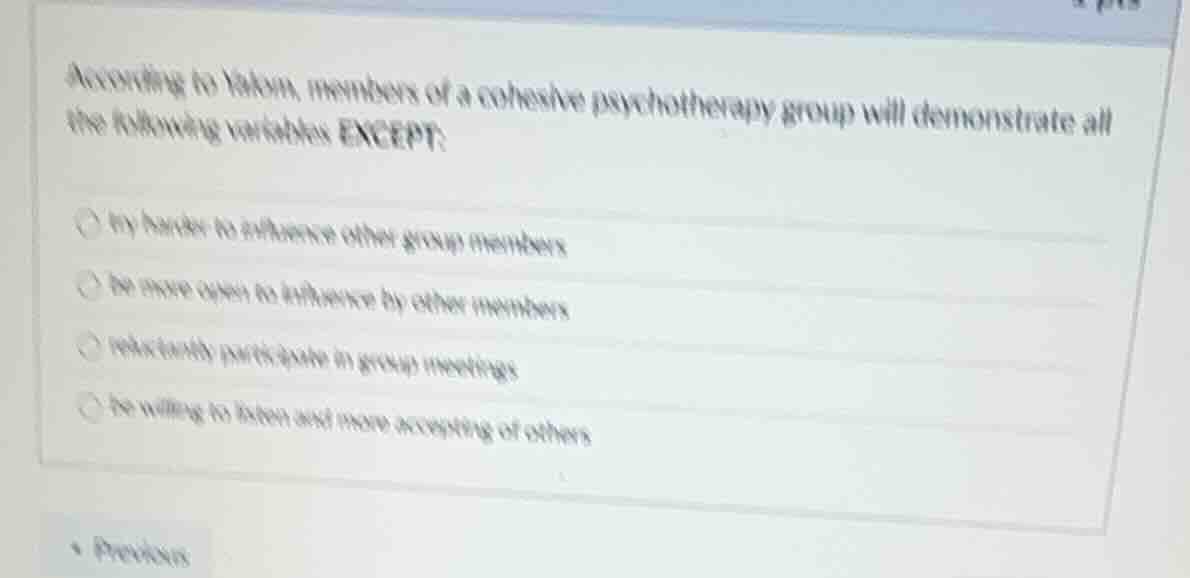
according to yalom, members of a cohesive psychotherapy group will demonstrate all the following variables except:
try harder to influence other group members
be more open to influence by other members
reluctantly participate in group meetings
be willing to listen and more accepting of others
🆕 New Concept Discovered: Yalom's Therapeutic Factors (Group Cohesiveness)
How group connection drives therapeutic change.
Step 1: Define Group Cohesiveness in Yalom's Theory
Irvin Yalom defines group cohesiveness as the therapeutic equivalent of "relationship" or "alliance" in individual therapy. It refers to the attraction that members have for their group and for the other members.
In a highly cohesive group, members feel a strong sense of belonging, acceptance, value, and security. This supportive environment encourages active participation, mutual influence, and deep self-disclosure.
Step 2: Analyze the Characteristics of Cohesive Group Members
According to Yalom, members of a highly cohesive psychotherapy group demonstrate specific behaviors and attitudes:
- Active Engagement: They are highly motivated to attend and participate actively, rather than reluctantly.
- Mutual Influence: They try harder to influence other group members because they care about the group's direction and outcomes.
- Openness to Influence: They are more open to being influenced by other members because they trust them.
- Acceptance and Listening: They are willing to listen, show empathy, and are highly accepting of others.
Step 3: Identify the Exception
Let's evaluate the given options against Yalom's findings:
- try harder to influence other group members: True of cohesive groups.
- be more open to influence by other members: True of cohesive groups.
- reluctantly participate in group meetings: False. Members of cohesive groups show high attendance, commitment, and enthusiastic participation, not reluctance.
- be willing to listen and more accepting of others: True of cohesive groups.
Therefore, "reluctantly participate in group meetings" is the exception.

Snap & solve any problem in the app
Get step-by-step solutions on Sovi AI
Photo-based solutions with guided steps
Explore more problems and detailed explanations
reluctantly participate in group meetings