QUESTION IMAGE
Question
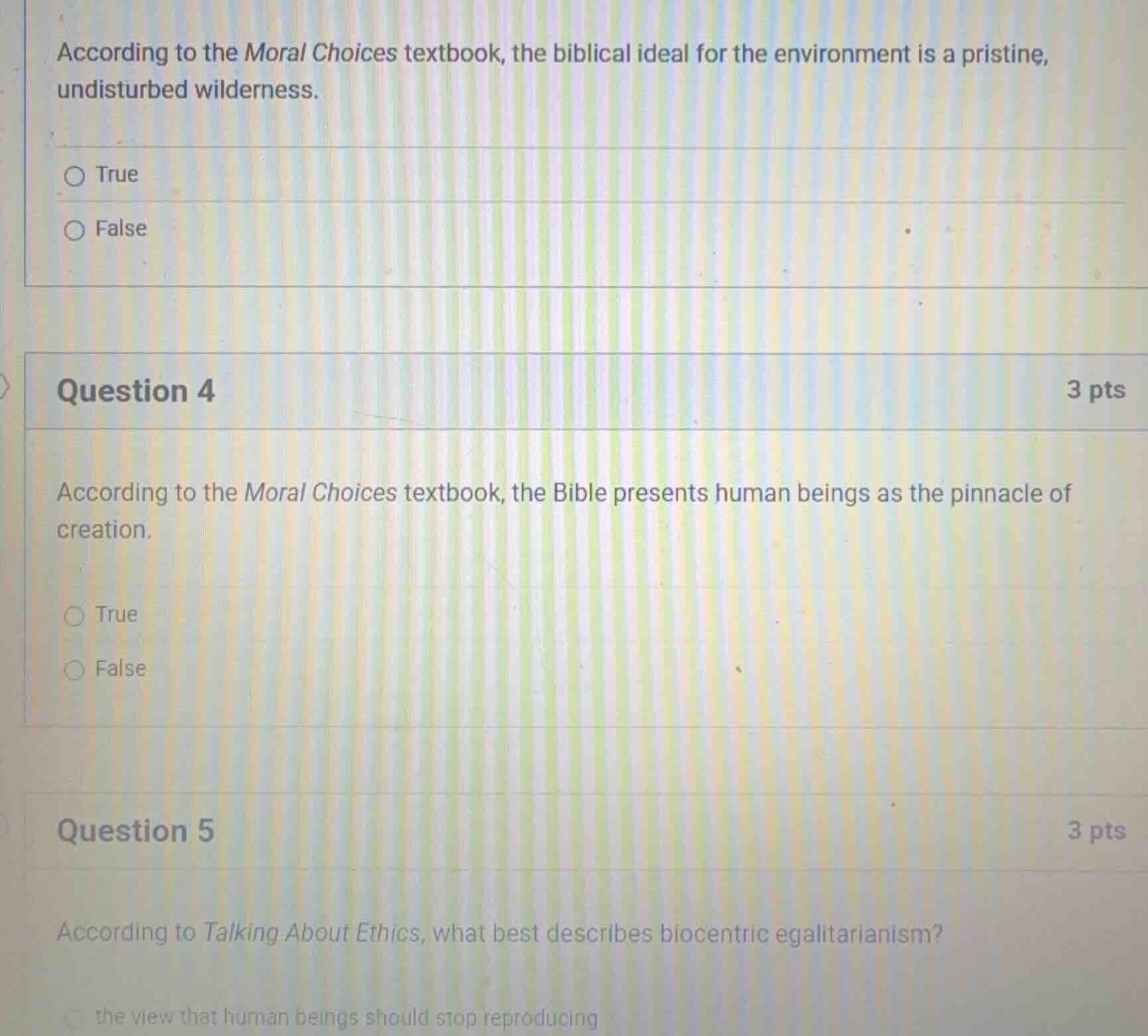
according to the moral choices textbook, the biblical ideal for the environment is a pristine, undisturbed wilderness.
true
false
question 4
according to the moral choices textbook, the bible presents human beings as the pinnacle of creation.
true
false
question 5
according to talking about ethics, what best describes biocentric egalitarianism?
the view that human beings should stop reproducing
🆕 New Concept Discovered: Christian Environmental Ethics
The relationship between humanity, nature, and God.
Step 1: Analyze the first statement
The first statement asserts: "According to the Moral Choices textbook, the biblical ideal for the environment is a pristine, undisturbed wilderness."
In Christian environmental ethics (as outlined in Scott Rae's Moral Choices), the biblical mandate is generally framed around stewardship (the "dominion" mandate in Genesis). This view holds that the earth is created for human use and care, rather than being left completely untouched as a "pristine, undisturbed wilderness" (which aligns more with radical preservationism or deep ecology). Therefore, the biblical ideal involves active, responsible cultivation and caretaking rather than preservation of untouched wilderness.
This statement is False.
Step 2: Analyze the second statement (Question 4)
The second statement asserts: "According to the Moral Choices textbook, the Bible presents human beings as the pinnacle of creation."
In Christian theology and the Moral Choices framework, human beings are uniquely created in the image of God (Imago Dei) and given dominion over the rest of creation. This positions humanity at the peak or pinnacle of the created order, distinct from animals and plants.
This statement is True.

Snap & solve any problem in the app
Get step-by-step solutions on Sovi AI
Photo-based solutions with guided steps
Explore more problems and detailed explanations
- First Statement: False
- Question 4: True