QUESTION IMAGE
Question
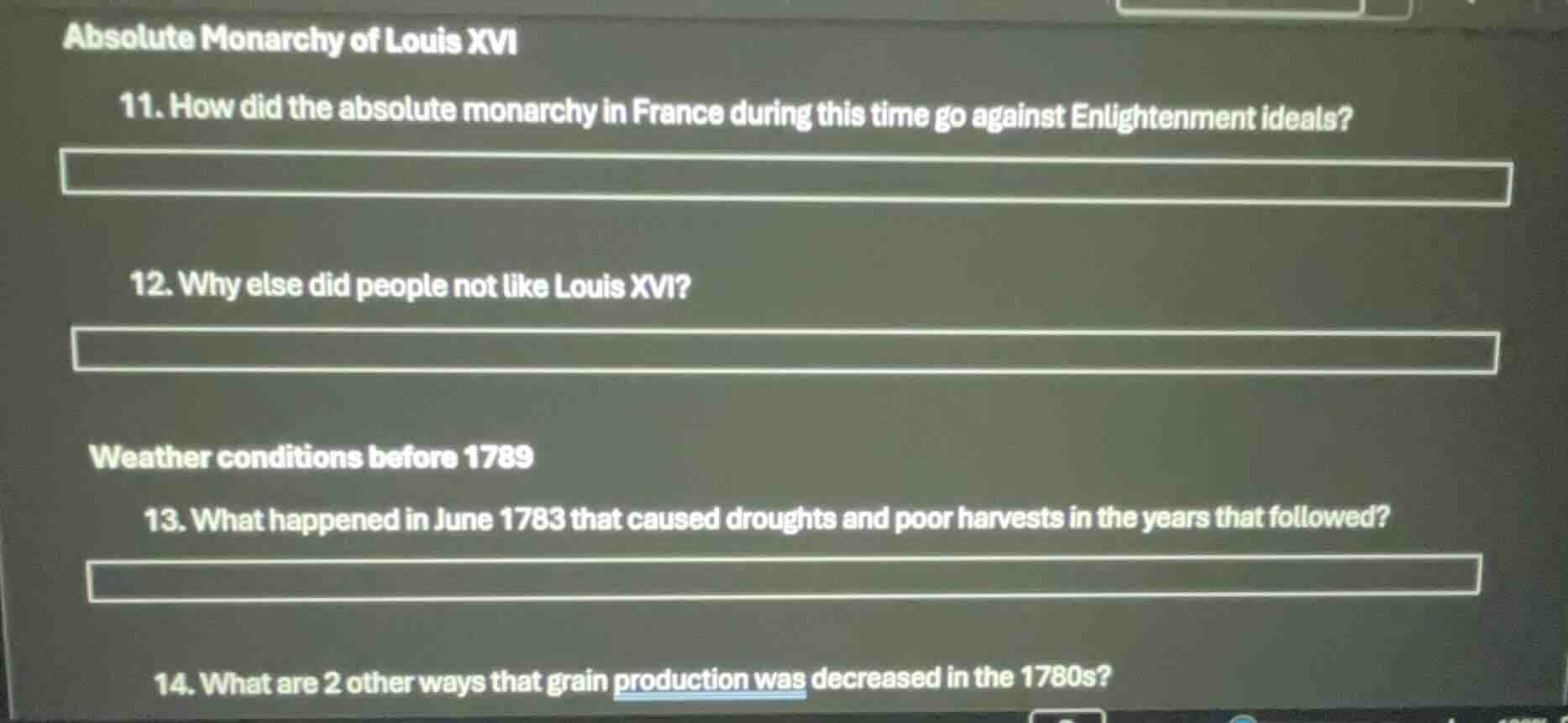
absolute monarchy of louis xvi
- how did the absolute monarchy in france during this time go against enlightenment ideals?
- why else did people not like louis xvi?
weather conditions before 1789
- what happened in june 1783 that caused droughts and poor harvests in the years that followed?
- what are 2 other ways that grain production was decreased in the 1780s?
Question 11
Enlightenment ideals emphasized popular sovereignty, individual rights, and separation of powers. Louis XVI's absolute monarchy had him hold all power (no separation, against popular sovereignty), and the estate system oppressed the Third Estate (against individual rights/equality).
Louis XVI faced dislike for financial mismanagement (France's debt crisis), his and Marie Antoinette's lavish spending (while people suffered), and his indecisiveness in governance (failing to address economic/social issues effectively).
In June 1783, the Laki volcano in Iceland erupted. The volcanic ash and sulfur dioxide released caused a "volcanic winter" - reduced sunlight, cooler temperatures, which led to droughts and poor harvests in subsequent years.

Snap & solve any problem in the app
Get step-by-step solutions on Sovi AI
Photo-based solutions with guided steps
Explore more problems and detailed explanations
The absolute monarchy under Louis XVI went against Enlightenment ideals as Enlightenment promoted popular sovereignty, individual rights, and separation of powers. Louis XVI held all political power (no separation of powers), the monarchy was based on divine - right (not popular sovereignty), and the estate system (with the Third Estate oppressed) violated ideals of equality and individual rights.