QUESTION IMAGE
Question
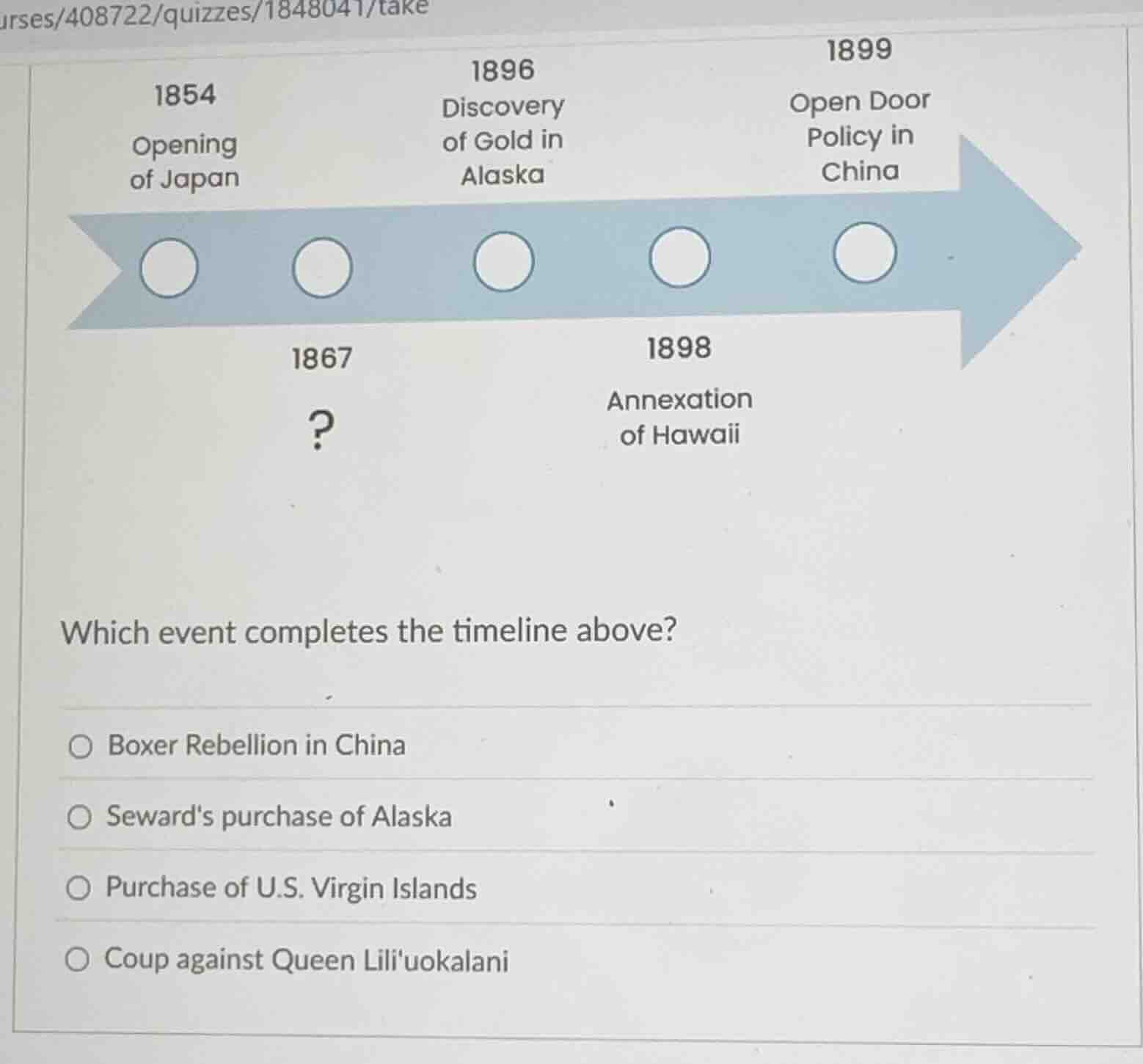
1854 opening of japan
1896 discovery of gold in alaska
1899 open door policy in china
1867 ?
1898 annexation of hawaii
which event completes the timeline above?
boxer rebellion in china
sewards purchase of alaska
purchase of u.s. virgin islands
coup against queen liliuokalani
Analyze the timeline structure
The timeline displays key events in United States foreign policy and territorial expansion during the 19th century:
- 1854: Opening of Japan (Matthew Perry's expedition)
- 1867: ?
- 1896: Discovery of Gold in Alaska (Klondike Gold Rush)
- 1898: Annexation of Hawaii
- 1899: Open Door Policy in China
We need to identify the historical event that occurred in 1867 from the given options.
Evaluate the options by historical date
Let's analyze the dates of the events listed in the options:
- Boxer Rebellion in China: Occurred between 1899 and 1901.
- Seward's purchase of Alaska: The treaty to purchase Alaska from Russia was signed on March 30, 1867, and the transfer took place on October 18, 1867.
- Purchase of U.S. Virgin Islands: The United States purchased the Danish West Indies (now U.S. Virgin Islands) in 1917.
- Coup against Queen Lili'uokalani: The overthrow of the Hawaiian Kingdom occurred in 1893.
Using the American Imperialism and Pacific Expansion knowledge points, we can see how these events fit into the broader context of late 19th-century U.S. territorial growth.
Confirm the correct match
The event that occurred in 1867 is "Seward's purchase of Alaska" (often referred to as "Seward's Folly" at the time). This purchase directly connects to the later event on the timeline, the "1896 Discovery of Gold in Alaska," which vindicated the purchase.

Snap & solve any problem in the app
Get step-by-step solutions on Sovi AI
Photo-based solutions with guided steps
Explore more problems and detailed explanations
- Boxer Rebellion in China
- Seward's purchase of Alaska (Correct answer)
- Purchase of U.S. Virgin Islands
- Coup against Queen Lili'uokalani