QUESTION IMAGE
Question
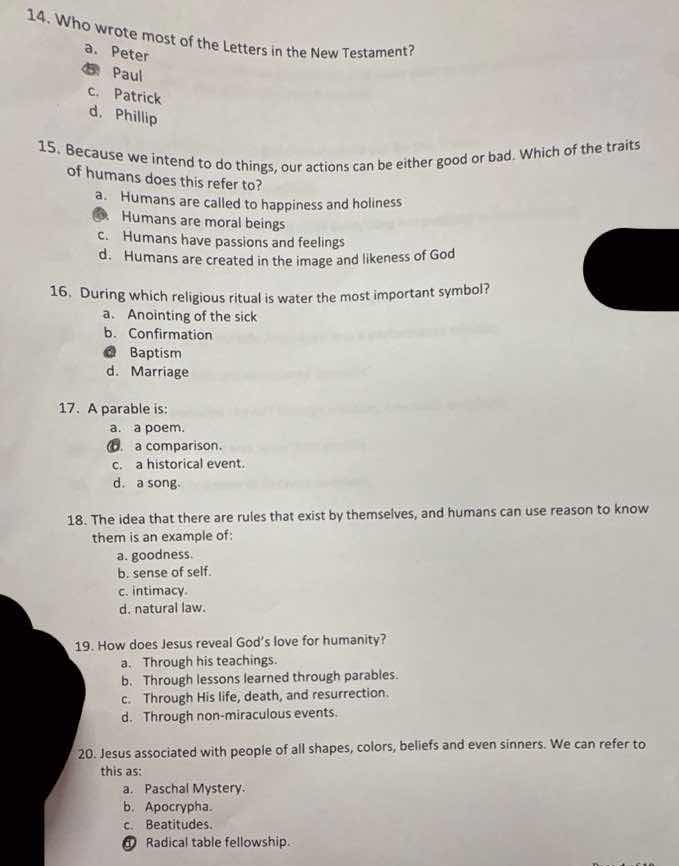
- who wrote most of the letters in the new testament?
a. peter
b. paul
c. patrick
d. phillip
- because we intend to do things, our actions can be either good or bad. which of the traits of humans does this refer to?
a. humans are called to happiness and holiness
b. humans are moral beings
c. humans have passions and feelings
d. humans are created in the image and likeness of god
- during which religious ritual is water the most important symbol?
a. anointing of the sick
b. confirmation
c. baptism
d. marriage
- a parable is:
a. a poem.
b. a comparison.
c. a historical event.
d. a song.
- the idea that there are rules that exist by themselves, and humans can use reason to know them is an example of:
a. goodness.
b. sense of self.
c. intimacy.
d. natural law.
- how does jesus reveal gods love for humanity?
a. through his teachings.
b. through lessons learned through parables.
c. through his life, death, and resurrection.
d. through non-miraculous events.
- jesus associated with people of all shapes, colors, beliefs and even sinners. we can refer to this as:
a. paschal mystery.
b. apocrypha.
c. beatitudes.
d. radical table fellowship.
Question 14: Author of New Testament Letters
The New Testament contains 21 epistles (letters). Traditionally, 14 of these are attributed to Saint Paul, making him the author of the vast majority of the letters in the New Testament.
Question 15: Human Moral Agency
Using the Moral Decision Making knowledge point, humans possess free will and intellect, meaning our intentional actions carry moral weight and can be judged as morally good or bad. This directly defines humans as moral beings.
Question 16: Water Symbolism in Rituals
Using the Sacraments knowledge point, water is the essential matter and primary symbol of Baptism, representing cleansing from sin, dying to old life, and rising to new life in Christ.
Question 17: Definition of a Parable
The word "parable" comes from the Greek parabolē, which literally means "a comparison" or "throwing alongside." It is a short, metaphorical story used to illustrate a moral or spiritual lesson by comparing a familiar everyday scenario to a divine truth.
Question 18: Rules Known Through Reason
Using the Catholic Doctrine knowledge point, natural law refers to the objective moral order established by God that is written on the human heart and can be discovered by all people through the use of natural human reason.
Question 19: Ultimate Revelation of God's Love
While Jesus' teachings and parables reveal God's love, Christian theology holds that the ultimate, definitive revelation of God's love for humanity is accomplished through the Paschal Mystery—His entire life, sacrificial death, and resurrection.
Question 20: Jesus' Inclusive Table Fellowship
Jesus' practice of sharing meals with outcasts, tax collectors, and sinners broke social and religious barriers. In contemporary theology, this inclusive practice is widely referred to as "radical table fellowship."

Snap & solve any problem in the app
Get step-by-step solutions on Sovi AI
Photo-based solutions with guided steps
Explore more problems and detailed explanations
Question 14
- a. Peter
- b. Paul (Correct answer)
- c. Patrick
- d. Phillip
Question 15
- a. Humans are called to happiness and holiness
- b. Humans are moral beings (Correct answer)
- c. Humans have passions and feelings
- d. Humans are created in the image and likeness of God
Question 16
- a. Anointing of the sick
- b. Confirmation
- c. Baptism (Correct answer)
- d. Marriage
Question 17
- a. a poem.
- b. a comparison. (Correct answer)
- c. a historical event.
- d. a song.
Question 18
- a. goodness.
- b. sense of self.
- c. intimacy.
- d. natural law. (Correct answer)
Question 19
- a. Through his teachings.
- b. Through lessons learned through parables.
- c. Through His life, death, and resurrection. (Correct answer)
- d. Through non-miraculous events.
Question 20
- a. Paschal Mystery.
- b. Apocrypha.
- c. Beatitudes.
- d. Radical table fellowship. (Correct answer)