QUESTION IMAGE
Question
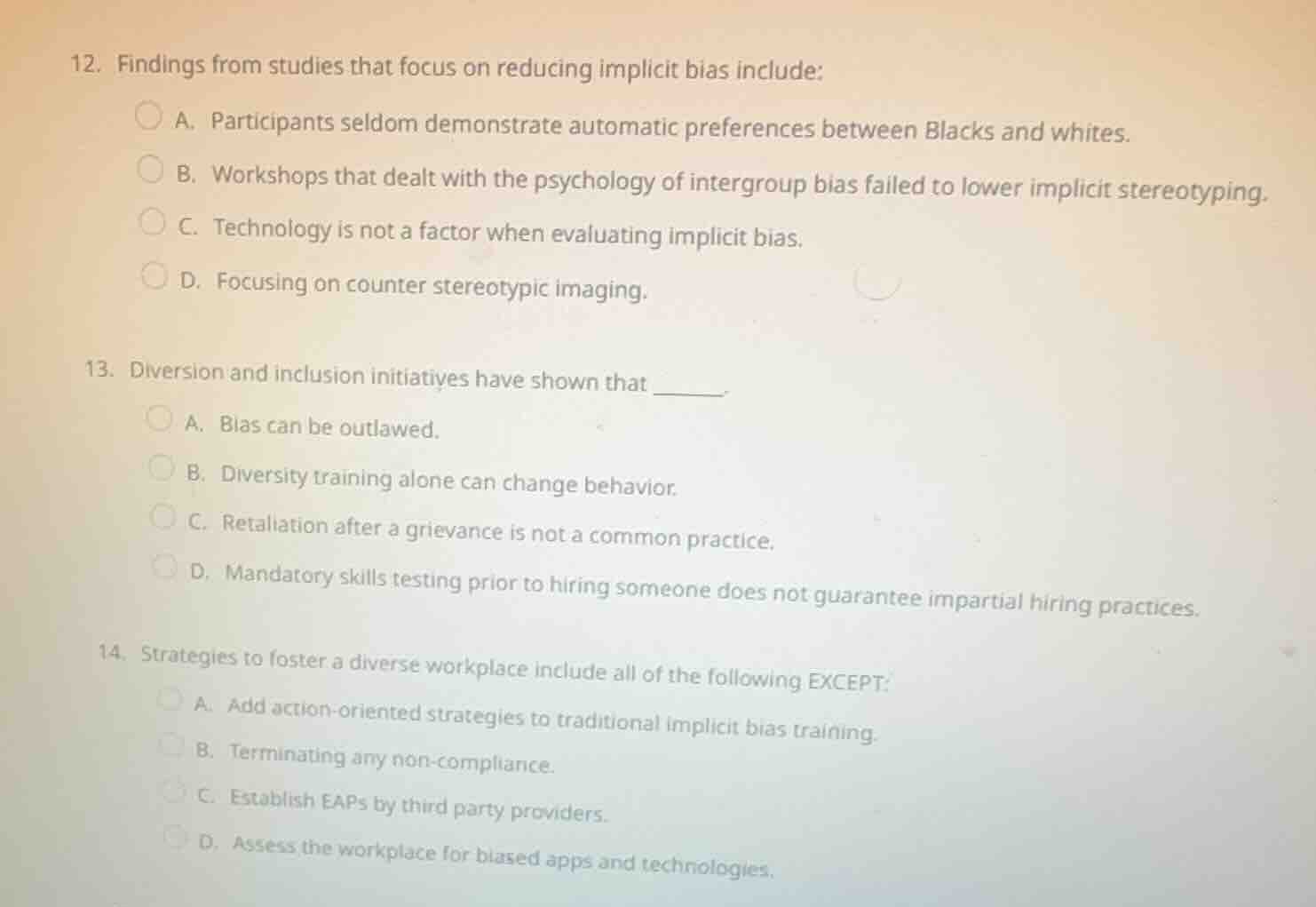
- findings from studies that focus on reducing implicit bias include:
a. participants seldom demonstrate automatic preferences between blacks and whites.
b. workshops that dealt with the psychology of intergroup bias failed to lower implicit stereotyping.
c. technology is not a factor when evaluating implicit bias.
d. focusing on counter stereotypic imaging.
- diversion and inclusion initiatives have shown that ______.
a. bias can be outlawed.
b. diversity training alone can change behavior.
c. retaliation after a grievance is not a common practice.
d. mandatory skills testing prior to hiring someone does not guarantee impartial hiring practices.
- strategies to foster a diverse workplace include all of the following except:
a. add action-oriented strategies to traditional implicit bias training.
b. terminating any non-compliance.
c. establish eaps by third party providers.
d. assess the workplace for biased apps and technologies.
Analyze Question 12
This question asks about findings from studies focused on reducing implicit bias.
- Option A is incorrect because participants frequently demonstrate automatic preferences.
- Option B is incorrect because many intergroup bias workshops have successfully lowered implicit stereotyping.
- Option C is incorrect because technology (such as implicit association tests or software tools) is a major factor in evaluating bias.
- Option D is correct. Research shows that focusing on counter-stereotypic imaging (exposing individuals to exemplars that contradict common stereotypes) is an effective strategy to reduce Implicit Bias.
Analyze Question 13
This question asks about the outcomes of diversity and inclusion initiatives.
- Option A is incorrect because bias is a cognitive process and cannot simply be outlawed.
- Option B is incorrect because studies show diversity training alone rarely changes long-term behavior without structural support.
- Option C is incorrect because retaliation remains a documented issue in workplace grievances.
- Option D is correct. Mandatory skills testing prior to hiring does not guarantee impartial hiring practices, as human bias can still influence other stages of evaluation or how test results are interpreted.
Analyze Question 14
This question asks for the strategy that is NOT a way to foster a diverse workplace (an "EXCEPT" question).
- Options A, C, and D are constructive, proactive strategies to foster diversity and address Implicit Bias in Healthcare or general workplaces.
- Option B, "Terminating any non-compliance," is an extreme, punitive measure rather than a constructive strategy to foster an inclusive and diverse workplace culture. Therefore, it is the correct "EXCEPT" choice.

Snap & solve any problem in the app
Get step-by-step solutions on Sovi AI
Photo-based solutions with guided steps
Explore more problems and detailed explanations
Question 12
- A. Participants seldom demonstrate automatic preferences between Blacks and whites.
- B. Workshops that dealt with the psychology of intergroup bias failed to lower implicit stereotyping.
- C. Technology is not a factor when evaluating implicit bias.
- D. Focusing on counter stereotypic imaging. (Correct answer)
Question 13
- A. Bias can be outlawed.
- B. Diversity training alone can change behavior.
- C. Retaliation after a grievance is not a common practice.
- D. Mandatory skills testing prior to hiring someone does not guarantee impartial hiring practices. (Correct answer)
Question 14
- A. Add action-oriented strategies to traditional implicit bias training.
- B. Terminating any non-compliance. (Correct answer)
- C. Establish EAPs by third party providers.
- D. Assess the workplace for biased apps and technologies.