QUESTION IMAGE
Question
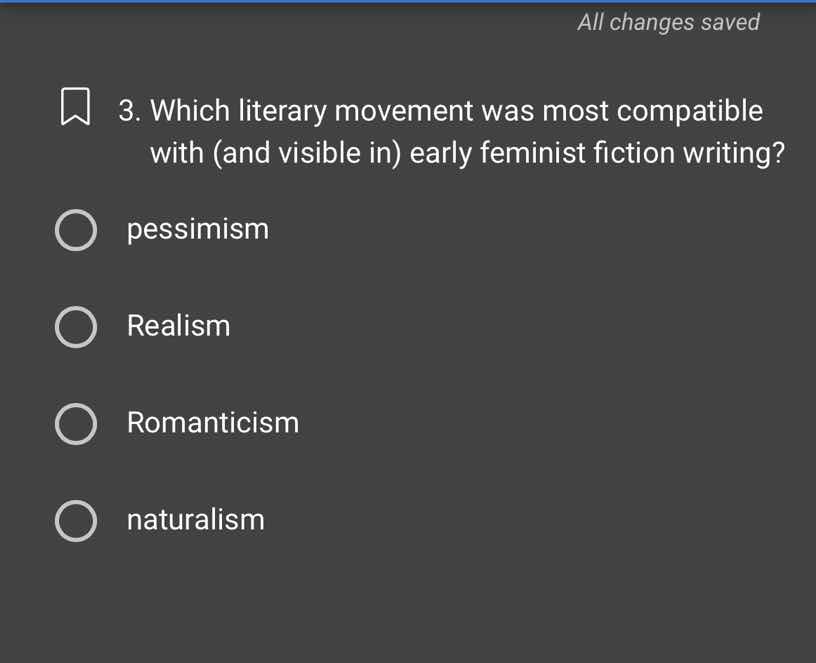
- which literary movement was most compatible with (and visible in) early feminist fiction writing?
pessimism
realism
romanticism
naturalism
🆕 New Concept Discovered: Literary Movements and Social Contexts
How historical literary styles reflect societal changes
Step 1: Understand the goal of early feminist fiction
Early feminist fiction (emerging prominently in the late 19th and early 20th centuries) aimed to depict the actual, often restrictive conditions of women's lives. Rather than idealizing women's roles or escaping into fantasy, these writers sought to expose the everyday social, economic, and domestic struggles that women faced under patriarchy.
Step 2: Analyze the given literary movements
- Pessimism: This is a general philosophical outlook rather than a formal literary movement.
- Realism: This movement focused on representing familiar things as they actually are, depicting everyday middle- and lower-class life, social barriers, and honest human relationships without idealization or romantic coloring.
- Romanticism: This movement emphasized intense emotion, individualism, nature, and the sublime. It often idealized situations, which ran counter to the early feminist goal of exposing harsh domestic realities.
- Naturalism: An offshoot of realism, naturalism viewed human behavior through scientific determinism, suggesting that characters are completely controlled by heredity and their environment. While it dealt with harsh realities, its extreme fatalism was less central to the foundational, reform-minded goals of early feminist fiction.
Step 3: Determine the best fit
Realism provided the perfect literary framework for early feminist writers (such as Kate Chopin, Charlotte Perkins Gilman, and Henrik Ibsen). By focusing on objective, truthful depictions of domestic life, marriage, and societal expectations, Realism allowed these authors to critique the genuine limitations placed on women in contemporary society.

Snap & solve any problem in the app
Get step-by-step solutions on Sovi AI
Photo-based solutions with guided steps
Explore more problems and detailed explanations
Realism