QUESTION IMAGE
Question
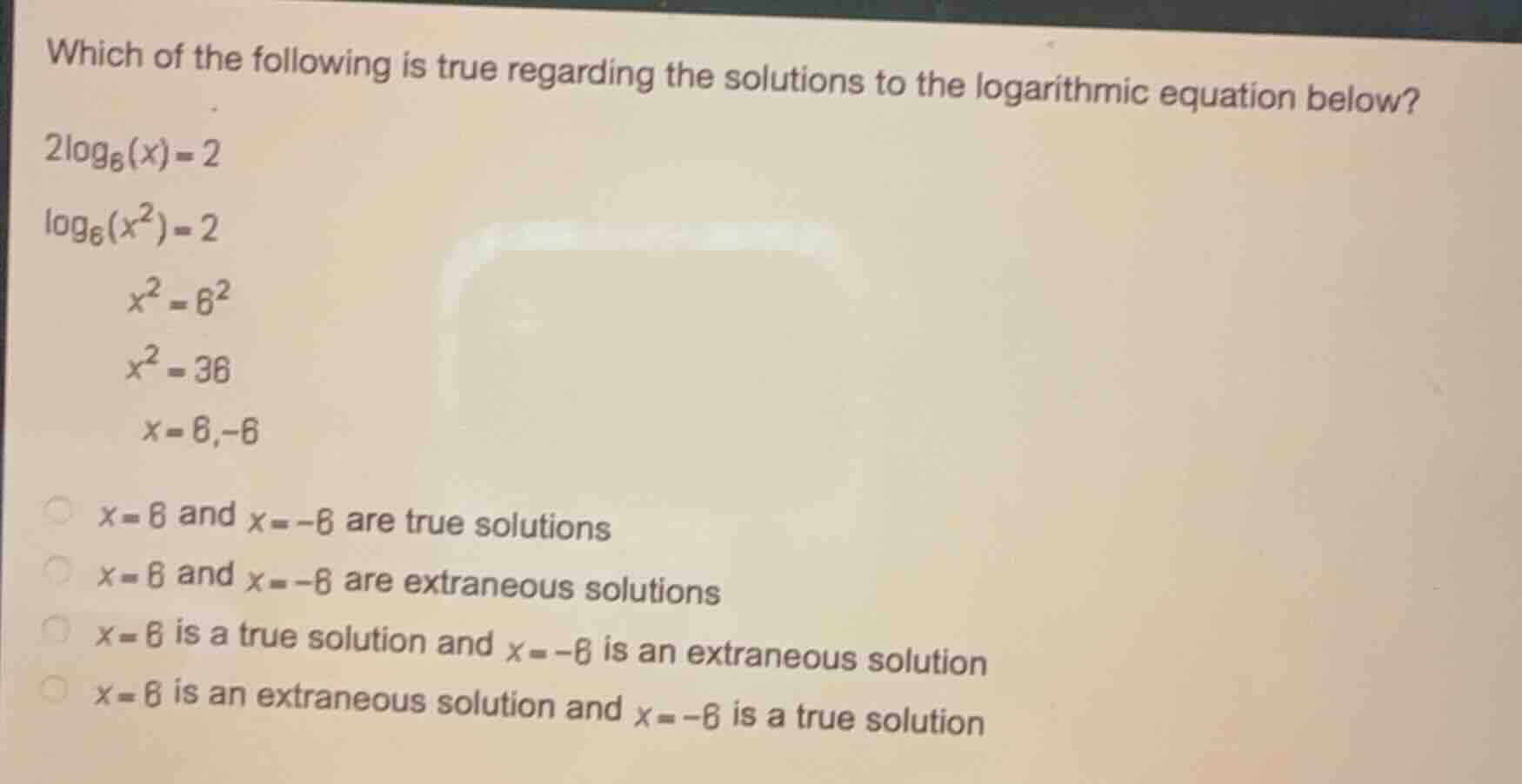
which of the following is true regarding the solutions to the logarithmic equation below?
\\(2\log_{6}(x) = 2\\)
\\(\log_{6}(x^2) = 2\\)
\\(x^2 = 6^2\\)
\\(x^2 = 36\\)
\\(x = 6, -6\\)
- \\(x = 6\\) and \\(x = -6\\) are true solutions
- \\(x = 6\\) and \\(x = -6\\) are extraneous solutions
- \\(x = 6\\) is a true solution and \\(x = -6\\) is an extraneous solution
- \\(x = 6\\) is an extraneous solution and \\(x = -6\\) is a true solution
Identify the original equation and its domain restriction
$$
LATEXBLOCK0
$$
Evaluate the proposed solutions against the domain
$$
LATEXBLOCK1
$$
Match with the correct multiple-choice option
$$
x = 6 \text{ is a true solution and } x = -6 \text{ is an extraneous solution}
$$

Snap & solve any problem in the app
Get step-by-step solutions on Sovi AI
Photo-based solutions with guided steps
Explore more problems and detailed explanations
- x = 6 and x = -6 are true solutions
- x = 6 and x = -6 are extraneous solutions
- x = 6 is a true solution and x = -6 is an extraneous solution (Correct answer)
- x = 6 is an extraneous solution and x = -6 is a true solution